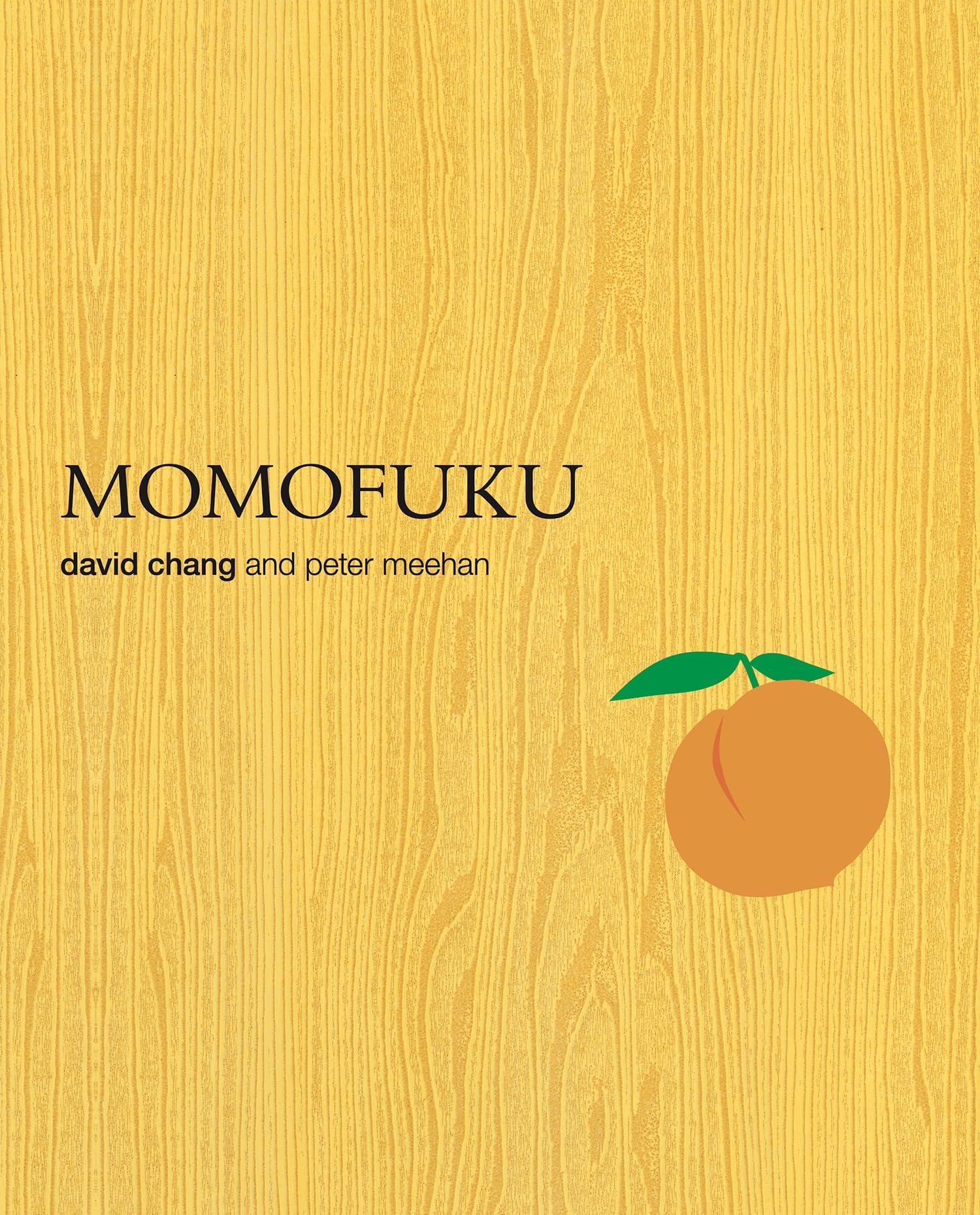

With 200,000+ copies in print, this New York Times bestseller shares the story and the recipes behind the chef and cuisine that changed the modern-day culinary landscape. Never before has there been a phenomenon like Momofuku. A once-unrecognizable word, it's now synonymous with the award-winning restaurants of the same name in New York City (Momofuku Noodle Bar, Ssäm Bar, Ko, Má Pêche, Fuku, Nishi, and Milk Bar), Toronto, and Sydney. Chef David Chang single-handedly revolutionized cooking in America and beyond with his use of bold Asian flavors and impeccable ingredients, his mastery of the humble ramen noodle, and his thorough devotion to pork. Chang relays with candor the tale of his unwitting rise to superstardom, which, though wracked with mishaps, happened at light speed. And the dishes shared in this book are coveted by all who've dined—or yearned to—at any Momofuku location (yes, the pork buns are here). This is a must-read for anyone who truly enjoys food. Review: Great book, some stumbles with the recipes. - A really good origin story of the Momofuku restaurants. I concur with what most of the 5 star reviewers have said, and will not repeat. I initially had a library copy of the book but bought my own to have more time to spend with the recipes. And most are very good, but I had some problems: The pork bun recipe says it make fifty 25 gram buns. (=1250 grams) But there are less than 1000 grams of ingredients here. And the recipe specifies a volume rather than weight for the flour, which is disappointing. I used 120g/cup (as that is King Arthur Bread Flour recommendation) but I think 125 would have been better, as my dough was a little sticky. But no alternate value for a cup of flour would get you near 50 buns. My 38 buns came out tasting good but weren't pretty. The pork for the buns (or ramen) is a very simple recipe. But I don't see how you can put a piece of meat with 1/4 cup of sugar on it , into a 450 degree oven for an hour and not end up with a lot of burnt sugar. Are you maybe supposed to rinse off the salt and sugar before roasting? And I did not get any of the highly touted "pork jelly"; the mix of pork fat and burnt sugar did not decant. Maybe if it was covered for the low temperature part of the recipe. The pork was delicious but the recipe text did not match my experience (two batches.) I tried the chicken meat glue recipe. (Moo-Glue RM from desertcart) I am cooking for two, so I wanted to try the roast method one night and the fry method the second with my two boned chicken halves. The first (roast) came out OK and certainly was a novel form of chicken and its nice to have a disk of chicken with skin all the way around it. But the white and dark meat don't taste any different because they have been glued together. But the second night, when I unwrapped the other half chicken that had been glued two nights previously, it became completely, totally unglued before cooking. I have seen no mention of this happening with meat glue. I made the ramen noodle soup pretty much as written, except that I could not bear the thought of adding a pound of expensive bacon to the broth to get some smokiness. (I used bonito flakes). So I'm having a lot of fun working through these recipes, and there are plenty that work exactly as written. YMMV. Review: A Colombian cooking from Momofuku - I bought Momofuku a few weeks ago, after I heard an interview with the author on NPR. Coincidentally, my eleven year old daughter and I are going through a Ramen Noodles craze, inspired by Hayao Miyazaki's films (the grandfather in Whisper of the Heart serves noodles to the young ones when in distress; and in Ponyo the mom makes noodles look like magic). In any case, I wanted something better than the packages available at the local Asian grocery store. Now, a month later, not only are my ramen noodles exquisite, but Momofuku has made me a much better cook. Here's why: * Chang's attention to the quality of the ingredients one uses: I found a local farmer who raises pigs and drove an hour and a half on beautiful Oklahoma country roads to her place. My freezer is now packed with wonderful cuts of free ranging, non-chemical raised pork, stew meat, and bacon. * His large quantities did not deter me. Actually, the book's advise on how to store food is perfect for my family of two. I made a huge pot of ramen noodle broth, let it reduce and once ready (simmered for 6 hours), stored in small containers in the freezer. Now I have absolutely wonderful broth for months. (Note: as a Colombian from the Andes, I don't want my broth to have any fishy flavor, so I excluded the Kombu from Chang's recipe) * Chang's recipe for roasting pork is amazing too! I followed it by the book and ended up with something so good I had a hard time believing I had made it. I roasted a huge chunk of shoulder, and once ready and cool, shredded it, divided it in small zip lock bags, and to the freezer. As with the broth, I have excellent roasted pork to add to our weekly ramen noodles. * Chang's creative techniques: I will never fry chicken any other way. Momofuku's recipe for fried chicken is exquisite. Easy, creative, and the chicken is delicious, tender, not oily, brown on the outside ...perfect. * Small details that take once's eating experience to an entirely new level: such as the ginger, scallion recipe. Again, as a Colombian, when nostalgic sometimes I add a little chopped cilantro to the ginger-scallion sauce. Chang's approach to Asian cuisine, his respect for tradition without the anxiety of hybridizing, bending, mixing, is perfect for a Colombian bored with the food available in central Oklahoma and trying to make good food out of an ordinary, everyday life kitchen.


| Best Sellers Rank | #484,655 in Kindle Store ( See Top 100 in Kindle Store ) #84 in Asian Cooking, Food & Wine #153 in Professional Cooking (Books) #273 in Culinary Arts & Techniques (Kindle Store) |
R**H
Great book, some stumbles with the recipes.
A really good origin story of the Momofuku restaurants. I concur with what most of the 5 star reviewers have said, and will not repeat. I initially had a library copy of the book but bought my own to have more time to spend with the recipes. And most are very good, but I had some problems: The pork bun recipe says it make fifty 25 gram buns. (=1250 grams) But there are less than 1000 grams of ingredients here. And the recipe specifies a volume rather than weight for the flour, which is disappointing. I used 120g/cup (as that is King Arthur Bread Flour recommendation) but I think 125 would have been better, as my dough was a little sticky. But no alternate value for a cup of flour would get you near 50 buns. My 38 buns came out tasting good but weren't pretty. The pork for the buns (or ramen) is a very simple recipe. But I don't see how you can put a piece of meat with 1/4 cup of sugar on it , into a 450 degree oven for an hour and not end up with a lot of burnt sugar. Are you maybe supposed to rinse off the salt and sugar before roasting? And I did not get any of the highly touted "pork jelly"; the mix of pork fat and burnt sugar did not decant. Maybe if it was covered for the low temperature part of the recipe. The pork was delicious but the recipe text did not match my experience (two batches.) I tried the chicken meat glue recipe. (Moo-Glue RM from Amazon) I am cooking for two, so I wanted to try the roast method one night and the fry method the second with my two boned chicken halves. The first (roast) came out OK and certainly was a novel form of chicken and its nice to have a disk of chicken with skin all the way around it. But the white and dark meat don't taste any different because they have been glued together. But the second night, when I unwrapped the other half chicken that had been glued two nights previously, it became completely, totally unglued before cooking. I have seen no mention of this happening with meat glue. I made the ramen noodle soup pretty much as written, except that I could not bear the thought of adding a pound of expensive bacon to the broth to get some smokiness. (I used bonito flakes). So I'm having a lot of fun working through these recipes, and there are plenty that work exactly as written. YMMV.
C**X
A Colombian cooking from Momofuku
I bought Momofuku a few weeks ago, after I heard an interview with the author on NPR. Coincidentally, my eleven year old daughter and I are going through a Ramen Noodles craze, inspired by Hayao Miyazaki's films (the grandfather in Whisper of the Heart serves noodles to the young ones when in distress; and in Ponyo the mom makes noodles look like magic). In any case, I wanted something better than the packages available at the local Asian grocery store. Now, a month later, not only are my ramen noodles exquisite, but Momofuku has made me a much better cook. Here's why: * Chang's attention to the quality of the ingredients one uses: I found a local farmer who raises pigs and drove an hour and a half on beautiful Oklahoma country roads to her place. My freezer is now packed with wonderful cuts of free ranging, non-chemical raised pork, stew meat, and bacon. * His large quantities did not deter me. Actually, the book's advise on how to store food is perfect for my family of two. I made a huge pot of ramen noodle broth, let it reduce and once ready (simmered for 6 hours), stored in small containers in the freezer. Now I have absolutely wonderful broth for months. (Note: as a Colombian from the Andes, I don't want my broth to have any fishy flavor, so I excluded the Kombu from Chang's recipe) * Chang's recipe for roasting pork is amazing too! I followed it by the book and ended up with something so good I had a hard time believing I had made it. I roasted a huge chunk of shoulder, and once ready and cool, shredded it, divided it in small zip lock bags, and to the freezer. As with the broth, I have excellent roasted pork to add to our weekly ramen noodles. * Chang's creative techniques: I will never fry chicken any other way. Momofuku's recipe for fried chicken is exquisite. Easy, creative, and the chicken is delicious, tender, not oily, brown on the outside ...perfect. * Small details that take once's eating experience to an entirely new level: such as the ginger, scallion recipe. Again, as a Colombian, when nostalgic sometimes I add a little chopped cilantro to the ginger-scallion sauce. Chang's approach to Asian cuisine, his respect for tradition without the anxiety of hybridizing, bending, mixing, is perfect for a Colombian bored with the food available in central Oklahoma and trying to make good food out of an ordinary, everyday life kitchen.
W**Y
Great book!
I've made a few of the recipes form this book; pork buns, scallions and ginger sauce, and tare sauce for chicken wings. I've had various degrees of success. This book is great for the story that Chang tells. Its not just a recipe book but describes his insecurities of starting a restaurant as well as journey to building an empire. I thought the recipes were written very well. There are some things that are a little bit difficult to understand. I still don't understand his process of cold smoking indoors. But generally the recipes are written very well and usually helps you understand why a particular process or ingredient is used. Not always. I'm still not sure why he decided to use usukuchi over regular soy sauce. I'm guessing its due to the saltiness of the soy sauce and/or the color. I'm sure there is another characteristic that he likes as well. Some of the recipes are deceptively simple! His pork belly recipe literally have only 3 ingredients: pork belly, sugar and salt. The result is mind glowingly good. This book will make you feel and look like a genius! I haven't made a batch of ramen from this book… yet! But it can be something that will take a home cook a full day or a few days to make. Some of the ingredients can be a little hard to find. I had a hard time finding the soy sauce he uses (usukuchi). I've found it at one of the Korean grocery stores, but the ingredient was expired. I'm not sure if that matters very much with soy sauce, but I didn't buy it. I don't like expired ingredients. I used the soy sauce that I usually use. I'm not sure what effect that had on the dish. However, the tare turned out very good. The scallions and ginger sauce was very pungent. But the recipe calls for outrageous amounts of ginger and scallions. I'm not sure what effect my substitute ingredients had on the recipe, but I would like to try and find out. This book is great if you are wanting experience some of Momofuku without going to NYC.
J**N
Very engaging cookbook, great photos, recipes and story
This is not a replacement for Joy of Cooking. It tells the story of David Chang's Momofuku line of restaurants and provides recipes for popular menu items at Noodle Bar, Ssam Bar, Ko and Milk Bar. You will learn about Benton's Bacon and Wylie Dufresne and meat glue and other oddities that pique Chang's interest. You will see more profanity than any other cookbook. It's a good story, good cooking, but most importantly, provides interesting perspective on ingredients and recipes. Chang's cooking varies wildly between classics like kimchi, ginger scallion noodles and pan-roasted steak and really interesting new recipes like his "brick" chicken, the foie gras/lychee/brittle concoction and cured hamachi. However, I think the best recipes are those that combine old and new, like the bacon dashi. While the recipes themselves are good, it's the way Chang thinks about food and dishes that I find really riveting. Some people may be put off by the informal style, but that's right up my alley. In addition, other reviewers have complained about the size or practicality of some recipes. While for some people, that is a downside, I find Chang's warnings ("Hey, if you're going to go to the trouble to find transglutaminase to make this recipe, I'm thinking that deboning a chicken is something that's right up your fun alley.") to be sufficiently informative and cautionary. There are a few recipes that are nearly impossible for the home cook, but I expect that in a restaurant cookbook. I'm thrilled by how many recipes are possible, compared to other cookbooks like Alinea, Fat Duck or Under Pressure. I've tested numerous recipes out of this book, and I almost always keep some ginger scallion sauce, kimchi and slow-poached eggs around now as a result. The cured hamachi was a great success, but trying the same recipe with sea bass was an abject failure. This is a stimulating cookbook that tells the story of the food, not a cookbook that lists recipes. If you're aware of that and still interested, you're almost certain to enjoy this book.
C**A
Good narrative & good food for the patient cook
I debated on buying this book for awhile because I wasn't sure if it'd actually be useful as a cookbook, but ultimately I figured that even if I can't actually make anything in the book, I could at least begin to understand the magic behind making good food. I ultimately purchased the Kindle version so that I could easily view it on my computer and I wouldn't have to deal with turning pages or getting the book dirty if I actually wanted to try out some recipes. The key thing about appreciating this book is going into it with the right expectations. Other reviewers have a valid point - Chang's recipes aren't really home friendly. They require a lot of time and effort, which after a long day of working, is probably the last thing that people want to do. But Chang writes with an impressive narrative voice - you can really gain insight into his personality and his struggles as he walks through the history of his life, restaurants, and recipes. What I like about the book is that he brings in the grunge. Cooking can be pretty gross, and he showcases this side as well. Overall, there are a couple of simple recipes that are easy to put together, but the majority of recipes in the book require more than minimal effort. I've tried a couple, including his tofu cherry tomato salad and pork butt - the recipes were both good. Easy to follow and understand. The food results were also pretty amazing. So, while this isn't the most practical book for everyday cooking, it provides a wonderful illustration of the work behind creating Momofuku and, if you have time, gives you the option of trying to produce top notch food.
M**0
Fun, creative and delicious
This is one of my "go to" cookbooks. First its a fun read, like the Vivien Howard book I read cover to cover before making anything from it. Its an interesting story and well written. No its not an Asian Cookbook - Its a David Chang cookbooks packed with "mother" recipes that can be used and applied in every day cooking. So YES several of the recipes reference other recipes as ingredients but that is part of the fun and the efficiency! For example - I few times a year I make the ramen broth and freeze batches (followed by the pickled shiitakes and seaweed salad because both are delicious and are leftover from the broth), at the same time I also make a batch of red beans (not a David Change recipie) because I put the chicken from the ramen broth in my beans. So one afternoon of cooking leaves my freezer stocked. I do the same with pork belly and steamed buns - so I always have the building blocks for a quick meal. Because so many of the recipe's work in multiple recipes the investment in time and ingredients pays off for me. No I will probably NOT be making the 48 hour Sous vide short ribs but I might make the sauce for braised beef cheeks. For Christmas 2019 I did both the Kewpie Mayonnaise with YuZu for Jonah crab claws and the hamachi crudo with edamame cream - super quick prep and easy. Bo Ssaam is perfect for a casual dinner with friends and the dragon sauce is delicious on almost anything. This cook books works for me and the way I like to cook. LONG LIVE BENTON'S BACON
J**O
We <3 Momofuku! Really fun yummy recipes!
We <3 Momofuku! This book is very fun and yummy. The binding, paper, and photo quality are great. A lot of the recipes call for secondary recipes, but some of them are pretty quick. Pictured below: 1) Ginger Scallion Noodles with Pan Roasted Cauliflower, Bamboo Shoots, Quick Cucumber Pickles, and Nori – p57. The Ginger Scallion Noodles take about 5 minutes to pull together the sauce, then it needs to sit for 20 minutes and fresh noodles only boil for about 3 minutes. The Pan Roasted Cauliflower takes about 10 minutes. The Bamboo Shoots take 5 minutes, then simmer for 30. And the Quick Cucumber Pickles take 5 and sit for 20. The Nori just gets plated. Altogether, it took about 40 minutes and it was a divine dinner that tasted really special. 2) Roasted Mushroom Salad over Braised Pistachios with Pickled Sunchokes and Radishes - – p57-58. So delicious and pretty! 3) Momofuku Ramen – p39. Okay, this one’s a time investment, but oh so worth it! My gosh – the ramen broth is so delicious that it silenced our table. The pork belly is to die for! And my youngest thinks the fish cakes look like something out of Hello Kitty, so she was on board before she even tried it. There are seven sub-recipes to pull it together: Ramen broth – p40, Tare – p42, Pork belly – p50, Pork shoulder – p51, Bamboo shoots, Seasonal vegetable (collard greens) – p54, and Slow poached egg – p52. I can't wait to try the other recipes. If you see ingredients listed that you don't recognize, it'll save you time shopping to look them up online so you'll have a better idea what it is and what section of the store you might be looking in.
I**E
Wow, the most in depth and souful books I've ever read on cooking
I bought this book purely on wanting to know more about David Chang's cooking techniques. I live in L.A. so I can't just stroll down the block to get some noodles. What I thought was merely going to be a catalog of recipes, turned into so much more. He and Meehan's passion for cooking comes through very strongly, and their writing style accessible and pretty funny as well. The book is really two layers, one being the mini autobiography of Chang's career, which engaged me more in the book than I thought it would, and the other layer fully details the recipes and some great cooking techniques. The one thing I really love about it, is how each recipe begins with a detailed story on how it was initially created. Then each story craftily transitions into the prep and how to cook each dish - covering even the finest of details. For you dessert fans, he does include a handful of MILK bar recipes. Lastly, the photographs and print quality is stunning for a cook book. I highly recommend anyone pick this up, even if your just slightly interested in cooking. It inspired and taught me to cook with more inspiration, and is one of the few cook books I have that I've read cover to cover.
R**T
Great book, good condition
A**G
Bellissimo libro di ricette asiatiche/internazionali
David Chang è un grandissimo chef. Il libro è molto molto bello. Sia per il racconto che per la parte tecnica delle ricette. Vale solo per il capitolo sui pickles! Belle foto.
R**Z
Great book!
Chang not only goes in detail in some of his recipes, he also brings you by the hand and tells you his story. The way his friend writes everything down is like listening to a mate telling you a story. Great in every sense!
D**S
Recomendo
Livro incrível
C**E
Librazo de un clásico neoyorkino
David Chang en una composición culinaria hermosa.
Trustpilot
1 month ago
5 days ago