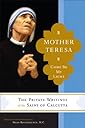
Mother Teresa: Come Be My Light: The Private Writings of the Saint of Calcutta
Product ID: 118007376
This historic work reveals the inner spiritual life of one of the most beloved and important religious figures in history--Mother Teresa. During her lifelong service to the poorest of the poor, Mother Teresa became an icon of compassion to people of all religions; her extraordinary contributions to the care of the sick, the dying, and thousands of others nobody else was prepared to look after has been recognized and acclaimed throughout the world. Little is known, however, about her own spiritual heights or her struggles. This collection of her writing and reflections, almost all of which have never been made public before, sheds light on Mother Teresa's interior life in a way that reveals the depth and intensity of her holiness for the first time. Compiled and presented by Fr. Brian Kolodiejchuk, M.C., who knew Mother Teresa for twenty years and is the postulator for her cause for sainthood and director of the Mother Teresa Center, Mother Teresa brings together letters she wrote to her spiritual advisors over decades. A moving chronicle of her spiritual journey—including moments, indeed years, of utter desolation—these letters reveal the secrets she shared only with her closest confidants. She emerges as a classic mystic whose inner life burned with the fire of charity and whose heart was tested and purified by an intense trial of faith, a true dark night of the soul. "If I ever become a Saint-- I will surely be one of "darkness." I will continually be absent from Heaven-- to light the light of those in darkness on earth." --Mother Teresa Review: Connected to Christ through Faith and Works and Prayer - This is the story of a holy woman's journey with Christ, her growth in relationship and spirit told through her letters, with narration by a man of the Roman Catholic cloth. A stunning and revealing story, "Mother Teresa, Come Be My Light: The Private Writings of the `Saint of Calcutta'" edited and with commentary by Brian Kolodiejchuk, M.C., Ph.D. tells us of Christ's thirst, his loneliness for human souls, and the same expression returned in love through need by reciprocity--a mirror of living the Cross in letters and in service to others by a Roman Catholic Nun. There is lots of light in this book. In the chapter, "God Shows his Nothingness to Show his Greatness," Mother Teresa's spiritual experience is described: "Her long experience of darkness, her sense of rejection, her loneliness, the terrible and unsatisfied longing for God, each sacrifice and pain had become for her as one more `drop of oil' that she readily offered to God, to keep the lamp--the life of Jesus within her--burning, radiating His love to others and so dispelling the darkness." A sometimes apophatic experience of Christ, after years of much darkness and unknowing, Mother Teresa came to recognize and live the Christ experience as a knowing by his feeling of God's abandonment on the Cross, and his tears and need, his suffering and darkness at his time of the Cross and during his life. Mother Teresa found a union of understanding with Christ--through Christ a holiness of spirit and a gift to mankind. This is a work of religious history, through letters of intimacy; the work is a service of literary religious feeling and belief. The book reveals her service to the poorest of the poor. Her obedience to the Church and her obedience in faith is literally a marvel of discipline and rigor. It is by the strength of God that she was given such Obedience, and to God she devoted her life in service. So this book demonstrates in words and letters. A marvelous revelation of personal letter writing, the confession of an unknowing-knowing journey and suffering which she recognized as sharing in the suffering of Christ. Observers have claimed that her journey was a failure of faith, and a darkness of spirit that made her despair. True, she experiences despair and writes of her pain, but evidenced by her continued work and prayer, she maintained faith and journey with Christ in the most holy of ways. So I postulate based on her letters and the narrative written by Father Kolodiejchuk, a member of the Missionaries who works towards the Cause of Beatification and Canonization of Mother Teresa of Calcutta. A famous Nun of her time in the 20th Century, Mother Teresa's book of letters and her life as a light of Christ, will have a place in religious literature for decades to come. This book is a most interesting and fulfilling book for people interested in the religious life, and living with Christ through their own relationship and religious life as Christians. For Mother Theresa and her religious worked tirelessly for the poorest of the poor, in a special way of religious devotion. Many of these poor lived and live on the streets of Calcutta, in a hole, or a dirt floor shack. The religious Order Mother Teresa founded, the Missionaries of Charity, provide their service in many cities in India and other parts of the world including the United States. Many or much of the poor helped by Missionaries of Charity (mostly Nuns, but a few Brothers and some Priests), are as poor or many significantly poorer than those poor described in the sociology book "Poor People," by William T. Vollmann. From the Rules of her Order, started and led during her lifetime mostly as Mother Superior: "The General End of the Missionaries of Charity is to satiate the thirst of Jesus Christ on the Cross for the love and souls by the Sisters [through] absolute poverty, angelic charity, cheerful obedience." To do this they carry "...Christ into the homes and streets of the slums, [among] the sick, dying, the beggars and the little street children..." People all over the world admired this woman who was born in Skopje, Macedonia, in 1910 and died 1997. The Roman Catholic Church beatified her in 2003. The dust cover quotes her famously: "If I ever become a Saint--I will surely be one of darkness. I will continually be absent from Heaven--to light the light of those in darkness on earth." A chilling note, a note enough to give one a chill, Mother Teresa lived a good life and her Order remains active today. They bring light to darkness. This calling is a noble means of doing God's work, and in the religious life serving and connecting to Christ. The book tells of this work and its development, both the order itself as a developing group of religious, but mainly of Mother Teresa's relationship and struggles of spiritual and religious significance in her saintly life and holy connection to Jesus Christ: Letters that cast a light on Christ and his relationship with mankind. --Peter Menkin, 4th week of Advent (Sunday) 2007 Review: Harrowing, Revealing, Not Easily Approached - I was ambivalent about the release of this "memoir" for a very long time, despite being a considerable admirer/devotee of the good Mother and her Sisters in the Missionaries of Charity -- souls who continue to "live" the Gospel up at the sharp end. One of the graces about reading of Teresa's life is that I do not ever come away feeling self-conscious about my own comparatively abysmal spiritual deficiencies. Rather, I always feel inspired ... As if I have indeed encountered heroic Christian virtue/witness. We need all we can get of that. Bitter cynics will always be repelled by abject holiness, so those sybaritic louts who have sought to discredit Mother Teresa always get a mere eye-roll from me: please, folks -- if you're going to focus your energies on exposing religious hucksters, have a gander at any number of televangelists currently snug in their mansions and/or Lear jets. Mother Teresa's life and work have already been scrutinized to the nth degree by the Vatican's own canonical "devil's advocates" and the woman is virtually beyond reproach, so just deal with it already. I guess that sort of invasive spotlight on Mother's private life was also the big reason I did not want to read this book for the longest time. Teresa explicitly and frequently asked her superiors and friends to burn her private letters (not because she had anything to hide, but because she was the embodiment of humility and wanted no attention for herself. "I want Jesus to be credited for everything, always," she repeats throughout her private correspondences. And she meant it.) I did not agree with the overarching claim of the Catholic Church that view her life as some sort of "saintly property" -- and I do not respect her superiors/friends for disobeying/betraying her wishes, even though I know they "meant well" within a Roman Catholic canonical purview and that they loved her. I do not have a problem with the very edifying and beautiful Catholic veneration of particularly heroic Christians ("saints"), but I recoil from some of the more ghoulish and untoward excesses associated with said devotion. I rue the day when Mother Teresa is fully canonized and The Church will literally plunder her tomb for pieces of bone to be dispersed around the world and poke and prod her remains ... To say nothing of the cheap made-in-China dashboard statues of the good mother that will crop-up by the millions. The cult of the saints has not, by any means, always been one of the more tasteful aspects of Roman Catholic orthopraxis. The witness of Mother Teresa's extraordinary love for Christ made manifest in her care for the poor, her approved writings, and the happy surety of her heavenly intercession ought to be more than enough. But we now have access to the private letters she wanted destroyed, so (in graceful fashion) we are indeed better for their preservation, not worse. What do her private letters reveal? They reveal much that one would expect from a woman who clearly lived the life of a true Christian mystic along the lines of Paul of Tarsus, John of the Cross, Teresa of Avila, etc. She experienced profound episodes of spiritual aridity and immolation as she went about her prayerful way, but these episodes (like those experienced by St. Paul and others ... even millions of "everyday" Christians) only drew her more deeply to her Light, which was always and exclusively Christ. In many ways, one can see the miracle of this "dark dance with the Lord" -- her vocation was not based upon being cloistered and immersed in lonely contemplation. She could have lived that life, mystic that she was, and perhaps would have produced writings of astonishing spiritual complexity. Her personal love of Christ was so profound that such a contemplative life may even have been her natural "tendency" --she was shy and unwilling to attract attention to herself in any way. If had been swept off her feet in daily mystical raptures, the Missionaries of Charity would never have come into existence. It is extraordinary to read these letters and see the ways in which God clearly challenged her faith, and tested her soul for the good of the vocation to which she had been summoned, and it was a backbreaking one. The ineffable beauty of it all, of course, is that Mother Teresa put her belief solidly in Christ even when he seemed light-years away to her, even when the tragedy of the human condition could have easily overwhelmed her circumstances. When God seemed to hide his face from her, she sought him out all the more passionately and relentlessly. And she held fast to her conviction that the friends of Christ should always, always be cheerful. She suffered disconsolate moments, but did not waver. THAT is faith, and her story (heroic virtue or no heroic virtue) is the story of every Christian believer. That is another theme Teresa touched-upon constantly in her letters; all Christians are called to be saints, wherever they are, in big ways ir small ways. It's all about faith. I would recommend reading Paul's letters to the Corinthians before reading this book, as a spiritual preparation, and certainly the Gospel accounts of Christ's desert sojourn and his anguish in Gethsemane, etc. Spiritual tests are part of the Christian path, and Teresa was not exempt. Thank heaven. Her letters do not in any way contain accounts only of her spiritual "desert" times. There were of course many oasis moments for the reader to now behold, and the entire collection certainly sheds a frankly thrilling light upon the spiritual profundity empowering the ministry of a tiny woman who lived only to love Christ and to express that love without reservation by seeing him in "the least of" his brothers and sisters.

| Best Sellers Rank | #113,413 in Kindle Store ( See Top 100 in Kindle Store ) #26 in Roman Catholicism (Kindle Store) #32 in Miracles & Spirituality #54 in Health & Spirituality |
P**N
Connected to Christ through Faith and Works and Prayer
This is the story of a holy woman's journey with Christ, her growth in relationship and spirit told through her letters, with narration by a man of the Roman Catholic cloth. A stunning and revealing story, "Mother Teresa, Come Be My Light: The Private Writings of the `Saint of Calcutta'" edited and with commentary by Brian Kolodiejchuk, M.C., Ph.D. tells us of Christ's thirst, his loneliness for human souls, and the same expression returned in love through need by reciprocity--a mirror of living the Cross in letters and in service to others by a Roman Catholic Nun. There is lots of light in this book. In the chapter, "God Shows his Nothingness to Show his Greatness," Mother Teresa's spiritual experience is described: "Her long experience of darkness, her sense of rejection, her loneliness, the terrible and unsatisfied longing for God, each sacrifice and pain had become for her as one more `drop of oil' that she readily offered to God, to keep the lamp--the life of Jesus within her--burning, radiating His love to others and so dispelling the darkness." A sometimes apophatic experience of Christ, after years of much darkness and unknowing, Mother Teresa came to recognize and live the Christ experience as a knowing by his feeling of God's abandonment on the Cross, and his tears and need, his suffering and darkness at his time of the Cross and during his life. Mother Teresa found a union of understanding with Christ--through Christ a holiness of spirit and a gift to mankind. This is a work of religious history, through letters of intimacy; the work is a service of literary religious feeling and belief. The book reveals her service to the poorest of the poor. Her obedience to the Church and her obedience in faith is literally a marvel of discipline and rigor. It is by the strength of God that she was given such Obedience, and to God she devoted her life in service. So this book demonstrates in words and letters. A marvelous revelation of personal letter writing, the confession of an unknowing-knowing journey and suffering which she recognized as sharing in the suffering of Christ. Observers have claimed that her journey was a failure of faith, and a darkness of spirit that made her despair. True, she experiences despair and writes of her pain, but evidenced by her continued work and prayer, she maintained faith and journey with Christ in the most holy of ways. So I postulate based on her letters and the narrative written by Father Kolodiejchuk, a member of the Missionaries who works towards the Cause of Beatification and Canonization of Mother Teresa of Calcutta. A famous Nun of her time in the 20th Century, Mother Teresa's book of letters and her life as a light of Christ, will have a place in religious literature for decades to come. This book is a most interesting and fulfilling book for people interested in the religious life, and living with Christ through their own relationship and religious life as Christians. For Mother Theresa and her religious worked tirelessly for the poorest of the poor, in a special way of religious devotion. Many of these poor lived and live on the streets of Calcutta, in a hole, or a dirt floor shack. The religious Order Mother Teresa founded, the Missionaries of Charity, provide their service in many cities in India and other parts of the world including the United States. Many or much of the poor helped by Missionaries of Charity (mostly Nuns, but a few Brothers and some Priests), are as poor or many significantly poorer than those poor described in the sociology book "Poor People," by William T. Vollmann. From the Rules of her Order, started and led during her lifetime mostly as Mother Superior: "The General End of the Missionaries of Charity is to satiate the thirst of Jesus Christ on the Cross for the love and souls by the Sisters [through] absolute poverty, angelic charity, cheerful obedience." To do this they carry "...Christ into the homes and streets of the slums, [among] the sick, dying, the beggars and the little street children..." People all over the world admired this woman who was born in Skopje, Macedonia, in 1910 and died 1997. The Roman Catholic Church beatified her in 2003. The dust cover quotes her famously: "If I ever become a Saint--I will surely be one of darkness. I will continually be absent from Heaven--to light the light of those in darkness on earth." A chilling note, a note enough to give one a chill, Mother Teresa lived a good life and her Order remains active today. They bring light to darkness. This calling is a noble means of doing God's work, and in the religious life serving and connecting to Christ. The book tells of this work and its development, both the order itself as a developing group of religious, but mainly of Mother Teresa's relationship and struggles of spiritual and religious significance in her saintly life and holy connection to Jesus Christ: Letters that cast a light on Christ and his relationship with mankind. --Peter Menkin, 4th week of Advent (Sunday) 2007
J**R
Harrowing, Revealing, Not Easily Approached
I was ambivalent about the release of this "memoir" for a very long time, despite being a considerable admirer/devotee of the good Mother and her Sisters in the Missionaries of Charity -- souls who continue to "live" the Gospel up at the sharp end. One of the graces about reading of Teresa's life is that I do not ever come away feeling self-conscious about my own comparatively abysmal spiritual deficiencies. Rather, I always feel inspired ... As if I have indeed encountered heroic Christian virtue/witness. We need all we can get of that. Bitter cynics will always be repelled by abject holiness, so those sybaritic louts who have sought to discredit Mother Teresa always get a mere eye-roll from me: please, folks -- if you're going to focus your energies on exposing religious hucksters, have a gander at any number of televangelists currently snug in their mansions and/or Lear jets. Mother Teresa's life and work have already been scrutinized to the nth degree by the Vatican's own canonical "devil's advocates" and the woman is virtually beyond reproach, so just deal with it already. I guess that sort of invasive spotlight on Mother's private life was also the big reason I did not want to read this book for the longest time. Teresa explicitly and frequently asked her superiors and friends to burn her private letters (not because she had anything to hide, but because she was the embodiment of humility and wanted no attention for herself. "I want Jesus to be credited for everything, always," she repeats throughout her private correspondences. And she meant it.) I did not agree with the overarching claim of the Catholic Church that view her life as some sort of "saintly property" -- and I do not respect her superiors/friends for disobeying/betraying her wishes, even though I know they "meant well" within a Roman Catholic canonical purview and that they loved her. I do not have a problem with the very edifying and beautiful Catholic veneration of particularly heroic Christians ("saints"), but I recoil from some of the more ghoulish and untoward excesses associated with said devotion. I rue the day when Mother Teresa is fully canonized and The Church will literally plunder her tomb for pieces of bone to be dispersed around the world and poke and prod her remains ... To say nothing of the cheap made-in-China dashboard statues of the good mother that will crop-up by the millions. The cult of the saints has not, by any means, always been one of the more tasteful aspects of Roman Catholic orthopraxis. The witness of Mother Teresa's extraordinary love for Christ made manifest in her care for the poor, her approved writings, and the happy surety of her heavenly intercession ought to be more than enough. But we now have access to the private letters she wanted destroyed, so (in graceful fashion) we are indeed better for their preservation, not worse. What do her private letters reveal? They reveal much that one would expect from a woman who clearly lived the life of a true Christian mystic along the lines of Paul of Tarsus, John of the Cross, Teresa of Avila, etc. She experienced profound episodes of spiritual aridity and immolation as she went about her prayerful way, but these episodes (like those experienced by St. Paul and others ... even millions of "everyday" Christians) only drew her more deeply to her Light, which was always and exclusively Christ. In many ways, one can see the miracle of this "dark dance with the Lord" -- her vocation was not based upon being cloistered and immersed in lonely contemplation. She could have lived that life, mystic that she was, and perhaps would have produced writings of astonishing spiritual complexity. Her personal love of Christ was so profound that such a contemplative life may even have been her natural "tendency" --she was shy and unwilling to attract attention to herself in any way. If had been swept off her feet in daily mystical raptures, the Missionaries of Charity would never have come into existence. It is extraordinary to read these letters and see the ways in which God clearly challenged her faith, and tested her soul for the good of the vocation to which she had been summoned, and it was a backbreaking one. The ineffable beauty of it all, of course, is that Mother Teresa put her belief solidly in Christ even when he seemed light-years away to her, even when the tragedy of the human condition could have easily overwhelmed her circumstances. When God seemed to hide his face from her, she sought him out all the more passionately and relentlessly. And she held fast to her conviction that the friends of Christ should always, always be cheerful. She suffered disconsolate moments, but did not waver. THAT is faith, and her story (heroic virtue or no heroic virtue) is the story of every Christian believer. That is another theme Teresa touched-upon constantly in her letters; all Christians are called to be saints, wherever they are, in big ways ir small ways. It's all about faith. I would recommend reading Paul's letters to the Corinthians before reading this book, as a spiritual preparation, and certainly the Gospel accounts of Christ's desert sojourn and his anguish in Gethsemane, etc. Spiritual tests are part of the Christian path, and Teresa was not exempt. Thank heaven. Her letters do not in any way contain accounts only of her spiritual "desert" times. There were of course many oasis moments for the reader to now behold, and the entire collection certainly sheds a frankly thrilling light upon the spiritual profundity empowering the ministry of a tiny woman who lived only to love Christ and to express that love without reservation by seeing him in "the least of" his brothers and sisters.
D**Y
A View Inside
This book was picked up on a whim, it was on sale and I, frankly, had never read a book on Mother Teresa. The movie "Madre Teresa" is dynamic and full of hope, but it looked more at the movement than the "pencil in the hand of God" as she called herself. After about one chapter I was hooked. This is a book of sharp contrasts--Mother Teresa knows God is there, she sees His hand, she knows His love, but He seems so silent to her. It was hard to read at times as we walked with her through the "Dark Soul of the Night" (taken from her own letters and the reading by St John of the Cross). You almost wanted to reach into the book and tell her "God is there!" but then you are awakened to the very fact that many of us live the same walk with God. God's silence is so loud, yet we know He is there, even in the darkest corners of our life. The amazing parts were her "spunk." While she took every answer as a "Yes" or "No" from God, she was not one to let others decide the answer without her sending volumes of letters explaining her rationale for every project, every idea...she almost pestered her superiors, but pester is not the right word. She exhibited passion--a trait not as evident today. The one thing that I walked away with comes very late in the book and it will really change your life. It deals with a passage she hears read during a sermon or presentation from Psalm 68.21 (or Psalm 69.20 in the Protestant version). Read it in the NRSV...it is a powerful essay in one verse on the state of (or lack of) caring in our world. Her answer to all the sisters (and to the reader) is "Be The One." Be the one for the hurting, be the one who stands in the gap (Ezekiel), be the one for the poor man (Eccl.) and more. As Mother Teresa reaches the end of her life the book quietly winds down to one simple story at the end. It takes place in a simple village and a simple home (I won't spoil it) but it sums up the entire book and it gives the reader a challenge for a changed life to be lived among the poorest of the poor. Every page is rich in detail. It is amazing so many people ignored her admonition to burn her letters and they kept all the correspondence...which now gives us a legacy. As a non-Catholic myself, I had heard so much rumor of her faith being more Hindu than Christian, more secular than sacred. This book sets the story straight as it takes the very words from the very letters she wrote and she received. An amazing book to have our kids read, too.
J**Y
Greatest Saint of Our Times
The inner flap of the dust jacket of this book begins "This historic work reveals the inner spiritual life of one of the most beloved and important religious figures in history. "This book leaves no doubt as to the accuracy of this assessment of Blessed Mother Teresa of Calcutta (1910-1997), a Loreto Sister who left her community to change the world by founding the Missionaries of Charity (M.C.), having been called to this vocation by Jesus ("the Voice") whom she heard speak to her on a train trip in India on Sept. 10, 1946, a date forever known & celebrated as the date of "The Call" by the M.C. Mother Teresa had wanted all of her correspondence destroyed, but thanks to Providential intervention, most of it survived & we are eternally blessed to know what she had to tell us in those letters. In 1951, when the M.C. finally began their work of caring for the poorest of the poor in the streets & "holes" of Calcutta, Mother was filled with light & consolation. Soon thereafter & for the rest of her life, she lived a life of continual interior suffering & feelings of complete abandonment by God, the silent One to Whom she had vowed never to refuse Him anything. Consider the anguish from a 1959 letter to one of her priest spiritual advisors. "Lord, my God, who am I that You should forsake me? The child of your love - and now become as the most hated one - the one You have thrown away as unwanted - unloved. I call, I cling, I want - and there is no One to answer - no One on Whom I can cling - no, No One. - Alone...The loneliness of the heart that wants love is unbearable. "What are You doing My God to one so small? When You asked to imprint Your Passion on my heart - is this the answer?...here I am Lord, with joy I accept all to the end of life -- and I will smile at Your Hidden Face - always." Be prepared to weep as I did when you read such lines. Her pain of feeling forsaken by God is not unlike that of most of the saints, only hers was rare in its extremeness. As the decades passed, she learned to accept her lonely inner life, & forgetful of self, surrender herself totally to God, the one Whom she forever sought & remained madly in love with, & understood that God was madly in love with her. She became known worldwide, winning the Nobel Peace Prize, & traveling the globe, establishing what is now a M.C. order of 4,500 nuns present in 133 countries. She also founded a M.C. order of priests. Her greatest legacy was to show by her life that it is not how much we do or how big the things are that we do, but how much love we put into caring for anyone we encounter in need, rich or poor. One can only stand in utter awe of this diminutive Saint of God who followed "the Call" heroically. "Let God use you without consulting you," she would often say. Her Gospel-on-five-fingers sums it up: "You did it to me." (Matthew 25:40).
B**T
The confusion between suffering and love
SUMMARY This book is a collection of Mother Teresa's private letters to her superiors, friends and confessors over a 60 year period. The letters are a surprise because they reveal Mother Teresa's interior feelings of darkness, emotional pain and faithlessness which she hid from everyone except her confessors. "The place of God in my soul is blank--There is no God in me...He does not want me---He is not there...Heaven--souls--why these are just words--which mean nothing to me." Mother Teresa's inner suffering began shortly after she formed the Missionaries of Charity and continued relentlessly until her death in 1997. The letters also document the unexpected difficulties that Mother Teresa encountered trying to persuade the Catholic Church to allow the formation of her new missionary group. Mother Teresa began writing and lobbying for support shortly after September 10, 1946, the day she heard the Voice of Jesus compelling her to do this work. Yet, church officials did not want to hear about or make decisions based on Mother Teresa's reports of visions and voices. They coached her to stop her thoughts and to be a perfect nun. Believing that obedience was essential, Mother Teresa did her best to comply, but could not. "Day after day, hour after hour, He asks the same question: `Wilt thou refuse to do this for Me?'" She finally received permission to form the Missionaries of Charity in 1948. Mother Teresa begged the recipients of her letters to destroy them, but her wishes were not honored. Come Be My Light enables us to see Mother Teresa unplugged. MESSAGE OF LOVE/HARMLESSNESS: Score 5 Why did such a devout, loving being suffer so much pain for so long? That's the mystery of Mother Teresa's life. One of her confessors, Father Neuner, explains it this way: "It was simply the dark night of which all masters of spiritual life know -- though I have never found it so deeply, and for so many years as in her. There is no human remedy against it...Thus the only response to this trial is the total surrender to God and the acceptance of the darkness in union with Jesus." If you believe that we are powerful beings and that we get exactly what we ask for, then the simplest answer is that Mother Teresa asked for or allowed her suffering, most likely because she believed in the Christian concept of "carrying the cross" or living Christ's passion (which means sharing in the suffering of Jesus). However, the belief that we must suffer to atone for badness, or to commune with God and/or to win points with God is not exclusive to Christianity. Modern-day suicide bombers, for example, willingly destroy self and others to suffer and kill for God and to win His approval. In fact, the idea that God asks for sacrifice and suffering is the oldest and most persistent belief of all time and came before the emergence of organized religions. Through Mother Teresa we see that suffering does not uplift. "If there is hell -- this must be one." We see that suffering does not bring us closer to God. And we see that suffering made Mother doubt the efficacy of every ritual and prayer she ever performed and even made her question the reality of heaven. Perhaps Mother Teresa was learning the lesson we all must learn: suffering is nothing. It is empty. It has no meaning. It has no value. We cannot use it for a bargaining chit. INSPIRATION: Score 5 It is not possible to read Mother Teresa's words without feeling deeply compelled to BE the light of the world. "It is we who have to be His love, His compassion in the world of today." RELEVANCE/PRACTICALITY: Score 5 In an age where the slightest emotional discomfort is treated with drugs, drinks and support groups, Mother Teresa's gives a refreshing and new example of how to live. Mother was not undone or thrown off course by her constant bad feelings. She did not call attention to herself through dramatic outbursts or whining. She did not make excuses for herself or ask for exemptions from duties. This is because Mother Teresa had a strategic purpose in life: to be a pencil in God's hand. Her inner strength and power came from always knowing exactly what she wanted. "Thank God we don't serve God with our feelings, otherwise I don't know where I would be." ORGANIZATION/READABILITY: Score 2.5 Come Be My Light begins in 1928 when Mother Teresa joins the Loreto Sisters at age 18 and continues chronologically to her death. There are many repetitions in Mother's letters. On the one hand, this underscores "the progression, intensity and duration of her darkness." And on the other hand, well, there's a lot of rehashing of the same themes. There's also the subtle sales pitch for sainthood presented by the narrator/editor Brian Kolodiejchuk. Some people may find the book difficult to stick with or hard to read, but it is definitely worth the effort. STAR RATING: 3.8 Love is the only thing that really matters, The Spiritual Reviewer
B**N
She paid the price for responding to the call of Jesus
While most people are accustomed to speak of Mother Teresa in a glowing sense, as a very holy woman, a woman of great faith, someone of outstanding virtue, this book is a revealing look at her inner world. The Spiritual Life of Mother Teresa was not filled with the ecstasy that we hear with many other saints. No, hers was a Spiritual Life that over-abounded in desolation. The sense of God's presence in her life all but vanished for most of the time that the world knew of her as Mother Teresa. Since we are created as individuals, God does not treat us all the same. As disciples of Jesus, he knows how to treat us as individuals, meaning so as to bring about in us the most good and also to give the Father the most glory. How this works itself out in individual lives can produce remarkable differences in persons. Lest we think that some get "off the hook" we must remember: for all of us there lies before us the decree of Jesus who summoned the crowd with his disciples and said to them, "Whoever wishes to come after me must deny himself, take up his cross, and follow me" (Mk 8:34). Saint Paul declares that in become his followers, from baptism on, "we have died" (see Rom 6:3-8)! If this is reality, then our growth in the Spiritual Life must be such that we must become what we are. We must become dead. Archbishop Fénelon, in his book Let Go , tells us that all that really needs to die is "the living." In reality, we look for all sorts of solutions, which are not solutions at all. They only prolong the agony. Likewise, he says, "You asked for a remedy, that your problems might be cured. You do not need to be cured. You need to be slain. Quit looking for a remedy and let death come. This is the only way to deal with self." The author of the book The Cost of Discipleship expresses this well. To open it and read the Forward is enough to scare anyone. It begins, "'WHEN CHRIST calls a man,'" says Dietrich Bonhoeffer, "'he bids him come and die.' There are different kinds of dying, it is true; but the essence of discipleship is contained in those words." And so we see in the life of Mother Teresa the shadow of the Cross. Following Christ brought the gospel to life for her. As Bonhoeffer said, "When a man really gives up trying to make something out of himself--a saint, or a converted sinner, ...a righteous or unrighteous man... when in the fullness of tasks, questions, success or ill-hap, experiences and perplexities, a man throws himself into the arms of God... then he wakes with Christ in Gethsemane. That is faith...." We see here that Mother Teresa paid the price for responding to the call of Jesus. She's happy now, though! More than we can imagine!
T**R
A Blessing and a Betrayal
I have mixed feelings about this book. On the one hand it was a real blessing for me. I went through (and somewhat I am still going through) one of the darkest periods of my life. During some of the most darkest times, I have cried out to God in tears: “Oh God, I need You. I need to hear from you. Something. Something to know you are there. A whisper, or just a touch. Just to know that you are there.” Many times I cried out and prayed this. And I got NOTHING. Not a touch, not a word. Nothing. And I got mad at God, to the point of asking: “If God is not there for you when you really need Him, what good is He?” How’s that for a blasphemous question? Honestly, my faith was shaken, I’m sorry to admit. And that is why this book has been such a blessing. It has given me understanding and answers to some of my questioning. It has helped me to grow in my faith in God again. A God that is loving. A God that is there for me, even when He seems to be ignoring me, and turning His back on me. If you are in a place that is making you feel this way, then I recommend this book for you. It has been a blessing to me, and I pray that it will bless you too. Now on the other hand, this book was a betrayal. Mother Theresa on many occasions made it explicitly clear that she did not want these letters to be published. She wanted them destroyed upon her death. They were entrusted to her spiritual leaders/advisors, and they betrayed this trust. They published her letters, which are in this book. I know from reading this book that because of her humility, and because of her submission to those in authority over her, that she probably would not see it this way. But because I am not where Mother Teresa is spiritually, that is how I see it. Which is what makes me conflicted about this book. While I am glad it was published after all, I can’t but help feel that her trust was betrayed. Maybe if, and when I get to where Mother Teresa was spiritually, I’ll feel differently. I hope this helps you.
J**N
Dear heart.
Dear Mother, how glad I am to read your letters, to feel how much you lived and loved. What a blessing.
R**M
Reading the letters of Mother Teresa brings the soul close to the Lord
I highly recommend this book if you want to be closer to God, if you want to share the Love of God to others. Mother Teresa is such an example of how to total surrender to the Holy Spirit, this book allows us to contemplate the intimacy of Mother Teresa with Jesus and how she lived the darkness allowed by the Lord
J**M
Amazing and eye opening
I really love this book. It's even more special as it was never meant to be a book. It's the real writings/letters of Mother Teresa to her superiors. Personally it's been life changing for me to read her real words. What a woman! What a saint! I highly recommend this book.
S**X
AWESOME BOOK
VERY INSPIRING LITTLE BOOK. MOTHER THERESA WAS GREAT!! WORTH READING. HER HEART WAS IN HER WORK. SHE SAW JESUS IN EVERYONE SHE WORKED WITH!
H**M
mystique du 21è=e siècle
Testament de Mère Teresa, on y découvre une vie intense dans la nuit. Texte prophétique pour le 21ème siècle et pour ceux qui ne rêvent que de réalisation et d'épanouissement humain. Mère Teresa nous ouvre la voie pour un épanouissement humain dans une autre dimension
電**か
光と闇の人
本書が発表された頃、雑誌TIMEでは(他の方のレビューにもあるように)センセーショナルな特集記事を出しました。本書の裏表紙にも抜粋が記載されています。でも読後の私の感想としては信仰の危機どころか、こんなに固い信仰を持った人もいないんじゃないかと。 若い頃修道会に入るまでの話、ロレト修道会や教師時代の話、奉仕活動を始めるまで、始めたその後、そして晩年まで書かれています。 奉仕活動を思い立ってすぐストリートに出たのかと思っていましたが、上司やローマ教会の許可を得るまで結構時間がかかったし(マザーはカトリックの制度を大事に思っていたので手順をきちんと踏んだ)、マザー自身も実は躊躇や怖れがあったんですね。そのへんも興味深い。 死にゆく人の宗教に合わせてお葬式をしたという話が本書には出て来ないのですが、神父さんが書いた本であるせい? そこが入っているとまた興味深かったような気もするんですが。 神秘的な体験といい不思議な出来事といい、本当に昔の伝説になっているような聖人(例えばアビラのテレサなど)のようだと思いました。 昔の手紙を破棄してくださいというマザーの願いを退けた人々がいたからこそこの本が生まれたわけでして、秘密の暴露みたいな、なんだか複雑な気もしたんですが・・・・・神父さんたちがなぜ手紙を保管していたかというと、(もしかしたら修道会の規則の関係もあったのかもしれませんが)「マザーの辿った軌跡が後進のシスター達や教会の精神的助けになるはずだ」という判断があったようです。 別に「有名なマザーテレサの手紙だから」とかいう低俗な理由ではなかったのですね。(^^; また、列福や列聖のための調査にも大変役立っているそうです。 マザーを精神的に助けた、周囲の神父さん達の辛抱強い支えも感動的でした。特に長年に渡って協力し続けたというFather Van Exemは大変に度量の大きな方だったのではないかと。 自分はクリスチャンでないので的外れな感想を書いてるかもしれませんが、マザーテレサに興味がある人はお読みになってみると良いと思います。 私は正直言ってマザーの言ってることが良く分からない部分があったのですが(目の前の人をJesusと思ってお世話する)、少し分かった気がします。 あと1点、興味を惹かれたのは、今までアグネス・ゴンジャ・ボアジューと紹介されてきたマザーの本名が、本書ではGonxha Agnes Bojaxhiuという順番になっていること。修道会に入る前の少女時代、個人名はGonxhaを使っていたようです。 それとフルネーム?はシスター・メアリー・テレサで、最終請願を立ててからマザー・メアリー・テレサになったようです。
Trustpilot
2 months ago
2 weeks ago