
Desertcart purchases this item on your behalf and handles shipping, customs, and support to Slovakia.
🌿 Grow Smarter, Eat Richer: The Future of Gardening is Intelligent!
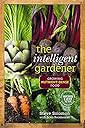
The Intelligent Gardener is a comprehensive guide that empowers serious gardeners to restore essential minerals to depleted soils using a scientific, data-driven approach. Featuring step-by-step instructions and customizable spreadsheets, it bridges the gap between soil chemistry and practical gardening to produce nutrient-dense fruits, vegetables, and grains. Highly rated and recognized in soil science and sustainable agriculture, this book challenges conventional and organic farming myths to help you grow healthier food and improve overall well-being.


| Best Sellers Rank | #189,456 in Books ( See Top 100 in Books ) #18 in Soil Gardening #21 in Soil Science (Books) #87 in Sustainable Agriculture (Books) |
| Customer Reviews | 4.7 out of 5 stars 512 Reviews |
M**S
you hate the idea of merging math and technical ideas with ...
This book might not be for you if: you already have a fertilizer, system, and/or philosophy that produces tons of vegetables and produce, you have 4 small raised beds that you occasionally grow stuff in, you hate the idea of merging math and technical ideas with the free spirit of gardening, you've already read tons material by Albrecht or Tiedjens, you just want to put some Dr. Earth fertilizer in a pot and water your plants, your soil is awesome! This book might be for you if: your soil is terrible, you can't grow anything despite watering and babying your plants, you just love consuming gardening information, you get ok results with your garden but there seems to be some bottleneck in performance. Personally I have annoying clay soil that is loaded with magnesium so my soil turns into cement when it dries. This book helped me remedy that problem along with providing an entire system for understanding the inner workings of soil and so far it hasn't done me wrong. Sure, I could have just read online that you need to add gypsum to clay soil but this book will help you figure out how much, for how long, and why bother in the first place. My soil is much better already and its only been one year since I started adding gypsum, next year things might be even better. Obviously there is a lot more to the book, so much more that it forces some people to leave 1 and 2 star reviews because it can sometimes be too complicated or overwhelming. I can't promise all the ideas in this book work but many have worked for me. Good luck!
S**R
Test and amend for healthy soil and crops
We live west of the Cascades and found Solomon's general gardening book for our region to be the best. After five years of gardening our new site I thought it would be appropriate to get some soil tests done to see how healthy our ground is for our plants. We grow much of our food and do it "organically". This new book by Steve Solomon was just what I needed. He specifically describes soil nutrients and basic chemistry and describes methods for using soil tests to create healthy soil for healthy (to eat) crops. This book is technical, but Solomon does a great job of explaining what dedicated gardeners should know about their soils. The reader can use his methods to determine how much of each amendment to add to soil without the need to understand his explanations of soil chemistry. I read straight through this book, and will have it on my bookshelf as a reference for making compost or preparing a garden bed for a new crop.
H**R
Excellent explanation and summary of Albrecht and Astera's methods
First of all, the subtitle is a bit misleading. You won't get information on many aspects of growing nutrient-dense food, like variety selection and time of harvest, out of this book. What The Intelligent Gardener does provide, though, is well worth the price. I've been nibbling around the edges of learning about soil testing for the last couple of years, but this book turned my understanding into a full (and nutrient-dense) meal. Solomon's work is based largely on Albrecht's studies of the optimal ratios of cations (calcium, magnesium, potassium, and sodium), with a lot of updates from the more modern work of Astera. Solomon breaks it all down into simple worksheets that anyone can fill out with a calculator able to multiply, add, and subtract. A second warning is due --- you'll need to put quite a bit of cash into Solomon's method if you have a large homestead. Solomon's math only works if you do a Mehlich 3 soil test, which is about $20 per sample; then, you'll probably be committing to adding several hundred dollars' worth of amendments (like gypsum) to get your soil back in balance. Even if you don't want to go the scientific route, though, this book is worth it for its explanation of the chemistry of soil. Highly recommended!
W**E
Gardening for health--we are what we eat
If you garden organically in the hope of improving your health, this book could provide a major missing link. For many years we had been advised to add compost and manure--if that did not work, just add more. In some areas where we lived, that seemed good enough. Now in retirement, with years of gardening experience but with depleted sandy soil, it seemed that nothing worked. A soil test from an area university revealed that our soil was deficient in most nutrients but too high in others. The advice was to add organic amendments. Period. After a quick initial reading of the book, I am optimistic that I will be able to balance my minerals and improve tilth in the process, by one of several options described. I should be able to calculate it myself after a particular soil test, without a degree in chemistry and higher math, or I can take an easier route and submit a sample to a lab, then get an online interpretation of what is needed--for a total of about $30. There is even a recipe for a "best guess" fertilizer, based on what most vegetables might need, for those who only have a few plants and can't afford to test. The most important point I have learned so far is that balancing the minerals in the soil can boost the micro-life, improve the holding capacity of moisture and nutrients and provide food for maximum nutritional value and taste. You can get recommendations for best local varieties and planting dates from a local extension service, but this book provides home gardeners with much information that was not readily available earlier.
C**M
Illuminating, in more ways than one
So, whenever I'm thinking of buying a book, I read the negative reviews first. They are much more revealing than the positive ones--frequently they are revealing not so much of the book's quality or content as they are of the assumptions readers bring. And so it seems to be with Solomon's books. I know this review is kind of long--the next paragraph plus the last one are my quickie summary review; if you want more specifics read the 3rd paragraph too. If I could give half-stars, I'd give this 3.5. The information is useful (albeit really dense in places...but we're talking about soil amendment recipes here, so, you know) but it's not entirely practical especially if you're low on capital at the outset. What specifically was useful? Solomon's basic argument is that plants contain nutrients derived from the soil, ergo if the soil is low in nutrients so are your vegetables. Plants are more than N, P, and K. They may look ok, you may even have good yields, but wit modern soils they are not as nutritious as they should be. Now this may not be an earth-shattering revelation (although many reviewers are surprisingly resistant to the concept...see below), but Solomon couples it with some suggestions on how to test your soil nutrient levels, how to improve them (this is where the big expense may come in, depending on your situation), and also challenges gardening orthodoxy that suggests that veggies will be nutritionally perfect as long as they're organic. The reason I deducted 1.5 stars is that after reading the book one may not be in a position to apply what they learned; which maybe is not the author's fault, but it could arguably have been addressed in the book...perhaps a chapter on "What to do if you can't access such-and-such or can't afford to shell out hundreds of dollars on amendments or can't wait three years to build your soil." Apparently gardening is a topic like health and diet in that everybody seems to think theirs is the Only Right Way to Do It. (This goes for Solomon too, although I think he's mostly right.) The #1 thing that strikes me about the negative reviews on Solomon is that people base their ideas on a very faulty understanding of the history of agriculture. I keep seeing the claim that people have been gardening for millennia and doing just fine without adding the amendments Solomon recommends (see reviews on Gardening When It Counts for more of the same), but this is simply not true. It is because of the bad methods used in the past that we are now reaping the whirlwind of nutrient-depleted soil. People have always done the best they could, but for most of history humans have not known about things like microscopic organisms in the soil or mycorrhizae, etc. "Put poop on it and keep digging until nothing grows there anymore" was basically the rule, until it was replaced in the 20th century by "put chemicals on it and keep digging until nothing grows there anymore." Analysis of skeletal remains shows that compared to ancient hunter-gatherers, agriculture resulted in people with rotten crooked teeth, stunted growth, crippling arthritis, and yes, major nutrient deficiencies. Remember rickets and scurvy? They still exist, you know. THIS HAS BEEN TRUE SINCE THE INCEPTION OF AGRICULTURE 10,000+ YEARS AGO AND IS STILL TRUE TODAY. Just because we're accustomed to it doesn't mean it's "natural" let alone optimal. Gardening and agriculture should never be compared to "nature" because they are examples of human INTERFERENCE with natural processes for our own ends. (This doesn't mean they are necessarily bad--but we need to be realistic.) Meanwhile, I also see many reviews saying Solomon's method is wrong because so-and-so does something different and their plants produce just fine--but unless they are doing a chemical analysis of the nutrient levels in their food, they can't compare their results to Solomon's, because he's not talking about yield, but nutritional content. It's comparing apples to oranges (har har). Conclusion: I'm a pretty inexperienced gardener. I haven't been able to apply all of Solomon's recommendations. But I accept his basic premises based on my very rudimentary knowledge of botany and my somewhat less rudimentary knowledge of history. if you accept the abundant scientific data, archaeological remains, and historical records that show our soils are badly eroded and depleted of nutrients; if you accept that plants get their nutrients from that soil and therefore soil chemistry is the limiting factor in how nutritious your plants can be; if you want your veggies to be as nutritious as possible; and if you are willing to read a book that is dense and has formulae and stuff, then you'll benefit from this one. If on the other hand you are already convinced your way of gardening is the Right Way, why are you even buying books on the subject? Just go do your thing.
H**L
"strictly organic" (meaning no "artificial" fertilizer altogether) is not the most intelligent way to garden
If I had to choose only one book as a resource to encourage a healthy soil full of micro-organisms that enable nutrient absorption by plants, this would be it. While the viewpoint of the authors leans strongly organic, they do not neglect the important contribution minerals make to the health of the soil, including the microbes. In fact, the authors make very clear that, contrary to Steve Solomon's previous books, "strictly organic" (meaning no "artificial" fertilizer altogether) is not the most intelligent way to garden. In this book, the authors make the important connection between a healthy soil and food grown on healthy soil to promote human health. (That's in contrast to growing nutrient-deficient food on nutrient-deficient soil and making up the lack with expensive nutritional supplements which may or may not be absorbed by the human body.) The authors provide guidance not only on how to promote a healthy soil through compost and compost tea, but also how to choose mineral soil amendments wisely. Some commercial fertilizers are just bad for the soil. Others should be used sparingly, if at all. And still others are intelligent choices to use on a regular basis. To me this section of the book was most valuable. (I mean, it made sense to me that soils need mineral additives if they are low on certain minerals, but some "organic" additives are just priced out of reach. The authors provide reasonable alternatives.) The science of the soil is brought alive by the engaging writing style including a lot of personal anecdotes. The only thing missing from this book is guidance for no-till gardening. A nice supplement to this book is * Teaming with Microbes: The Organic Gardener's Guide to the Soil Food Web, Revised Edition (Science for Gardeners) * which includes no-till gardening. (Unfortunately that book disappoints in not including remineralization of the soil.)
A**B
Customize Your Fertilizer
Near the end of his new book, The Intelligent Gardener, long-time garden guru Steve Solomon makes a significant point: "There is no place on this planet that remains free of toxic residues." He then suggests we would be far better off if we quit worrying so much about toxicity and, instead, concentrated on growing and eating nutrient dense food. I've been able to follow, and participate to a degree, in Mr. Solomon's metamorphosis from expert "organic" gardener to expert "nutrient dense" gardener. Solomon, in my opinion, has long been ahead of the pack as evidenced by his books "Growing Vegetables West of the Cascades" and "Gardening When It Counts." Through his early gardening experiences and from starting the Territorial Seed business he devised his Complete Organic Fertilizer (COF) which was an attempt to balance garden soil. COF is still a good way to go for people who don't wish to go any farther and the formula is easily found on the internet. (Also in The Intelligent Gardener pps. 84-85). In the last half dozen years through association with Michael Astera's Nutrient Dense Project and a re-study of the work of scientists like William Albrecht and Victor Tiedjens, Steve Solomon has become a convert to the concept of "nutrient dense." The concept of nutrient dense food is pretty simple. The gardener works over time to balance the soil with the proper mix of minerals. The result will be soil that encourages the life forms (worms, bacteria, etc.) that help with soil symbiosis and soil that provides the nutrients plants need to grow properly. Balanced soil will mean healthier plants, resistant to pests. Balanced soil will result in food that is nutrient dense, providing us with the vitamins and minerals we need to be healthy. Steve Solomon spends a lot of time debunking the concept promoted by J.I. Rodale that compost would solve all problems and that by continuing to heap organic matter on a garden a garden would only get better and better. This is not the case as Solomon explains in detail in a chapter titled: SAMOA (The S*** Method of Agriculture). More important is bringing calcium and magnesium into proper balance. When garden soil is properly balanced, according to Solomon, the garden will create its own nitrates. Balancing calcium, magnesium, potassium, sulphur, sodium and other minerals is the key to nutrient dense food. Getting this balance correct begins with a $20 soil test. Then, with a copy of The Intelligent Gardener in hand, one can use the worksheets provided to come up with a prescription for a custom fertilizer designed for one's own garden. Solomon's colleague and co-author, California gardener Erica Reinheimer has developed a website where you can find copies of the worksheets found in Steve's book. On this same website you will find a link to "OrganiCalc" which allows you, for a small fee, to compute your custom fertilizer prescription on line.
P**S
Good tool for understanding your soil
There's is a lot of information here to get you started on improving your garden's soil. It may be a bit too complex for the average reader, but for someone really wanting to dig into why their gardens produce good or more nutritious food then by all means read this, again and again. I enjoyed the fact the author had so much experience with different spils and knew the history of the organic farming practices. It's not just "add more compost". There's science in the decisions of how much and when to add amendments, so read carefully and heed his advice.
S**B
Must Read
Awesome books by an experienced gardener. I'm grateful to the author for sharing his rich experience in this book. Must Read for gardners, farmers.
R**G
would highly recommend
good read. solid piece for the libary
J**K
Excellent book
If you are interested in alternative methods for gardening then this is an excellent book. I really like Steve Solomons way of explaining his methodology and it is clear over his different texts he is not afraid to admit mistakes which i really admire in a writer.
L**A
interessante, apre molte riflessioni
libro molto interessante. Se non si hanno basi di conoscenza sul suolo e la sua chimica può risultare ostico, ma al massimo vorrà dire rileggere qualche paragrafo e riflettere su quello che si legge. Lo consiglio vivamente per coloro che hanno un orto, oppure per coloro che vivono di agricoltura su piccola/media scala
L**.
Seminal work on the importance of soil
A wonderful book that is full of important information. As the saying goes "garbage in, garbage out". With the demands of agra-business providing quantity but not always quality this is the missing link of success.
Trustpilot
2 months ago
1 week ago