Buy anything from 5,000+ international stores. One checkout price. No surprise fees. Join 2M+ shoppers on Desertcart.
Desertcart purchases this item on your behalf and handles shipping, customs, and support to Slovakia.
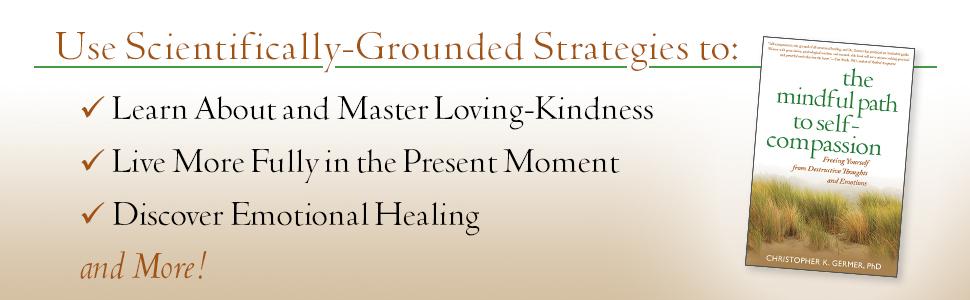
“Buck up.” “Stop feeling sorry for yourself.” “Don’t ruin everything.” When you are anxious, sad, angry, or lonely, do you hear this self-critical voice? What would happen if, instead of fighting difficult emotions, we accepted them? Over his decades of experience as a therapist and mindfulness meditation practitioner, Dr. Christopher Germer has learned a paradoxical lesson: We all want to avoid pain, but letting it in--and responding compassionately to our own imperfections, without judgment or self-blame--are essential steps on the path to healing. This wise and eloquent book illuminates the power of self-compassion and offers creative, scientifically grounded strategies for putting it into action. Free audio downloads of the meditation exercises are available at the author's website: www.chrisgermer.com. See also The Mindful Self-Compassion Workbook, by Kristin Neff and Christopher Germer, which provides step-by-step guidance for building mindful self-compassion skills and applying them to specific life challenges, and Teaching the Mindful Self-Compassion Program, by Christopher Germer and Kristin Neff (for professionals). Association for Behavioral and Cognitive Therapies (ABCT) Self-Help Book of Merit Review: So good that I keep buying it - because I always end up giving it away. - I won't go into a description of this book, because there are plenty of reviews that do that. What I will say is that as a psychology professor and psychotherapist, I have a few "go-to" books - books that I constantly have to replace because I end up giving them out to students or loaning them to clients. For couples, for example, it's Notarius & Markman's "We Can Work It Out." For people that need to work on mindfulness and learning to relate compassionately with themselves, this excellent book is it. I finally bought it on kindle as well just to have a copy that I could count on being able to get my hands on! Probably my favorite part about this book is the way that it uses mindfulness as a vehicle for the development of self-compassion, such that as readers move through the book, they develop both of these capacities. I can see it not appealing to some - it might be too psychological for those who prefer Thich Nhat Hahn, or not empirical enough for psychology professionals looking for empirically-validated treatment approaches supported by dozens of clinical trials...but for those who want a readable, sensitive path that is rooted in both spirituality and psychology, it is a tremendous resource. Highly recommended. Review: Sometimes life is tough - Germer outlines the mindfulness path to self-compassion ("freeing yourself from destructive thoughts and emotions"). He admits early in the book that "life is tough", and goes on to discuss acceptance of inevitable emotional pain and suffering, letting life be easy, moment-to-moment awareness, the importance of breathing and being aware of our breathing, caring for ourselves (easy to forget) and caring for others, and loving-kindness meditation. He suggests that when something bad happens to us, we tend to have three unfortunate reactions: self-criticism (put myself down), self-isolation (avoiding others), and self-absorption or focusing only on myself (been there to all three). The components of self-compassion on the other hand direct us in exactly the opposite directions. He also discusses personal vulnerabilities or "tender spots" that characterize many people and that can kick in when times are rough. Self-compassion is most likely to occur if we recognize and manage these vulnerabilities. Further, he outlines his conceptualization of "personality types" (based on anecdotal evidence rather than scientific research), and discusses ways that awareness of one's personality type can enhance self-compassion. The "personality types" include: Caregiver, Intellectual, Perfectionist, Individualist, Survivor, Workhorse, Butterfly, Outsider, Floater, Moralist, and Extravert and Introvert. As just one example, the "moralist" tends to get really upset when people behave badly, and they apply strict moral codes to themselves as well. To develop self-compassion and serenity, the moralist needs to lighten up. I was pretty impressed with German's book.


| Best Sellers Rank | #137,349 in Books ( See Top 100 in Books ) #806 in Meditation (Books) #976 in Happiness Self-Help #1,893 in Personal Transformation Self-Help |
| Customer Reviews | 4.6 out of 5 stars 1,082 Reviews |
R**S
So good that I keep buying it - because I always end up giving it away.
I won't go into a description of this book, because there are plenty of reviews that do that. What I will say is that as a psychology professor and psychotherapist, I have a few "go-to" books - books that I constantly have to replace because I end up giving them out to students or loaning them to clients. For couples, for example, it's Notarius & Markman's "We Can Work It Out." For people that need to work on mindfulness and learning to relate compassionately with themselves, this excellent book is it. I finally bought it on kindle as well just to have a copy that I could count on being able to get my hands on! Probably my favorite part about this book is the way that it uses mindfulness as a vehicle for the development of self-compassion, such that as readers move through the book, they develop both of these capacities. I can see it not appealing to some - it might be too psychological for those who prefer Thich Nhat Hahn, or not empirical enough for psychology professionals looking for empirically-validated treatment approaches supported by dozens of clinical trials...but for those who want a readable, sensitive path that is rooted in both spirituality and psychology, it is a tremendous resource. Highly recommended.
D**Y
Sometimes life is tough
Germer outlines the mindfulness path to self-compassion ("freeing yourself from destructive thoughts and emotions"). He admits early in the book that "life is tough", and goes on to discuss acceptance of inevitable emotional pain and suffering, letting life be easy, moment-to-moment awareness, the importance of breathing and being aware of our breathing, caring for ourselves (easy to forget) and caring for others, and loving-kindness meditation. He suggests that when something bad happens to us, we tend to have three unfortunate reactions: self-criticism (put myself down), self-isolation (avoiding others), and self-absorption or focusing only on myself (been there to all three). The components of self-compassion on the other hand direct us in exactly the opposite directions. He also discusses personal vulnerabilities or "tender spots" that characterize many people and that can kick in when times are rough. Self-compassion is most likely to occur if we recognize and manage these vulnerabilities. Further, he outlines his conceptualization of "personality types" (based on anecdotal evidence rather than scientific research), and discusses ways that awareness of one's personality type can enhance self-compassion. The "personality types" include: Caregiver, Intellectual, Perfectionist, Individualist, Survivor, Workhorse, Butterfly, Outsider, Floater, Moralist, and Extravert and Introvert. As just one example, the "moralist" tends to get really upset when people behave badly, and they apply strict moral codes to themselves as well. To develop self-compassion and serenity, the moralist needs to lighten up. I was pretty impressed with German's book.
A**K
Pleasurable read, includes psychological and neurological case studies
I had only recently heard of the concept of "self-compassion" through a blog I stumbled upon last year, and I'm trying to learn more about meditation to deal with chronic neuropathic pain and "self-compassion" as a tool to deal with depression and alcoholism. There are a few people in mind I have when reading this book, myself and others, and I was pleased how the book had a variety of case studies that included not only psychological case studies, but also other experiments and studies involving functional MRIs. The book gives actual "steps" on what you can do to practice mindfulness and self-compassion. It's not preachy, it's not sappy. It's a good how-to book with studies and stories to introduce you to "mindfulness" and self-compassion. I haven't finished reading it (I have a tendency to have several books "in progress" and bounce around according to my mood), but it's an easy read, not overly scientific nor full of medical terminology. It's for the "regular" person seeking practical ways to deal with their depression, pain, ptsd, alcoholism, grief, feelings of failure, or other deadening and self-defeating habits or battles. If you're trying to get through an exhausting mental battle, tired of not being able to function, keep "slipping back" or sick of being on medication, I recommend you read this book for practical ways to help heal yourself and be able to face daily challenges.
W**Y
Contains valuable recipes for living better.
(This review is based on a review I wrote and maintain on my home web site. The definitive version can be found at: [...]. I had reached the point in my personal and professional development where I noticed I was giving a lot of energy to "beating myself up" about stuff -- goals unmet, decisions regretted, actions not taken. It had gotten to the point where I realized a lot of my energy going to waste doing so. After having read, "Mindset" by Carol Dweck, (more on that book in another review) I was actively seeking new ways to set and meet higher expectations for myself in a constructive and supportive way. Christopher Germer's mindfulness and loving kindness meditations turned out to be the right recipes for me. The meditations enabled me to replace my old habits of bringing myself down or catastrophizing failure with new habits of giving myself kindness while I worked, and when I suffered setbacks either from outside circumstance or from my own limitations. Sometimes books about meditation are presented in a framework set by some particular religion. Germer's presentation is simple and factual. Germer uses Budhism, but he keeps religiosity out of it. He focuses on connecting one's self with our fellow human beings in a way that can be comfortably read by people of various faiths, those who are agnostic or those who consider themselves apart from a faith or religious tradition. Anyone who has come from a high pressure professional, personal or family history will find this book a valuable help.
D**R
Highest recommendation for this Book
Christopher Germer does a great job of writing this important book. He makes it simple enough to understand and try to practice without imposing judgment or expectation on the process. But urges one to keep trying it. This age old Buddhist concept of Loving/kindness I believe is our greatest hope for beginning with self and one person at a time practicing this until the worldwide karmic energy goes more positive than not. Then with this growing compassion conscientiousness first given to self, will enable all of us to give it out to others and pass it along worldwide. This is my greatest hope and faith in practicing Loving/Kindness Mindfull Compassion daily in every way possible in gestures and words makes all the difference. Much like the "Chaos" Theory that a butterfly flapping its wings affects the entire planet so does simple acts of loving/kindness (random acts of kindness) affect our karmic energy produced and taken in daily. Thank you Christopher Germer for shining a brilliant white light on this "enlightenment path" we can choose if we want to. I hope many many will and pass the word to others encouraging them to practice Loving/Kindness Compassion.... and so on and so and so on.........
C**Y
A Masterpiece on the Subject - Brilliant and Simple with Practice
This is by far the "closest thing" I have ever come to ("in my emotional life,") which I truly feel is answering my deepest questions for why I have not been able to overcome my "multi-faceted" anxieties. The approach is entirely new to me and comes from a completely different angle (quite the opposite actually) from my self-critical approach. The heart of this book for me personally has much to do with seeing and feeling (and allowing with softness and kind loving awareness) the suffering I "endured" as a young child. The solution Christopher write about has been for me (for us) to love that hurt little boy and to accept that there were causes -- which in my case had to do with my mother (God bless her) who was in many ways unavailable to me physically and emotionally -- and who was quite opinionated and critical of others. I now see my anger clearly in my body (when it is revisited) and how I am now more able to accept it with a self-loving and compassionate attitude. I highly recommend this book as a tool for many people who suffer from childhood trauma whether it be slight or deep.
H**L
Awesome. No other word for it.
This book has brought me so many answers as to how to cope with day to day living, they're beyond counting. When I get to the end, I start over and begin again. I'm reading it for the third time and the pages are wrinkly from all the highlighting. :-) You don't have to be religious to benefit, and you can also benefit if you ARE religious - because it's not about religion, it's about living centered and sane. I'm really getting in touch with the reality that when I'm centered and sane within, my external world gets more centered and sane. Maybe the world hasn't changed at all but I'm simply seeing it differently - that's OK with me, all I know is that I feel better. If there's something you're having trouble coping with, or if you just have this undercurrent of feeling a little nuts all the time, check this out. And keep a highlighter handy.
A**R
This book could help you change your life for the better
I haven't finished this book yet, but I am finding it very enlightening and very helpful. I became interested in mindfulness meditation after being diagnosed with moderate cognitive impairment. Mindfulness is supposed to build your cognitive reserves. I never could get into meditation, and in a way mindfulness is easier than the 70s types of meditation was for me. However, there is more to this than first meets the mind. This is the fourth book I've bought on mindfulness. This one stresses self-compassion -- something I never thought much about -- after all, why spoil yourself? . I'm beginning now to believe self-compassion is an important key. And it's not spoiling yourself -- that self-compassion reaches out into your world in so many positive ways. Also this is a book to read a little at a time so you can really absorb it.
L**N
Thank you
Well written and smart, I really enjoyed this. Helps tie together different therapy and spiritual traditions in a way that makes sense for my love of evidence-based, scientific, universally true stuff.
T**C
Life-changing
Really helps me to change the relationship with my emotions!
R**I
Sem compaixão não dá...
O livro é excelente. Simples, direto, e, principalmente, bem fundamentado. A leitura é prazerosa, e as práticas são valiosas. Recomendo.
H**M
Clear & concise.
This is an excellent manual on practicing mindfulness with self - compassion to provide relief from emotional suffering. I only wish that I had been aware of both mindfulness & self compassion a long time ago and that easily followed guides like Christopher Germer’s had come to my attention earlier. I have also recently found the teachings of Thay Thich Nhat Hanh both on You Tube & in books to be of immense help.I really hope that anyone suffering from any form of emotional imbalance find these resources to bring the relief that they are providing for me - as long as you are prepared to practice they work.
D**N
Self-care
I bought this book two years after I started a daily loving kindness meditation practice. It helped me refine the experience, tune into my feelings, and expand my capacity for self-compassion. For me, this has been a life-shifting experience. The meditation exercises are simple and easy to follow. The basic principles of practice can be integrated into any life, whether you meditate regularly or just want to find new strategies for taking care of yourself in the normal course of a day. I wonder how many of us might find more peace if we learned how to take as good care of ourselves as we do of others.
Trustpilot
1 month ago
1 week ago