

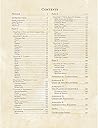


D&D 2014 Player's Handbook (Dungeons & Dragons Core Rulebook)
Product ID: 3320116
🎲Core rules for smooth gameplay
📚350+ spells & equipment
⚔️Step-by-step character creation
Desertcart purchases this item on your behalf and handles shipping, customs, and support to Slovakia.
🎲 Level up your story with the ultimate D&D Player’s Handbook!
The D&D 2014 Player's Handbook is the essential core rulebook for 5th edition Dungeons & Dragons, featuring over 350 spells and equipment, detailed character creation and leveling guides, and streamlined mechanics designed to enhance storytelling and gameplay for both new and veteran players.


| Best Sellers Rank | #84,353 in Books ( See Top 100 in Books ) #78 in Dungeons & Dragons Game #112 in Puzzle & Game Reference (Books) #8,140 in Reference (Books) |
| Customer Reviews | 4.9 out of 5 stars 54,582 Reviews |
G**5
Character as protagonist again!
I am going to try to not duplicate the information provided in most of the other 5 star reviews because I agree with the vast majority of them. I am an oldster, have played every edition of D&D there has been, most of them being released when I was of legal drinking age, and IMO this is the best edition ever. I have not been this excited about a version of D&D since 2nd edition was released. It appears to me to have taken all the best, from a game design point of view, and most popular aspects of earlier editions and put them in one book. Another way to think of it is that this edition is the most true to the game principles set forth in the earlier editions, especially AD&D 1st and 2nd editions, while at the same time carrying the more modern and popular principles from 3.5 and even the much maligned 4.0. I have to admit that I completely steered clear of the earlier play test versions, and was more than a little skeptical of the approach taken in getting feedback from so many play testers. I was worried that we would end up with a "too many cooks spoil the stew" situation; a game that was a convoluted mish-mash of everyone's "favorite rules" creating an incoherent and largely unplayable mess. I am pleasantly surprised to say that I was 100% wrong about the effectiveness of the play test process and the finished product. Contrary to the opinions in some of the lower star reviews, what I am holding in my hands and have read cover to cover is a very "tight," comprehensive, elegant, and fun set of rules. Who is likely to like these rules? I think both the veteran player who cut his or her teeth on any version before 3.0, and a brand new player will like them. The mechanics most definitely have a "return to the basics that made the game great in the 70's and 80's" feel, while at the same time keeping a more elegant version of the more modern mechanics, like feats, attacks of opportunity, etc., that people generally love from 3.0 and later editions. For the most part, all of these things have been streamlined and made more elegant in application, but they are there. I will end with my favorite thing about this book. A little background first to provide some context for my opinion. And let me say that this is just my opinion and some will disagree with me. For me, D&D started to trend downward in my enjoyment of the game at 2nd edition, and then it really did so at 3.0 and 3.5. For me, although I did not have the strong dislike for 4.0 that many people did, it just was not D&D to me anymore, I think primary because I had cut my teeth so much on 1st edition and the Basic and Expert sets in particular. D&D 5th edition has produced a steep positive trend for me for I think one general reason. When playing even 2nd edition, but very much so for 3.0, 3.5, and even 4.0, I found myself interacting with my character in the game more as a playing piece than a character in a story. Concerns about where to put skill points, and if a particular collection and order of choice for Feats began to dominate my thoughts and game choices. It was almost as if my character, and my decisions about playing the character, began to be dominated more by my interface with the rules in the book, rather than with my ideas about my character and my interaction with the game world. As my character advanced in level, I found that my focus on the book and what was written therein became more pronounced, not less as it did with earlier editions. As I reflected while playing these later editions, I found that I was not really playing a character, but instead was playing a set of rules. So far, the gift that 5th edition has given to me is a change in focus. My character has again become a protagonist in an adventure story, rather than a playing piece. I worry now more about the choices and decisions I make while interacting with the game world, and those choices making the character fun to play, rather than fretting over whether or not I have chosen the right Feats or if my modifier for a particular skill is as high as I want it to be. The way that races, and even classes, are discussed, the used of a character's background and the ideals, personality characteristics, etc. that are randomly determined from the background choice, and the lack of mathematical modifiers except for the familiar ability modifier, and the soon to be ubiquitous global proficiency modifier, instead using the elegant advantage/disadvantage mechanic all have worked to focus my attention back on my character as protagonist. For that I want to thank the play testers and writers of 5th edition. For me this has been the most nostalgic aspect of the rules, not so much the mechanics per se. Do I like all of the rules? Absolutely not. Frankly, I think that is impossible to attain and do not expect that from any set of rpg rules. To me that's not fair to expect that of the writers. And frankly, I am not even looking for that in a set of rules anymore. As I start down the path of the twilight of my gaming career given my age, I want a set of rules that provides enough structure that a DM can make consistent rulings on the fly that fit in with the general mechanics used in the game, and that foster my appreciation as a player of the development of my character in a game world where playing the game is smooth and produces memories of an interesting character who is the protagonist in an interesting story line. Most importantly, I want a set of rules that stays out of the way of that process, and helps me to focus on the game aspects that will produce those kinds of memories. For me, D&D 5th edition, although not perfect, will accomplish this just fine.
K**R
D&D for 25 years, and this is my favorite so far.
Background for this review - I have been playing RPGs since I was 12 (so 25 years) and started with the 1983 Red Box. I have played every edition of D&D since, including the OGL offshoot Pathfinder. I was also one of the people that liked both 4th Edition and Pathfinder for different reasons. Pathfinder was more gritty realistic fantasy (the 40K of d20 games really) while 4th edition was the high action fantasy game (the Exalted of d20, really). That said, I think this may be my favorite version of D&D to date. There is a lot of reasons for that. Let me sum up some highlights then go into details. First 5 minute impression on 5th Ed D&D - OMFGAMAZEBALLS they fixed barbarian rage so that you don't have to recalculate half your sheet! Bard and Druid are nice and playable. Ranger has options other than two weapon fighting that are viable. Warlock is good but not stupid powerful. Chaos sorcerer still needs a full page chart though... ehhh. I don't have to play it. More reading... *ZOOM!* What's this? Listing all the major D&D setting pantheons in the back of the book, and including real world mythical ones for historical or homebrew settings? Actually listing the most common critters you can summon or turn into in the PHB rather than forcing a player to buy the MM? Madness! The equipment list that doesn't force you into certain weapons just because they are clearly better, so you can have the ones you want to IMAGINE using! Craziness! Backgrounds giving you part of your starting skills... "Prestige" or "paragon" classes being part of the core classes that you select at level 3... Paladins having an Oath rather than just having to be Lawful Good... Feats are optional and not required... you give up an attribute boost to take a feat, and there are only about 30, that take the entire 'chains' of feats from v3.5/4e and bundle them into one feat... so even on games with them if you don't want them you don't have to take them and lose nothing in the balance. Multiclassing requires attribute minimums, and you don't get all the toys of the new class (which actually makes taking the same class from 1 to 20 worth it as you'll have marginally more raw power than someone that split focus). Now, specifics. BOOK LAYOUT -- It's well organized, attractive, and has a good index. The art is gorgeous, more epic looking than the video game look of 4e. The book is in 3 clear sections, Character Creation - Rules - Spells and easy to read. My only beef with layouts is that I would have included a line in each spell as to what classes can get it at what levels, and in the mian lists I would have tagged the ritual spells with (R). Still, that's minor and fans are already working on free lists like this. CONTENT -- As mentioned above, the rules are clean, and character creation is much quicker than before. I have made 1st level characters after reading the book once in 15 minutes, and a test 17th level in 40 minutes. So, yeah, this is the start of a great edition.
B**S
Doesn't replace 3.5 but provides streamlined rules for different kind of play (or players)
I play 3.5 and love/hate it. Mostly I love it but sometimes the rules get me frustrated when all I want to do is role-play and I need like 3 skills, a feat, and I have to make like 3 checks just to jump over a table (before anybody posts, this is an exaggeration - but my DM would force me to make at least a jump and balance check). BUT, all the rules, and books, and home-brew stuff (and pathfinder) are also great. There is a rule for everything, even some that make no sense, but hey, there's a rule for that. And yet 3.5 remains incredibly flexible, and breakable, but then the DM rolls out broken monsters and its great. Never really played 2nd or 1st edition but some people really like em'. 3.5 didn't replace them and 5th edition didn't replace 3.5. 3.5 is still out there and will continue to be played and remains a very easy system to adapt and modify. But 3.5 isn't always easy system to play, and 5th is. And that's a good thing. Because 5th edition DOES replace 4th IMHO. If you are going to make the game easier to play, don't focus on combat, which 4th edition did. But 5th edition focuses on role-play, the whole point of DND for me personally. Role-play and play freedom, let me explain. 5th edition IS streamlined (major overhaul, skills pretty much gone - A/C is super simple - no more 5 foot steps, modifiers are much reduced) and it has game mechanics that promote role-play and even tables for rolling traits, bonds, and even flaws (personality, not physical) such as, "if there is a plan you forget or ignore it." Do you have to follow this? No, but if you do you gain inspiration points that give you advantage on a roll. Basically you get to roll 2 dice. The math on rolling two dice is a lot simpler than, mod here, ranks this, plus misc. mod this equals... Now it boils down to, 2 is better than one. All of this serves to make the game a lot more approachable to new players, but not by trying to sell them on combat (like 4e did) which will never work because none of us play the game for combat (or at least no one I know). If you want streamlined combat well... video games are making millions (maybe billions?) of dollars a year for a reason. But why does tabletop gaming have it all over video games though? Freedom to do ANYTHING. 3.5 gave us one kind of freedom (I can't speak of 2nd edition or anything earlier) by giving us a huge amount of rules and options to draw from that if you were willing to commit yourself to learning, provided literally limitless options. COmbat was fun in this context because you came up with some bizare cross-class with certain feats and items that allowed you to do something unique and interesting and power (sometimes totally broken). 5th edition gives us a different kind of freedom with much simplified rules that are more intuitive. All checks match to an ability (even saves) proficiency makes it much more intuitive for the lay person too. You want to jump over that table? Roll 1d20, plus dex modifier (obviously). Are you proficient, add 2, done. One roll, make it? Cool. It's also easier on the DM. I would feel comfortable DMing 5th edition and I am trying to talk my friends into trying it out with me because I think they could handle the system and would enjoy knowing what the hell they were doing. I have been selling my friends on table-top rpgs for years on the basis that "you can do literally anything" but I have done a lot of the math for them. Now I think they could handle their own characters stats. Also,I think the role-play rules will be great for my friends who are reluctant to come out of their shells right away. It's not always about breaking the game, and WOTC has clearly tried to unbreakable a lot of things and put rational floors and ceilings (and reduce min-maxing). Yes, it feels more limited in this fashion, but it sucks in 3.5 when one player has an A/C of 31 and everyone else in the party has an A/C around 20. 5th edition reduces this possibility by reducing possibilities, but that opens up the world to your imagination over thinking only in terms of game mechanics. This is good for people who don't want to spend hours thinking about character creation and just want to play and not be told, sorry, you can't climb that because you don't have ranks in climb. I know that pathfinder addressed some of these issues but that is still more "hardcore" that 5th edition IMHO. And that's a good thing! If you don't have friends that you would like to game with who aren't into all the rules or are intimidated by RPGs, or you have never thought to yourself, man I just want to jump in and play instead of looking-up specifics half the time, then ignore this reivew (and this edition). If you are perfectly happy with 3.5 and/or pathfinder, awesome. It's not going anywhere. I know I will keep playing both. But 5th edition is a happy addition to my shelf (where 4th was not) because it offers a different way to play the game, and a system that is very good in my opinion; the care, and play-testing really shows! Are there problems? Yes, the dragon-born draconic bloodline sorcerer thing is weird... Also dragonborn seem a little broken to me compared to other races, although all the races have received some love. I really enjoy the specifics of forest versus rock gnomes, hill dwarves versus mountain dwarves, and the flavor text is great! Do I need the book to give me little blurbs on dwarf racial characteristics, what they are like, how they treat other races? No. But it's fun, and immersive. Do I need the book to give me sub-race characteristics? No, I could (or the DM could) do that on my/her own right. Could I streamline 3.5 rules? Yes, but I would probably spend a lot of time getting the kinks out. I've tried actually. But hey, do I eve need any book at all? I could just make up all the rules! I could completely invent my own game! And I bet it wouldn't be half as good as this one. And in terms of what you pay for, it's great to get a flavor text, and a pretty complete system (I could DM a game right out of the PHB, there are even monsters in the back!) and the art! The art is truly the best I have seen! I love to flip through the older books for the art, I am dorky like that. And 3.5 has some good art, and some is, OK. Pathfidner had a great art style IMHO. But the art in this edition raises the bar! and it is well integrated onto each highly readable page. I would like to note that I appreciate the lack of chain-mail bikinis. Once again, I am trying to get MORE of my friends to play, not fewer. The art would attract many and offend few. Which is a good thing. So, in terms of what you pay for, good system, good layout, immersive flavor text and play ideas, and amazing art across every page. And it's complete enough you could DM right out of the PHB. At 50 bucks it's a good deal, at 30 its a steal! But best of all, 3.5 still exists! But this edition makes the tabletop gaming library more versatile and appealing. IF you think that's a good thing, and want to try a new take on a great game, I highly recommend this edition (for what it is - which isn't 3.75). If your happy with what your playing. Then happy gaming!
T**A
Fantastic new edition
tl;dr: This is a great new edition, and I recommend it to almost anyone. I've spent at least some time with every edition of D&D since 1e and Red Box Basic, which I played as a kid. I missed most of the 2e era and I left 4e relatively early in its cycle, but I spent a ton of time playing 1e and 3e. I also have a little bit of exposure to old school revival (OSR) rules that harken back to earlier Original D&D rules. 5e captures a lot of what I like about all of the above. 5e continues the trend dating back to 2e (with THACO) of simplifying the math underlying the game. Almost everything in the game is an ability check -- pick the relevant ability score, add the bonus from that score to the result of a d20, and try to beat some number that represents the difficulty of the check. Proficiencies provide bonuses, having the advantage or disadvantage in a situation changes the odds, there's a few stray bonuses here and there, and that's pretty much it. The whole core of the game works on that mechanic -- attacks, saving throws, attempting to perform actions (with or without a relevant skill), pretty much everything. It's fantastic. 4e marked a major philosophical change to make D&D more like a *game*, as traditionally understood. Balance in gameplay became one of the most important aspects, there was a relentless focus on combat tactics, character capabilities became systematized into (mostly combat) "powers", many rules revolved heavily around "squares" and board position, and aspects that undermined that kind of gameplay were intentionally weakened -- e.g. magic items, the ability to fly, completely open-ended spells, etc. It was as easy to role play the game as ever, but things like the Encounters series of play sessions in gaming shops and the reuse of the rules in the D&D board games like Castle Ravenloft made it clear that role playing wasn't as integral to the rules, and the portion of the rules devoted to campaign play outside of specific encounters was scant at best. People who loved the tactical aspect of the game generally love 4e. For those people, 5e is going to be a step back, at least for now. The open-ended aspects of the game get a ton of love and none of the minis/squares/board position-based tactics make it into the PHB. If that's your thing, you won't like 5e at this point. My guess is that there will be further books that add back the same tactical depth, so you may yet end up really liking 5e, but for now, there's not that much for you here. Instead we get a return to "theater of the mind" (TOTM) gaming as the default assumption, where you imagine what's going on where your characters are and probably have a small map of the layout, but you don't move little minis around on a board or dungeon tiles or whatever. You could still play that way if you like it, but the game doesn't give you special rule support the way it did in 4e. Instead, the focus of the game rules is shifted to starting with players trying whatever actions they feel like (which need not be specific things the game designers have thought of in advance), and using the ability check mechanic to resolve it. Specific types of actions you may get you better bonuses because you're using a weapon you're good with or you have a relevant skill that means you're trained in that kind of action, but if what you want to do is swing a monkey by his tail and throw him into the mouth of the angry dragon, all the DM has to do is establish a difficulty and have you roll a (Dexterity, presumably) check to try it -- no power cards required. As far as I'm concerned, this is a huge win for imagination, and the fact that the game really tries to lay out that you can do whatever you can think of is fantastic, and shows they've learned key lessons from the OSR movement. We also get a return of focus to the campaign as a whole, as we see from the wonderful chapter on equipment. There's plenty of typical dungeon equipment and some obvious extras like artisan's tools for various trades, but it continues by telling you how much it costs to live in town (depending on the style in which you live, with details on what the different kinds mean), the price of various vehicles and riding and draft animals, the going rates for various trade goods, the cost of hiring different kinds of servants, and more. There have certainly been game supplements that have gone into even more detail in the past, but to put this much detail into the PHB itself really emphasizes how much focus there is on making the game world feel like a real place that your character is a part of -- this is by far the best this has ever been handled in a core rulebook in any edition. The other really fanstastic thing is the focus on making your character more that just a set of stats. There's a whole chapter on personality and character background that's a quantum leap over anything they've done in a PHB in the past. There are a variety of different kinds of background -- some examples are noble, soldier, guild artisan, hermit, criminal, sailor, folk hero, outlander. There's also variations on many of them (e.g. guild merchant for guild artisan), and specific encouragement to work with the DM on a custom background if you have a different idea. Every background gets two skills, one or more tool proficiency, and a special feature, such as guild membership or the ability for sailors to secure free working passage on a ship. The traditional pre-4e alignment wheel is back, but every character also gets two personality traits, a goal, a bond that ties them to something in the world (their clan, an enemy, etc.), and a weakness. There are tables for all of those things tied to each background that you can select or roll from, but there's plenty of latitude to come up with your own. Good role players already did a lot of work like this on their characters before any rules showed up in the rulebook like this, but this is a fantastic tool for new players, less character-focused players, or anyone trying to think of ideas for their latest character. The rules section of the book also does a good job building rules for social encounters and for general exploration of dungeons and the world at large, without resorting to gimmicks like 4e's skill challenges, which meant well, but turned something open-ended into something a little too mechanical. Combat will always be an important part of the rule system, but in 5e, it's just a part of a larger whole. Lest you think this is completely anti-4e, one strong thing 5e preserves is having different character tracks within each class, a real innovation over 3e. In 3e, you could build a really nice custom character, but you had to do it with complicated multiclassing approaches, careful study of skill levels and feat trees, etc. A lot of people like that kind of work, but it was *definitely* work. 4e had different class builds, paragon paths, and power selection such that you could make a character your own by making simpler decisions that didn't require a ton of upfront planning to nab the right prerequisites or take things in the order you wanted. 5e retains this. Different wizard schools and cleric domains are folded in as paths within the class that give you interestingly different gameplay, e.g. depending on whether you want to play a cleric that attacks mainly with spells or with weapons. There's a simple build of fighter designed for "I hit it with my sword" beginner players, but also a build that offers a choice of various combat maneuvers, and an Eldritch Kinght that can cast spells. Rogue comes with paths for standard thief, assassin, and arcane trickster -- no prestige class required. Wizards also get a simpler version of Vancian magic, and high-level wizards lose the unbalanced ability to lob 20 devastating area of effect spells in a row at their enemies (sorry, Wizard enthusiasts). There's a stealth path for monks for players who want to build ninjas. Interestingly, feats are an optional rule, and even if you play with them you don't have to select them. At various times depending on class, your character can add two points to ability scores (to a max of 20 on any given score). If you prefer, you can take a feat instead. You can do this once, or do it every time. This not only makes for an interesting tradeoff, it means feats can be incredibly powerful. You can learn to cast ritual magic like a member of a different class as a feat. You can pick up two of the fighter maneuvers for a non-fighter character with a feat. You can use a single feat to pick up 2 cantrips, 3 skills, or 3 languages plus cyphering. You can really customize the feel of your character by spending a single feat, but beginners don't have to worry about them, and nobody has to worry about keeping track of complicated feat trees and prerequisites. Multiclassing is an optional rule, and it's more flexible that the original (fake) multiclassing options in 4e but not as crazy as it was in 3e, because there are rules on what you get if you just dip into a second class for a level or two. I'm sure there are specific character concepts people will want to make with multiclassing, but overall, it feels a lot less necessary than it did in 3e, and a lot less unbalancing. There's definitely a focus on the core 4 races and core 4 classes, but other races from Gnome to Tiefling to Dragonborn (who are listed as not existing in every game world) are represented, and classes from Barbarian to Paladin to Warlock are here as well. I think they've captured the essence of each of these races and classes well, and this feels like a really polished product that people who like virtually any edition can come to and find a way to capture what they liked about the characters and gameplay of that edition (again, tactical 4e players notwithstanding, for now). There's a great ability to adapt this from pretty simple, streamlined games to much more in-depth ones. If you prefer using the general action-resolution system over keeping track of a ton of character abilities, you could download the free version of the rules and maybe buy a monster manual and play a streamlined, OSR-influenced game happily for years. If you like lots of options for building out your character, there's a ton here for you, and I'm sure there will be plenty more to come in forthcoming splat books. Houserule different healing rules and such (options the forthcoming DMG is likely to lay out for you), and you could play anything from a gritty, inches-from-death style game remininscent of OD&D or 1e to a game that makes you feel invincible as long as you play intelligently like 4e can. When you consider all the ways the rules have improved, 5e could easily fulfill WotC's hopes and become a lingua franca for D&D fans of all the various editions to migrate to and find common ground. Considering the quality of the materials they're releasing, I hope they succeed.
A**M
The ideal tabletop RPG for any fantasy lover!
The Dungeons And Dragons Player’s Handbook is the core set of rules to play the critically acclaimed Dungeons and Dragons franchise: the fifth edition. I bought this book at the end of May, and I've enjoyed every minute of my purchase. If you're considering delving into the wonderful world of Dungeons and Dragons; I promise you will fall in love with it. Along with this promise, I'll guide you through some of the best aspects of this product. Play-ability: The sheer amount of entertainment you can get out of Dungeons and Dragons is something to awe at. You are able to customize every aspect of the game: from the world and people, to every character and adventure you go on. Only 2 people are required to play, and you can have groups as large as you want to join in on the fun. There are a plethora of character options, and near unlimited ways to implement them. With all of this, the play-ability of this game is near unlimited. Versatility: Dungeons and Dragons is meant to allow you to be in control of exactly how you want to play your game. Whether you're a seasoned Dungeons and Dragons player, or a brand new player eager to jump in, this book caters to everyone. With concepts written out in an easy to understand way; and pictures to help you visualize some of the more complex and abstract elements of the game, you will be able to have a grasp on every part of the game in no time. There are side notes included to help you with variants of the game, if you want to change anything. Enjoyment: I have been playing Dungeons and Dragons for just over 2 years, and have played 3rd, 3.5, 4, and 5th editions. Overall, 5th edition is the easiest to learn, and focuses the most on the player: You! After months of playing, I have been able to spend 10-15 hours a week devoted to the game and it has only gotten better and better. It is the best game of any type; including video games and board games, that I have ever played. It has been the highlight of every one of my weeks, and can be for you as well. Dungeons and Dragons is definitely a life changer. It promotes critical thinking, decision making, and above all: friendship. I would give it my highest recommendation, for anyone who is into fantasy or any similar subject. It is the best purchase I have made, and is one of the best values out there for entertainment. If you are at all hesitant, i urge you to make the jump into the world of Dungeons and Dragons; it’s one of the best decisions I've made.
A**R
I pretty much ignored 3
I started playing D&D 28 yrs ago as a player in 1st ed. I then went on to run several long campaigns in 2nd ed, including through the "Players Options" period towards the end. I pretty much ignored 3.0, and took some time off. 3.5 got me fired up and I ran 2 more long campaigns with those rules, one of which I continue to run currently. Never touched 4th. I've been ignoring 5th, and Pathfinder for that matter, because I'm so heavily invested in my current campaign and I don't just drop things and start over because "newer, cooler" stuff comes out. 3.5 really began bothering me once my group hit 9th level or so. I still considered myself new to it, I had never played high levels in it, and I held out with 2nd ed. for so long I totally missed 3.0, and frankly, by the time I started playing 3.5 it was very old. So I really didn't know what to expect from 3.5 and it takes me a couple years to really grasp all the pros and cons of a system, and also to understand the way it's rules subtly effect the way people play, and the actual flavor of the game. Going into it, I was excited about 3.5. They appeared to both streamline and unify things with the d20 core mechanic. I liked what they did with the classes. I likes the artwork, and I thought the indepth skill system and the idea behind feats were both really cool..in theory... In play, as both player and DM there was this feeling of being held back, and it was hard to pin down, and it just got worse the longer I played. 3.5 was difficult to run if you honor the rules and like to do things legit like I do. Don't get me wrong, winging it is a time honered tradition and an artform I love, but I also enjoy keeping to the rules in a way that feels both realistic and fun for everyone. I believe the very rules of the game themselves can be a inspiration for stories, themes, and ideas, for both players and dms. Anyways, I'll stop now because this is not supposed to be a review of 3.5. Got the 5th ed PHB. I was blown away. This reminded me of something that had almost died, a deep desire to imagine and play, it reminded me why I love this game so much, and it really brought me back to the kind of game I want to be playing. Here are the highlights 5th ed has added or changed: -First, I applaud the writers. 3.5 edition books were tedious to read. The rules read like text from a technical manual. The fluff was either cliche, or trying so hard to be different that it came across again as, cliche. This entire book is just interesting and inspiring to read. I literally get adventure ideas from every other paragraph, it's just easy enough that you could hand it to your little brother and he could struggle through it, yet rich enough, deep enough, intelligent enough that you don't feel lame reading it as an adult. -The have made your character's background actually important. For instance, if you're fighter was a criminal, he might be really good a sneaking around in addition to beating people up, but it he grew up in a temple, he might be versed on religious studies, as so fourth. Each character picks a background which gives them a few skills and a lot of flavor. There's more to it, but it's nice this game has finally brought character background into the mix in a formal way, instead of being just this thing you "should come up with", that a lot of people ignore, or gloss over. Where you came from now effects your character, and at the same time gives you another layer of customization without complicating things too much. -Combat is less herky-jerky. They've somehow simplified things without taking away variety. In fact, in a couple sessions I played, it just felt like you could get more done with your round. They've also added in reactions, so different classes have the opportunity to interrupt the flow of the round and sneak something in that can change the battle or save the day. People have a lot more reason to pay attention when it's not their turn, because they may have a chance to act. -They changed the way spells work in a way that nearly brought tears to my eyes...so much simpler, much more flexible, and still all the variety there was before in spells. All in all I can't put this book down and can't wait to start a new group. 5th edition appears to really empower the DM, without taking away options from the players. I don't know if this makes sense to anyone, but the direction 5th is taking feels more like a fantasy game, and less like a superhero game. It feels a bit like 2nd edition, but still keeps the d20 core mechanic, and makes tangible, rather brilliant improvements on many areas of the game. I have to applaud WOtC, for doing this right beyond what I thought was possible. I didn't know if the spirit of the game could be recaptured after 3.5 and from what I've heard, 4th ed, turned it into an escalating numbers game that felt like WOW on paper. The rules add to the story now, instead of burdening it. The rules make combat exciting now instead of slowing it down. Magic feels magical again instead of being a handful of dice doing fire damage. D&D is back, it had regained its soul. If you've been out of the game for years because it just stopped feeling right to you, if you miss the game, if you're playing Pathfinder/3.5 but you're tired of the cold war/numbers escalations between you and your DM, and especially if you're tired of battles taking 3+hours, and being mentally exhausted because of the constant need to track so many numbers, if you're a gamer and you're curious about the godfather of all games, you should really check this out. There is so much content and flavor in this book. I paid $30 for it but would have been just as excited to pay more for it...it's just the best thing I've seen in some time.
M**T
Great job with the 5e rulebooks!
I grew up with the blue Basic box and quickly transitioned to 1st edition AD&D in middle school, then lost touch with the game for many many years after college, aside from the Baldur's Gate family of games on the computer. Just last summer a group of old friends decided to put a game together using the Pathfinder ruleset, as there was a lot of controversial info floating around about 4e at that point, and 5e was too new for anyone to have drawn a conclusion about it. Also, the Pathfinder rules are available online for free, haha. We quickly foundered on the rocks and shoals of complexity, ultimately choosing to turn significant chunks of complicated Pathfinder rules (actions: standard, move, attack, full attack, quick, free YIKES) into "DM's discretion" - "This is what I want to do, can I do that?" Then came a bunch of positive press about 5e, the DM and I decided to split DM duties, and now we're looking into switching to this ruleset. As far as 5e in general goes, the rules do a very admirable job of reducing the mechanical complexity of 3.5/PF to something that allows for a lot more storytelling/roleplaying. And I'm saying this as the guy who likes to know the rules, learns all the rules, and is the one who can still keep 5 different types of modifiers straight and (usually) adds them all up accurately even after the sixth or seventh beer at the table. We've got a couple of younger, brand new players at our table, and their brains tend to melt and run out their ears during combat because of all these factors to keep track of. In my advancing age, I'd rather... just PLAY. So I'm a big fan of Advantage/Disadvantage, and the fact that everything in 5e comes down to a proficiency bonus and/or an ability score bonus. Eliminate saving throws in favor of appropriately chosen ability score checks? HELL, yes! Does dispensing with dozens of pages of rules from 3.5/Pathfinder sacrifice realism? From one perspective, yes. But in the bigger picture, not at all... Because the realism doesn't have to be in the rules, when it can be in the storytelling and the roleplaying - which is more fun anyway. Also: FANTASY GAME. Stop getting all hung up on physics and small unit tactics. We're making a MOVIE. In our MINDS. If the DM can sell it as believable, then it works. Talking about the PHB specifically: In terms of production quality, WotC really hit it out of the park on these. The artwork is spectacular, and evenly professional in quality throughout the book - not like the old "hit or miss" artwork of 1st edition rulebooks where the covers tended to be great (and even if not great are iconic, because: 1ST EDITION), but the inside line drawings were sometimes good, sometimes not. Physically the books are superb - solid bindings, glossy heavy-duty paper, color throughout, very well produced overall. Personally I could wish for some colored blocks on the right hand page edges to mark where the various chapters begin and end, since unlike when I was 12, I no longer have the leisure to completely memorize where everything is to be found. But this is a quibble: the overall quality of the physical product is superb. In terms of the organization of the PHB specifically, also a nice job. The overall organization is into three parts: 1) building characters, 2) process of adventuring/game mechanics, 3) spells and spellcasting, with an introduction and various appendices. I think that building characters is handled in a logical manner for how the game has developed. The chapter on backgrounds and personalities is nice - not everybody is a natural actor, or naturally super-creative, so it's nice to have an organized way to assign traits and flaws to a character if necessary. Or at least to see some examples worked out in the tables there, that you can use as a springboard for your own ideas. I think maybe the process of issuing starting equipment could be handled in a more unified way, perhaps with a summary at the beginning of Chapter 5 reminding you specifically where to go look for your class/race/background-based starting equipment. One quibble here: periodically throughout early chapters of this book one particuar game mechanic (taking a "reaction") is occasionally referred to without explanation. There is one tiny little paragraph about "reaction" in the Combat chapter that is itself a bit general. As with starting equipment mentioned earlier, this should be cross-referenced better if it's going to be mentioned before its actual explication in the rules. It's easy to mentally invent your own concept of what "reaction" is... and then be totally wrong - especially if transitioning from the Pathfinder ruleset with its plethora of different action types. Or miss the explanation entirely in Chapter 8 - I had to ultimately look it up in the index to find it, and I'm still not entirely satisfied even after cross-referencing with the DMG. Aside from that, the game mechanics section is quite sensibly organized. My 1st edition roots get a little twitchy at the "you can move your speed AND attack or take another action" combined with "here's all the things you can do WHILE moving and/or attacking" - but the simplicity is nice. And as we've seen in Pathfinder, aiming for realism in that particular mechanic... that way lies madness. The spellcasting sections is self-explanatory. There are some things about spellcasting that just don't work the same way as I'm used to from 1e, but that's not the PHB's problem :-) As far as the Appendices, I think Appendix A: Conditions would more aptly fit into Part 2 after combat and adventuring, because all of the those conditions characters can be subjected to (or can subject others to) very specifically affect their abilities in those areas. The other appendices (deities, the planes, and a brief "monster manual" of common creatures with statistics), are useful and presented well, albeit briefly. TL;DR - Nice job. I like the rules. Aside from some missed opportunities to cross-reference more directly to make things easier for players to find, it's organized well. The book seems like it will hold up well. Gets an A from this teacher. 4.5 stars.
M**W
Great Introduction to a Great Game!
As a brand new D&D player, this book was amazing! A friend finally, after YEARS, pestered me into joining her in entering this world of D&D, and after the first two meetings I had with her I HAD to buy this book. Even before making it to an actual game session, I had so much fun reading through all the different classes and characters, and had an absolute blast making my own. I ended up making... twelve(?) characters, just for fun. The rules and descriptions are written out pretty well, and I've never had any problems reading it. However, my friend's relatives, who played in 2 and 3e, hate it, because "its so different" and are having issues adjusting to new rules. Rules that I have read and seem very concise to me make no sense to them, so be warned about switching to 5e if you're a vet player. Now while I LOVE this book and this game, I'm going to talk about its flaws more than anything else, just to give warning to issues I faced, since there isn't much more I can say on the positive side. It was great... now what? My main issue is that there is a lot of... fluff for lack of a better word. Its not that the book is drawn out, but throughout the first several chapters they start explaining certain things (like dice checks, equipment, magic) but then the book just tells you ABOUT the thing and not the rules, how it applies, when to use it, ect, and instead directs you to another chapter in the book that doesn't actually explain that extensively. I'm still having a very hard time understanding saving throws and the difference between a saving through and a dice check, which isn't helped by the relatives telling me things from old versions that isn't ANYWHERE in the book. Conversely, it spends a lot of time explaining what the character is doing, rather than how to do it over the course of the rolls. When explaining ability checks, for example, it goes over EVERY SINGLE ability check in the terms of what the character is doing, rather then telling me what to roll, what modifiers to add, and what I am rolling against. Obviously a charisma check is for talking to people and strength is for physical endeavors. How about telling me how these apply to my actual rolls rather than telling me what my character is doing? Also, all the spells are collected in one giant mess in the BACK of the book. Chapter 10 is all the rules of magic (which falls prey to the same issue I had above), but chapter 11 is nothing but a LONG list of spells. The first several pages of this chapter break down into a list the names of the spells that each class can get and what the levels of the spells are. Then it goes into a very detailed list talking about each individual spell in alphabetical order, regardless of class functions as many of the spells overlap. While not the end of the world, flipping back and forth from the class description and abilities to the class spell list to the actual spell is a bit frustrating. Keep that in mind, when gaining new spells, there are THREE locations you need to keep on tab. I suggest buying a pack of index cards and writing down the entire spell details on one for when you are actually playing. Having to try and find the spell you're looking for while fighting SUCKS. All that aside, I strongly recommend grabbing this book, for new players and old! If you're going to be playing with a group, go ahead and snatch up your own copy. We tried to manage a five player and one DM group on one handbook... that was a massive mistake. We now have three and I still dread leveling up or starting new campaigns because it takes FOREVER to go through and update/make characters when sharing books. The book is honestly fun to read, even without the premise of actually playing. Come, join us in the world of D&D!
M**I
Price and deliverance
Price and deliverance
K**N
Exactly as pictured
Bought this several years ago so I could have my own copy and not need to borrow my friend's all the time. Love it, super helpful, and I still refer to it while playing (even though there are new versions, my friends and I prefer this version).
R**T
The ultimate tool for any D&D/RPG fan
If you're at this page, you probably already know what you're getting into. This is the ultimate tool for newcomers to D&D and experienced players as well. The quality of this book is absolutely stellar. The artwork is stunning and the quality of the content given by Wizard of the Coast is well thought out and enough for most people to understand what encompasses making a character for your RPG session. There can be no D&D 5E without this book. Buy it.
O**.
Original
Not sealed in plastic shrink wrap but it is New and unused. almost 30% cheaper than buying it locally. so i can't complain. Perfectly Good for what it is.
A**R
"Genau wie früher" - fast, aber besser!
Für Nicht-Kenner (Kenner können weiterscrollen): Dungeons & Dragons (D&D) ist ein mittlerweile zum 5. mal überarbeitetes Fantasy-Rollenspiel-Regelsystem. Man trifft sich mit Freunden, überlegt sich fantastische Charaktere in unwirklichen Welten der Fantastik, macht Jagd auf bösartige Orks und Drachen, besiegt garstige Untote und rettet die Welt. Oder? Oder man arbeitet für den Drachen? Oder schließt man sich doch eher den Orks im Krieg gegen die Menschen an? Einer der Spieler in der Runde ist der Dungeon Master oder Game Master (DM oder GM) - er überlegt sich eine Geschichte wie sie nur in einem Fantasy-Roman stattfinden könnte. Gemeinsam mit den Hauptfiguren, die sich die Spieler der Runder ausgedacht haben, erlebt man als Gruppe diese Geschichte. Als Abenteurer, Held, Dieb, Zauberer, Monster- und Schatzjäger. Das ganze findet wie früher als Kopfkino statt. Es ist ein Spiel der kreativen Vorstellungskraft. Dabei spielt es keine Rolle wer der DM oder GM ist. Es wird gemeinsam gespielt und damit auch gemeinsam gelacht, geweint, gezittert und mitgefiebert. Jetzt mit dem neuen Regelsystem ist Fantasyrollenspiel so einfach geworden wie damals vor 30 Jahren. Für altbackene Fans und Neueinsteiger genau richtig. (Anm. am Rande: Viele beklagen, dass das Buch sich nach kurzer Zeit von selber vernichtet. Kleber löst sich, etc. Habe ich bisher nicht gemerkt.) ------------------------------------------------------- Kenner lesen ab hier-------------------------- ------------------------------------------------------- Man kann sagen was man will: Für die Zeit damals war 3.5 super. Rein persönlich kann ich den späteren Hass auf D&D4e nicht verstehen. Klar, es gab schlechte Punkte, aber auch viel was gut gelöst war. (So wie immer.) Pathfinder (3.75 ;P) ist zwar kein D&D, aber ist das bessere 3.5 Zu 5e kann man sagen: Wow. Ich bin immens beeindruckt wie viel besser und "richtiger" es sich anfühlt als alles, was ich vorher von D&D kannte. Ich bin spät mit 3 und 3.5 eingestiegen. AD&D und das vorherige OD&D (original D&D) habe ich erst viel später kennen- und für die Einfachheit lieben gelernt. (Ausser dem THACO. THACO habe ich bis heute nicht verstanden...) 4e sah ich schon als Schritt in die richtige Richtung -> Vereinfachung. Jetzt mit 5e bin wie lange nicht mehr mit D&D zufrieden. - Das neue System mit dem globalen Professionsbonus ist sehr gut gestaltet. Professionsbonus ergänzt/ersetzt in etwa den Grundangriffsbonus & eventuelle andere kleine Boni z.b. auf Fertigkeitsproben. Du kannst es erklären? Du hast das nötige Werkzeug? Du bist mit dieser Waffe ausgebildet worden? Dann bekommst du Professionsbonus auf Angriff/Skillprobe/Rettungswurf, etc drauf. Fertig. - Der Umstand, dass die Rüstung deine Rüstungsklasse nicht nur beeinflusst sondern vorgibt, gefällt sehr gut. Macht Sinn für mich. Statt ein +6 auf RK durch Plattenrüstung heißt es: Mit Plattenrüstung feste RK von 18 und ohne hast du halt Pech und nur den Standard 10+Geschickbonus - Wunderbar gefällt mir Inspiration und Vorteil. Du bist inspiriert oder nicht - du kannst deine Inspiration ausgeben oder ungenutzt verfliegen lassen. Deine Entscheidung. Inspiration erlaubt es dir mit Vorteil zu würfeln. Vorteil wiederum heißt: Du würfelst für Angriff, Skill oder Rettungswurf mit 2 statt 1w20 und wählst das höhere Ergebnis. - Ich persönlich mochte die alte "lange" Skill-Liste, aber die Zentralisierung vieler Skills in einen großen Skill ist sinnvoll. (Beispiel: Statt Schleichen, Fallen suchen/entschärfen, Schlösser knacken, Verstecken, Verkleiden und Fingerfertigkeit gibt es 1 Skill Heimlichkeit, der alle vorherigen miteinander kombiniert.) - die neue Art der Feats ist gut. Feats werden seltener, aber auch weit mächtiger. Statt kleiner Boni und Negativeffekte gibt es immer ein 3er-Paket an positiven Erneuerungen. Durfte man mit Linguist vorher einfach nur 3 weitere Sprachen lernen erhält man jetzt +1 Intelligenz, 3 Sprachen und die Fähigkeit einen geschriebenen Geheimcode zu erschaffen. Nur du und die Leute, die es von dir gelernt haben können diesen Code problemlos lesen. Fremde müssen eine Fertigkeit würfeln oder mittels Magie nachhelfen. Anderes Beispiel ist 2waffenkampf. Sonst gab es immer das Problem, dass beim Kampf mit 2 Waffen Haupt- und Nebenhand immer nervige -6/-4 oder -4/-2 akzeptieren mussten... mit der 2waffen-Feat ist man sofort 2waffenmeister. +1 RK wenn man 2 Waffen führt, man kann immer 2 Waffen ziehen statt einer und die Einhandwaffen brauchen nicht das Attribut "leicht" um davon 2 gleichzeitig zu nutzen - Ich liebe die neuen Rettungswürfe. Statt bekanntem Zähigkeit, Reflex, Wille gibt es jetzt Professionsbonus auf die 2 Hauptattribute eines Charakters, der Rest sind normale Rettungswürfe auf die Attribute selber - Stärke, Geschick, Intelligenz, etc. Wunderbar gelöst. (Beispiel: Eine Fallgrube tut sich auf. Geschick-Rettungswurf. Alle würfeln w20, aber der Schurke hat Geschick als Hauptattribut und erhält darum seinen Professionsbonus auf den Wurf. Sauberer geht es nicht mehr.) Wie dereinst OD&D ist der Char auf das reduziert was du wirklich brauchst - der Rest ist ROLLENSPIEL. Es hat viel viel von der Einfachheit von OD&D wiederbekommen. Was mich im Endeffekt als Meister darin bekräftigt noch mehr Offenheit, noch mehr Freiheit zu erlauben. Ich meistere sehr locker, regelleicht und improvisiere lieber mit einer fixen leichten Hausregel als bei jeder Kleinigkeit im Buch nachzuschauen. Wir nennen sie Regelbücher, für mich sind es aber eher Hinweise darauf, wie man bestimmte Situationen lösen könnte. Einzig feste, wiederkehrende Werte belasse ich bei. (Anm. am Rande: Viele beklagen, dass das Buch sich nach kurzer Zeit von selber vernichtet. Kleber löst sich, etc. Habe ich bisher nicht gemerkt.)
Trustpilot
2 weeks ago
1 month ago