Light: Science and Magic: An Introduction to Photographic Lighting
Product ID: 45826100
Desertcart purchases this item on your behalf and handles shipping, customs, and support to Slovakia.
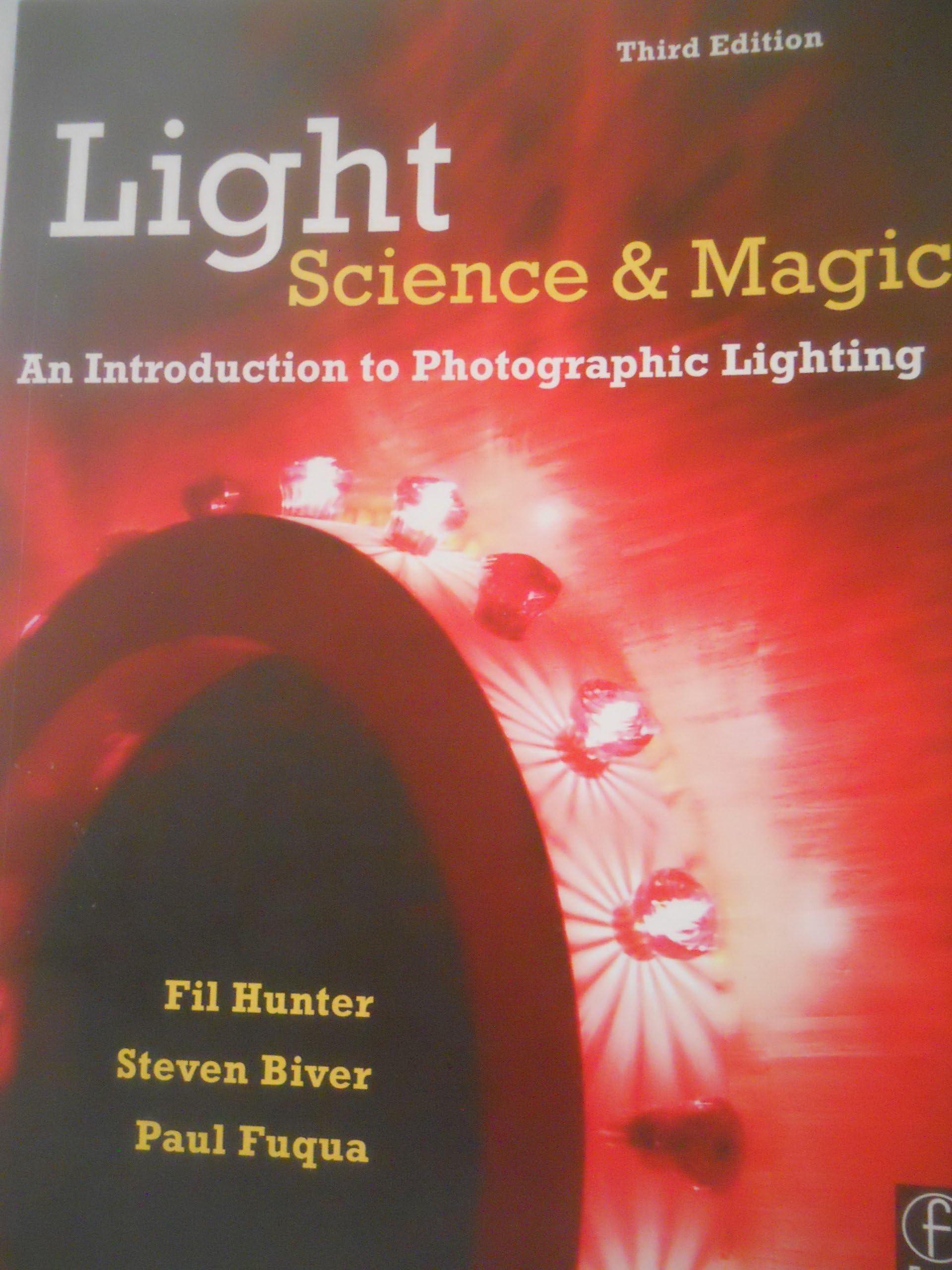
Light: Science and Magic: An Introduction to Photographic Lighting [Fil Hunter, Steven Biver, Paul Fuqua] on desertcart.com. *FREE* shipping on qualifying offers. Light: Science and Magic: An Introduction to Photographic Lighting Review: A book about learning and understanding light - If you want to drastically improve your photography then I highly recommend studying light and how it interacts with your subject. Armed with this knowledge you will know how to better light your subject in a given situation and get the best image possible under the circumstances. Light - Science & Magic will teach you how light interacts with matter and how you can modify the light to produce better images. It is on it's third edition now, and not that light has changed since creation, the book has been updated to include new technology and just as important an updated modern look. Comprised of 10 chapters, Light - Science & Magic cover such topics as how to learn lighting, light: the raw material in photography, managing reflections and the family of angles, surfaces, shape and contour, metal, glass, portraiture, digital cameras, white on white and black on black, portable lighting and much more. Rather than teach lighting styles, this book teaches how the light interacts with the subject matter and lets you decide (based on what equipment you have) how and what light to modify to create the result you want. The book's examples are mostly still life examples shot with hot lights or strobes. If you shoot mostly available light outdoors, don't let this sway you from considering this book. Outdoor sunlight behaves in exactly the same way, it's just easier to control in a studio environment for the book examples. There are light modifiers, natural or man made, that you can use to control the light outdoors. Once you learn the light you can then use your own creativity to modify it to create your own style indoors or out. Light - Science & Magic is well written with clear example photographs and technical diagrams. If you have an understanding of the basic photographic terms then you will have no problem learning from this book. It teaches you using layman's terms and introduces lighting language as it progresses. By the time you are done reading the book you will know what a gobo and a grid are and what direct and diffuse mean. What's more important is even if you know what those terms are now, you will be able to manipulate them to improve your photographs. I highly recommend you experiment with the examples in the book. A couple of table lamps and a few colored backgrounds are all you need to get started. You do not need a full blown studio with high powered gear. Light is light and is very scalable. So get the book, it's money well spent and you will, bad pun intended, walk away looking at light in a different light. Review: The most enjoyable technical book I've read! - It must be difficult to write a book on a technical subject for a heterogeneous population of readers. One can easily become boring and/or the reader can easily loose him or herself. Filling the book with valuable information does not help. The author(s) should also guarantee that the reader can get the pills. Perhaps, making the content light and easily digestable can be considered another solution. This, however will lessen the appeal of the book, to say the least, as such information will most likely be available free! The authors of this beautiful book (from concept, to writing to production) did a most astonishing job and made an easily readable book full of valuable information. The book reads as if it was written by a single author (a sign of good editorial work). The writing style is lucid & enthusiastic without being overly technical. The reader is never lost. The narrative is based on carefully chosen examples or problem situations. There are many repetitions but the reader feels happy to encounter a repetition as that helps to prove his/her progress! The figures are perfectly simple and exactly to the point (except, perhaps Fig.8.14, which does not seem right to me). The style can be summarized as "friendly advice"; the authors explicitly deny authority (if you believe them after reading the book!); they only claim experience. I have learned A LOT reading this book. I've read it (contrary to the authors' advice) from cover to cover almost as a thriller. I will keep it and consult it whenever I need to. This book will worth the price you pay for it even if you end up learning only the concept of "family of angles" by reading it. Simply great work. I do have to suggestions, however, for improvement: 1- The section on flash (strobe) photography can be given some more space (as this is probably the most widespread method of lighting for most readers). 2- The book cover should be replaced by a good one. I even think that a cover with text on blank space is better than the present one; the cover just does disservice to the book as it hides the beauty of the work presented. Do not let the cover to push you! I finish by repeating the last sentence of the book to show you what the authors say after giving you tens of perfect examples and as many sound advice: "Help yourself".
| Best Sellers Rank | #317,929 in Books ( See Top 100 in Books ) #14 in Photography (Books) #36 in Photography Lighting (Books) #250 in Digital Photography (Books) |
| Customer Reviews | 4.8 out of 5 stars 265 Reviews |
T**A
A book about learning and understanding light
If you want to drastically improve your photography then I highly recommend studying light and how it interacts with your subject. Armed with this knowledge you will know how to better light your subject in a given situation and get the best image possible under the circumstances. Light - Science & Magic will teach you how light interacts with matter and how you can modify the light to produce better images. It is on it's third edition now, and not that light has changed since creation, the book has been updated to include new technology and just as important an updated modern look. Comprised of 10 chapters, Light - Science & Magic cover such topics as how to learn lighting, light: the raw material in photography, managing reflections and the family of angles, surfaces, shape and contour, metal, glass, portraiture, digital cameras, white on white and black on black, portable lighting and much more. Rather than teach lighting styles, this book teaches how the light interacts with the subject matter and lets you decide (based on what equipment you have) how and what light to modify to create the result you want. The book's examples are mostly still life examples shot with hot lights or strobes. If you shoot mostly available light outdoors, don't let this sway you from considering this book. Outdoor sunlight behaves in exactly the same way, it's just easier to control in a studio environment for the book examples. There are light modifiers, natural or man made, that you can use to control the light outdoors. Once you learn the light you can then use your own creativity to modify it to create your own style indoors or out. Light - Science & Magic is well written with clear example photographs and technical diagrams. If you have an understanding of the basic photographic terms then you will have no problem learning from this book. It teaches you using layman's terms and introduces lighting language as it progresses. By the time you are done reading the book you will know what a gobo and a grid are and what direct and diffuse mean. What's more important is even if you know what those terms are now, you will be able to manipulate them to improve your photographs. I highly recommend you experiment with the examples in the book. A couple of table lamps and a few colored backgrounds are all you need to get started. You do not need a full blown studio with high powered gear. Light is light and is very scalable. So get the book, it's money well spent and you will, bad pun intended, walk away looking at light in a different light.
B**N
The most enjoyable technical book I've read!
It must be difficult to write a book on a technical subject for a heterogeneous population of readers. One can easily become boring and/or the reader can easily loose him or herself. Filling the book with valuable information does not help. The author(s) should also guarantee that the reader can get the pills. Perhaps, making the content light and easily digestable can be considered another solution. This, however will lessen the appeal of the book, to say the least, as such information will most likely be available free! The authors of this beautiful book (from concept, to writing to production) did a most astonishing job and made an easily readable book full of valuable information. The book reads as if it was written by a single author (a sign of good editorial work). The writing style is lucid & enthusiastic without being overly technical. The reader is never lost. The narrative is based on carefully chosen examples or problem situations. There are many repetitions but the reader feels happy to encounter a repetition as that helps to prove his/her progress! The figures are perfectly simple and exactly to the point (except, perhaps Fig.8.14, which does not seem right to me). The style can be summarized as "friendly advice"; the authors explicitly deny authority (if you believe them after reading the book!); they only claim experience. I have learned A LOT reading this book. I've read it (contrary to the authors' advice) from cover to cover almost as a thriller. I will keep it and consult it whenever I need to. This book will worth the price you pay for it even if you end up learning only the concept of "family of angles" by reading it. Simply great work. I do have to suggestions, however, for improvement: 1- The section on flash (strobe) photography can be given some more space (as this is probably the most widespread method of lighting for most readers). 2- The book cover should be replaced by a good one. I even think that a cover with text on blank space is better than the present one; the cover just does disservice to the book as it hides the beauty of the work presented. Do not let the cover to push you! I finish by repeating the last sentence of the book to show you what the authors say after giving you tens of perfect examples and as many sound advice: "Help yourself".
C**N
Highly recommended
This book is best for advanced amateur photographers who are interested in learning more about how to light. It is 300 pages long, divided into 10 chapters. The book is authoritative and fairly thorough, though more advanced photographers may find a good portion of the book to be a rehash of what they've already learned through other means. Still, this book is worth the read for the useful and technical information it provides, though it may be less meaningful for those without at least some lighting equipment (be they studio strobes or dedicated flashes). More advanced photographers might even learn a thing or three -- if they can get through all the stuff they might already know. Here's a list of what the chapters are about: 1) How to Learn Lighting (a brief introduction to the book and some topics that will be discussed in future chapters) 2) Light: the Raw Material of Photography (a description of what "light" means to a photographer, how light typically behaves) 3) The Management of Reflection and the Family of Angles (An in-depth description of light and relevant information about what to expect of light's behavior in photography) 4) Surface Appearances (a description of how light affects the appearances of various surfaces, and ways to best light particular surfaces -- glass, glossy, matte, black surfaces, etc.) 5) Revealing Shape and Contour 6) [How to Light] Metal 7) The Case of the Disappearing Glass (how to light glass objects) 8) An Arsenal of Lights (Portrait photography) 9) The Extremes (how to like white-on-white or black-on-black subjects) 10) Traveling Light (information on strobes and dedicated flashes and how to best utilize them) The book goes much more in-depth about all of these topics than I let on. It would be difficult to summarize all the information without plagiarizing. This is a great rulebook for how to use light in photography, and covers just about any topic most photographers might have, when learning about light. I highly recommend buying this book and keeping it handy as a reference when needed.
M**N
An classic, practical guide to lighting
"Light Science and Magic" opens with a brief description of the behavior of light, and for a moment you'll worry that you've been dragged back to high school physics class. Then the authors move to a series of very practical, well illustrated lessons on how to light common subjects -- people, textured items, white objects, black objects, glass, metal and so forth. The illustrations include photos of an object at each step of the lesson and there are diagrams showing how lights, reflectors, diffusers and black light absorbers ("gobos") were arranged. They also deal with mixed light sources (as when you have both tungsten or fluorescent and a flashgun, which have different color temperatures.) The only suggestion I have for the next edition would be to show three-dimensional (orthogonal) drawings or maybe photos of the more complex lighting setups. The two-dimensional sketches of the way the lights and other elements of the setup are placed are OK for most of the setups, but a few setups are complex and the sketches don't work quite as well for those. Most of the discussion is focused on studio lighting, but the principles are the same for lighting with a flashgun and the authors deal specifically with the use of portable off-camera flash in a chapter toward the end of the book. This is a well-written book now in its 3rd edition, so the authors have had a chance to fine tune the text and illustrations. It's rightly become a classic.
H**K
Everything you need to know about lighting
This book is an excellent guide for anyone interested in understanding the intricacies of photographic lighting. The third edition of this book offers a comprehensive introduction to the science behind creating captivating and well-lit photographs. The authors break down complex concepts in a way that is accessible to photographers of all levels. The book covers a range of topics, from the fundamentals of light and color to advanced techniques for shaping and controlling light in a photograph. The practical examples and hands-on exercises provided help readers apply the principles learned in real-world scenarios. One of the standout features of the book is its emphasis on the creative aspect of lighting. It goes beyond technical details to explore how lighting choices can impact the mood and storytelling in a photograph. The authors use a blend of theory and practical tips, making it a valuable resource for photographers looking to enhance their skills. The organization of the book is logical, with each chapter building on the knowledge gained from the previous ones. The inclusion of case studies and visual examples enhances the learning experience, allowing readers to see the principles in action. Overall, a good buy.
J**I
Learn the whys and hows of lighting from the ground up
I was recently faced with my first photography project that required lighting. At the time, I had never used lights before in my photography and, to be completely honest, I was a little scared of the prospect. I had to learn a lot in a short amount of time so I needed a solid resource. After a little research, I bought Light: Science and Magic to get things started. I'm glad I did. Fil Hunter, Steven Biver, and Paul Fuqua ease the novice reader in with very basic lighting concepts focused on two-dimensional subjects. Each chapter builds until you have an understanding of how to light complicated objects like metal and glass. The diagrams and supporting pictures clearly illustrate the concepts, and the writing is very natural and easy to understand. When I finished the book, I had the know-how and confidence to light just about any project. This is such a great book because the authors teach the principles of lighting instead of just showing you how to achieve certain effects or lighting styles. These principles can be applied to many situations and utilized to achieve any effect you desire. In other words, you won't find just a lighting cookbook here. Rather, read this book and you will learn how to think about lighting and understand it from the ground up. This puts you in control of how your photos will look. If you want to get started with lighting, Light: Science and Magic is an essential read.
M**N
Light, its behavior and its real-life photogrqaphic use, explained very carefully
I was skeptical. Based upon the pages of the book that one could see via Amazon's "Look Inside" I thought there would be little new for me here. I was wrong. This book is quite unique. It covers light and its use as a photographer might be concerned with it from a more scientific viewpoint than any other photography how-to book I've ever seen. One might categorize this book as an applied science book textbook. Not to worry though, this is not a tough science textbook, it's a "physics for poets" level textbook (no hard science or advanced math involved at all). Advanced photographers may know a lot of the material in this book from experience but Light, Science and Magic brings a careful scientific/mathematical perspective to explaining how light works (and with good/relevant illustrations throughout). I learned quite a few things from this book (i.e. issues regarding shooting white-on-white and black-on-black and issues regarding various types of reflections) and think most photographers, through advanced and professional levels, will also. It might be too much for someone just starting out in photography unless they have a strong science or technical background (they should probably wait until they've mastered the basics of photography first). Kudo's to Thom Hogan for recommending this book via his website.
W**R
Excellent study
This book describes itself as a grammar of lighting. I would add that it is a descriptive rather than a prescriptive grammar, that is, it tells you how lighting works as a matter of fact, rather than trying to tell you what you should do as a photographer. I'm still rereading chapters and getting something from them, perhaps especially because I'm taking the authors' suggestion and trying to do the exercises myself. While it is not terribly technical -- it's well written and easy to read -- the book is a bit abstract, in the sense that it's trying to describe the general properties of lighting as used for photography. For some readers and photographers, the abstract or theoretical approach may not be congenial. The book has very little (almost nothing) to say about equipment, for example. In the section on portrait lighting, the emphasis is simply on what happens when lighting is placed in different positions -- not on which form of lighting is best. But I personally found the book's approach exhilarating. I've read so many photography books it's hard for me to single out one as THE most informative and THE most helpful to me as a photographer, but if I had to do so, this book might be my pick.
Trustpilot
2 days ago
1 month ago