
Buy anything from 5,000+ international stores. One checkout price. No surprise fees. Join 2M+ shoppers on Desertcart.
Desertcart purchases this item on your behalf and handles shipping, customs, and support to Slovakia.
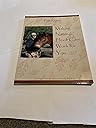
Detailed hands-on guide to natural horse and hoof care. Explains how to create a successful barefoot program for the domestic horse. Review: The best, and a great help if you want to try your own trimming - This is the best hoof care book I've ever read. It is both clear and persuasive. When I became a horse owner in 1997, one of the great mysteries to me was hoof care. Everybody I talked to and everything I read told me something different. It took me a while to find a farrier I trusted, and two years later he had to give up his practice due to heath issues. About that time I attended a Clinton Anderson seminar in which he devoted almost a whole session to natural hoof care. He sang the praises of Pete Ramey. So I bought Pete's book. I was looking for a better understanding of hoof care in general, but I was also hoping to learn enough to start doing my own trimming. This book was a great help with both. Now for the first time I feel like I can look at my horse's feet and have some confidence that either they look like they're supposed to or I know what to do to make them better. I've been doing my own trimming for over a year now. Here's some advice for anyone who hopes to do the same. Ramey's book is not a beginner's guide. He assumes you already own farrier tools, know how to use them, and that you know how to stand while you pick up a horse's hoof. My advice is to start with just a $20 hoof rasp and some kind of a stand. I put a short piece of 4" PVC pipe on a wooden base, but an automotive jackstand or a real hoof stand would be better. Read the book, watch your farrier closely, ask lots of questions, and start applying what you've learned. In the beginning you won't get much done. You'll gain new respect for the difficulty of a farrier's job as you fight your horse and become exhausted before you finish the first hoof. If your horse wants to move, I find it helpful to do what Clinton Anderson calls "touch and rub" (or porcupine game in Parelli language) - cheerfully lead the horse away from the trimming area and have him turn little circles for a while, then lead him back to the trimming area and give him the option to stand quietly. Smile and repeat as necessary. At some point he will get it. The more frequently you go through the motions of trimming, the quicker your horse will learn to cooperate. My horse will stand quietly now without being tied. Even if your horse is an angel you will still become rapidly exhausted because you will be asking muscles to do something they've never done. So don't wait until it's time for the next trim before you pull out your rasp for the first time. Ramey recommends that you trim every four weeks, but I try to keep to a weekly schedule. Do what you can, concentrating on eliminating flare and maintaining a nice rolled edge on the hooves. If you miss several weeks you'll find it hard to catch up with just the rasp, and a good hoof nipper will set you back $40-$90, so you might want to call your farrier back and start over until you're satisfied you'll be doing all your own trimming. I shared the book with a friend who does his own trimming and learned a lot in a hurry by working with him. If Ramey ever comes my way with a seminar I'll try to attend. There's no substitute for being able to watch, ask questions, and get your hands dirty. Meanwhile, the book is a great resource. I think every horse owner should read it. Edit, 12/24/2009 I bought some Clinton Anderson DVDs on the Black Friday sale. One of them was RFD TV Downunder Horsemanship episode 127, "Natural Hoofcare With Pete Ramey." This 2007 one hour episode of Clinton's TV show features Pete Ramey doing natural trims on two horses, with commentary as he works. Ramey's book was written in 2000, and he's learned a lot in seven years. He has become much more conservative, removing less material initially, as experience has taught him that much of what he once achieved by carving comes naturally with time. The video retails for $19.99. If you really want to master natural trimming, buy Ramey's ten DVD set, "Under the Horse," a full 20 hours of instruction for $250. He has additional DVDs available at [...]. But if you can't afford a $250 set of DVDs, the Downunder Horsemanship episode is an extremely helpful supplement to the book. Review: Amazing Resource! - This book is an amazing resource for anyone who is interested in learning more about hoof trimming and general hoof care. Ramey uses wild horses (who have virtually no hoof problems) as an example of the ideal hoof, and explains how domestic horses should be trimmed to account for their domestication. He also takes into account that every hoof is different, and demonstrates how to read the hoof to trim it appropriately. There are tons of great pictures and case studies that are very helpful and cover a wide variety of situations and problems. While I feel like this book is definitely written in a way that most everyone can understand, I do believe it's important to have a basic understanding of hoof anatomy and trimming/shoeing practices to get the full benefit of reading it. I worked in the horse industry for about 10 years and have spent a lot of hours holding horses for various farriers (and watching and asking lots of questions), and I felt this book was very easy to understand and I learned a LOT from it. After reading it, I realized that what separates the farriers I've considered "good" vs. "bad" over the years has been the use of the techniques Ramey explains. The only farrier that's ever been able to keep my OTTB sound basically trims him exactly the way Ramey suggests! I am looking to learn more about hoof trimming so I can trim my own horses, and I think this book definitely got me off to a great start.
| Best Sellers Rank | #554,803 in Books ( See Top 100 in Books ) #546 in Horse Care (Books) |
| Customer Reviews | 4.7 out of 5 stars 335 Reviews |
J**R
The best, and a great help if you want to try your own trimming
This is the best hoof care book I've ever read. It is both clear and persuasive. When I became a horse owner in 1997, one of the great mysteries to me was hoof care. Everybody I talked to and everything I read told me something different. It took me a while to find a farrier I trusted, and two years later he had to give up his practice due to heath issues. About that time I attended a Clinton Anderson seminar in which he devoted almost a whole session to natural hoof care. He sang the praises of Pete Ramey. So I bought Pete's book. I was looking for a better understanding of hoof care in general, but I was also hoping to learn enough to start doing my own trimming. This book was a great help with both. Now for the first time I feel like I can look at my horse's feet and have some confidence that either they look like they're supposed to or I know what to do to make them better. I've been doing my own trimming for over a year now. Here's some advice for anyone who hopes to do the same. Ramey's book is not a beginner's guide. He assumes you already own farrier tools, know how to use them, and that you know how to stand while you pick up a horse's hoof. My advice is to start with just a $20 hoof rasp and some kind of a stand. I put a short piece of 4" PVC pipe on a wooden base, but an automotive jackstand or a real hoof stand would be better. Read the book, watch your farrier closely, ask lots of questions, and start applying what you've learned. In the beginning you won't get much done. You'll gain new respect for the difficulty of a farrier's job as you fight your horse and become exhausted before you finish the first hoof. If your horse wants to move, I find it helpful to do what Clinton Anderson calls "touch and rub" (or porcupine game in Parelli language) - cheerfully lead the horse away from the trimming area and have him turn little circles for a while, then lead him back to the trimming area and give him the option to stand quietly. Smile and repeat as necessary. At some point he will get it. The more frequently you go through the motions of trimming, the quicker your horse will learn to cooperate. My horse will stand quietly now without being tied. Even if your horse is an angel you will still become rapidly exhausted because you will be asking muscles to do something they've never done. So don't wait until it's time for the next trim before you pull out your rasp for the first time. Ramey recommends that you trim every four weeks, but I try to keep to a weekly schedule. Do what you can, concentrating on eliminating flare and maintaining a nice rolled edge on the hooves. If you miss several weeks you'll find it hard to catch up with just the rasp, and a good hoof nipper will set you back $40-$90, so you might want to call your farrier back and start over until you're satisfied you'll be doing all your own trimming. I shared the book with a friend who does his own trimming and learned a lot in a hurry by working with him. If Ramey ever comes my way with a seminar I'll try to attend. There's no substitute for being able to watch, ask questions, and get your hands dirty. Meanwhile, the book is a great resource. I think every horse owner should read it. Edit, 12/24/2009 I bought some Clinton Anderson DVDs on the Black Friday sale. One of them was RFD TV Downunder Horsemanship episode 127, "Natural Hoofcare With Pete Ramey." This 2007 one hour episode of Clinton's TV show features Pete Ramey doing natural trims on two horses, with commentary as he works. Ramey's book was written in 2000, and he's learned a lot in seven years. He has become much more conservative, removing less material initially, as experience has taught him that much of what he once achieved by carving comes naturally with time. The video retails for $19.99. If you really want to master natural trimming, buy Ramey's ten DVD set, "Under the Horse," a full 20 hours of instruction for $250. He has additional DVDs available at [...]. But if you can't afford a $250 set of DVDs, the Downunder Horsemanship episode is an extremely helpful supplement to the book.
L**Z
Amazing Resource!
This book is an amazing resource for anyone who is interested in learning more about hoof trimming and general hoof care. Ramey uses wild horses (who have virtually no hoof problems) as an example of the ideal hoof, and explains how domestic horses should be trimmed to account for their domestication. He also takes into account that every hoof is different, and demonstrates how to read the hoof to trim it appropriately. There are tons of great pictures and case studies that are very helpful and cover a wide variety of situations and problems. While I feel like this book is definitely written in a way that most everyone can understand, I do believe it's important to have a basic understanding of hoof anatomy and trimming/shoeing practices to get the full benefit of reading it. I worked in the horse industry for about 10 years and have spent a lot of hours holding horses for various farriers (and watching and asking lots of questions), and I felt this book was very easy to understand and I learned a LOT from it. After reading it, I realized that what separates the farriers I've considered "good" vs. "bad" over the years has been the use of the techniques Ramey explains. The only farrier that's ever been able to keep my OTTB sound basically trims him exactly the way Ramey suggests! I am looking to learn more about hoof trimming so I can trim my own horses, and I think this book definitely got me off to a great start.
O**A
GREAT BOOK-wonderful compliment to the other two I bought-Tierney and Novzorov
The third book ordered for my returning venture to trying to keep my own horses trims up to date. I am very pleased with all three and actually recommend all three-as they communicate differently-and the pictures are different, and what doesn't hit you in the nose in one-may jump out at you in another. As stated in the Novzorov book review-I also have purchased some power tools to help me- as I do not have the hand or back strength to keep all four of mine trimmed and ride them too! :) In my case-all the tools I purchased (A Ryobi cordless sander, an Electric Hoof Knife-with several discs-of which I have only had to use the heavier sander), a curved rasp from Star Ridge, and my old nippers...have got us back on track, without lameness or tenderness which they all experienced every time the farrier came-despite my begging him not to take so much...all at the cost of one and a half of his visits...a good investment if you ask me! The main critical message I have gotten from each of these books is leave the sole alone...REALLY!...I've struggled with farriers over the years with this-as it LOOKS "NEATER" if the sole is "cleaned up", the frog is pared to a neat triangle and the walls are rasped???? Get used to "balanced, but perhaps a bit rough appearance. If the horses feet are such a mess from neglect or disease-please seek a qualified farrier and keep up the maintenance!
J**R
Making Natural Hoof Care Work for You
This is by far the best book yet on the subject of barefoot hoof care. It covers the transition, trimming, maintenance and nutrition. Scientific research, which he has worded for the layperson, documents explainations and photos. He includes many before and after photos and stories, some of which are inspirational and educational as to what can be achieved with foundered and laminitic horses that were to have been "put down". After reading this book, I had an excellent understanding of how all the pieces of the barefoot puzzle fit together and what I needed to do to make it work for me. I read this book before going to a live 2 day clinic by Pete. He is the real thing and what he writes is honest and from his heart. If you are considering transitioning your horse to barefoot, having problems with it working, or just a little bit curious about the concept, this book is the first one you should read... without a doubt!
K**M
Excellent resource material
In reading this book I really appreciated the concise and verbally descriptive approach to taking care of your horse's feet. I feel confident after reading this book that I can take these steps and apply them in real life. In fact, I have and after a month of putting this information to good use I am impressed with the results. My horse now has absolutely no trouble handling gravel roads or basalt rock outcroppings. He has been barefoot for 6 years but due to improper trims aimed at preparing a horse's foot for a shoe, he has always felt a little tender on gravel roads. Now he opens up like never before. His feet are visibly tougher and his freedom in movement has improved. There is still more work to be done but nothing has been more rewarding for me than to prepare his feet for nature to really do its work. I am disappointed with the lack of quality in the accompanying photos within the book. The resolution, contrast, and overall lack of visual detail leave much to be desired. The photos are in black and white (I'm sure to cut down on the cost of the book) so to really study pictures of hoof models you would have to purchase/rent/borrow more material. That's not really a drawback since entering into this kind of lifestyle should require you to glean as much information from as many sources as possible in order to become as proficient a natural horseman as you can. If you are really interested in taking care of your horse's feet yourself don't expect your journey to stop here.
K**S
Eye-opening information that gives us hope!
I ordered because I wanted to learn how to do my own horses hoof trims, and do them well. This book opened my eyes to so much potential and the importance of responsible hoof care. I never realized how many factors contribute to the health of my horses hooves until I read this. Most important factor has to do with the maintenance and people need to realize that the horse depends on them for proper care. I wish I would have had this information twelve years ago, when I was desperately trying to help a mare with founder. My only option when my farrier and veterinarian ran out of ideas, was to humanely put her down. It was a sad day for me. She deserved so much more. At least now there is hope for horses with founder/laminitis and navicular disease. I have been inspired!
D**K
This does Make Natural Hoof Care work you.
More like a referance book with the reasons why explained as clear as I've ever read. Lots of Pictures to explain what to look for before & after you trim your Horses Hoves. This certainly help me look after my Horses feet. The last time my Farrower came, he only had to file his Hoves flat about a 1/4". We're in realy rocky country, Iron ore rock every where, and my boy only pulled up sore after his first trim when I brought him up from down south Soft dirt pasture land. Now his soles are tough and hard. His frogs are fat and flat. He can trot with ease on Tarseal roads. He'll slow down to a walk on small stoney patches, but as soon as he "feels" he's in Softer ground, he jumps into a canter. And he's only 3 years old. This is a must to have if your into Bare foot Ponies. If your not, you should read it anyway and find out why your crippling your horse in Steel shoes!
C**E
Best info on natural hoof care I have read yet!
I adopted a horse with a twisted hoof which local farriers have been treating much in the same way as they would work on horses that wear shoes. After reading Ramey's book (and the articles by the author that I found on line) I have been working on this hoof myself (I used to rasp my own healthy horses barefoot hooves in the past) and am bringing the hoof back to it's "natural" state with Ramey's wild horse hoof model as a guide. The book has so many photographs and discusses hoof anatomy so precisely that it has given me the knowledge and confidence to help bring a damaged hoof back to life. And there has not been a day that my horse has been sore on the hoof since! This book would be great for anyone with a horse with bad or sore feet, or someone who wants to learn about how beneficial it is for horses to go barefoot. I think we'd all have a lot of happier and sounder horses if more farriers understood the principles of keeping barefoot hooves healthy!
E**N
selten so viel gelernt
Pete Ramey beschreibt hier auf sehr gut verstรคndliche Art und Weise wie die optimale natรผrliche Form des Hufs sein sollten und wie man diese erreichen kann. Fallbeispiele erleichtern das Verstรคndnis noch zusรคtzlich. Fรผr Pferdebesitzer, die ihr Pferd barhuf laufen lassen ist es ein tolles Buch um ein Verstรคndnis fรผr den Pferdehuf aufzubauen und die Qualitรคt der Arbeit seines Hufpflegers รผberprรผfem zu kรถnnen (wobei ich einrรคumen muss dass nicht jeder nach Ramey feilt und das vielleicht auch nicht sein muss). Ich denke auch fรผr Hufschmiede und -pfleger ist es ein super Buch um sein Wissen zu erweitern. Ich bearbeite die Hufe meines Vollblรผters schon viele Jahre problemlos selber habe aber durch dieses Buch ein paar Tricks gelernt und sie erfolgreich umgesetzt. Zudem hat mir dieses Buch bei dem Tinker meiner Freundin, der von Eisen auf barhuf umgestellt worden ist geholfen. Nachdem der Hufschmied den Huf sehr unzureichend bearbeitet hatte nahmen wir die Sache selber in die Hand. Schon nach einer Bearbeitung nach Ramey Grundsรคtzen besserte sich das Laufverhalten des Tinkers enorm. Ich bin vรถllig รผberzeugt! Vorsicht Laien: Keine Do-it-yourself Anleitung fรผr Pferdebesitzer die sich lieber das Geld fรผr den Hufpfleger sparen wollen. Aber ein guter Anfang um mal in Zusammenarbeit mit einem Fachmann die Hufe zu optimieren. Tolles Buch!
J**E
There is hope for the fatal hoof problems.
Author Pete Ramey says this book is 'out of date'. According to what is available now on his web site 'hoofrehab' it is dated. However it is a great introduction to what NHC (Natural Hoof Care) is. This is not just pull the shoes and let the horse go barefoot....It is a program including diet, exercise, riding and Shaping the foot. This book is written in an easy to digest form with lots of photos to show you what can and is being done. Pete is a Farrier that started doing NHC as a PART of his business. He now has more customers than time. Read about his 'transformation' and his plea to Farriers, Vets and Owners to share the documented evidence and work together for the good of all HORSES. It touched my heart. I am an owner that lost a horse to Laminitis. Reading this made me realize the death was not all the fault of the Vet or the Farrier. I made the first errors with what is still considered an acceptable diet. None of us knew any better. We were doing the best we Knew. All of us loved horses and that one in particular. Please, save your horse before it gets that bad. Read this book. It's the best money you could ever spend to launch you into a new world of knowledge.
U**R
good book if you lear how to trim your horse
A lot of info and examples, but pictures have poor quality and black and white so it is not always easy to learn something by them. Hope new edition will have better photos
T**R
Very nice book to learn more about hoof trimming
This book gives very concrete advice about how to best trim a hoof, which I found very helpful. It is written in a way that can be understood easily by everyone and the technique is quite straightforward - much easier than some other books out there - here you don't have to measure plenty of complicated angles and lengths, everything is in how you read the hoof. Would definitely recommend for anyone who wants to know what to do to correctly trim a hoof.
J**N
Excellent book for horse owners
This is a brilliant easy to read book and is the perfect introduction to those interested in keeping their horse/pony without shoes. The many photos and pictures begin the process of imprinting in your brain how a truly healthy hoof should look and if you decide to do your own trimming will help your hands in guiding the hoof towards the wild horse hoof ideal. Many of our equine friends will never achieve this ideal but if we can even come close our four legged friends will ultimately be much healthier and far more comfortable for our efforts. And isn't that what we want for our friends?
Trustpilot
2 weeks ago
1 month ago