We remain fully operational. Our teams are working around the clock to ensure your deliveries continue safely.

DOWNLOAD THE APP


Customer Services
Copyright © 2025 Desertcart Holdings Limited
DOWNLOAD THE APP
Buy anything from 5,000+ international stores. One checkout price. No surprise fees. Join 2M+ shoppers on Desertcart.
Desertcart purchases this item on your behalf and handles shipping, customs, and support to Slovakia.
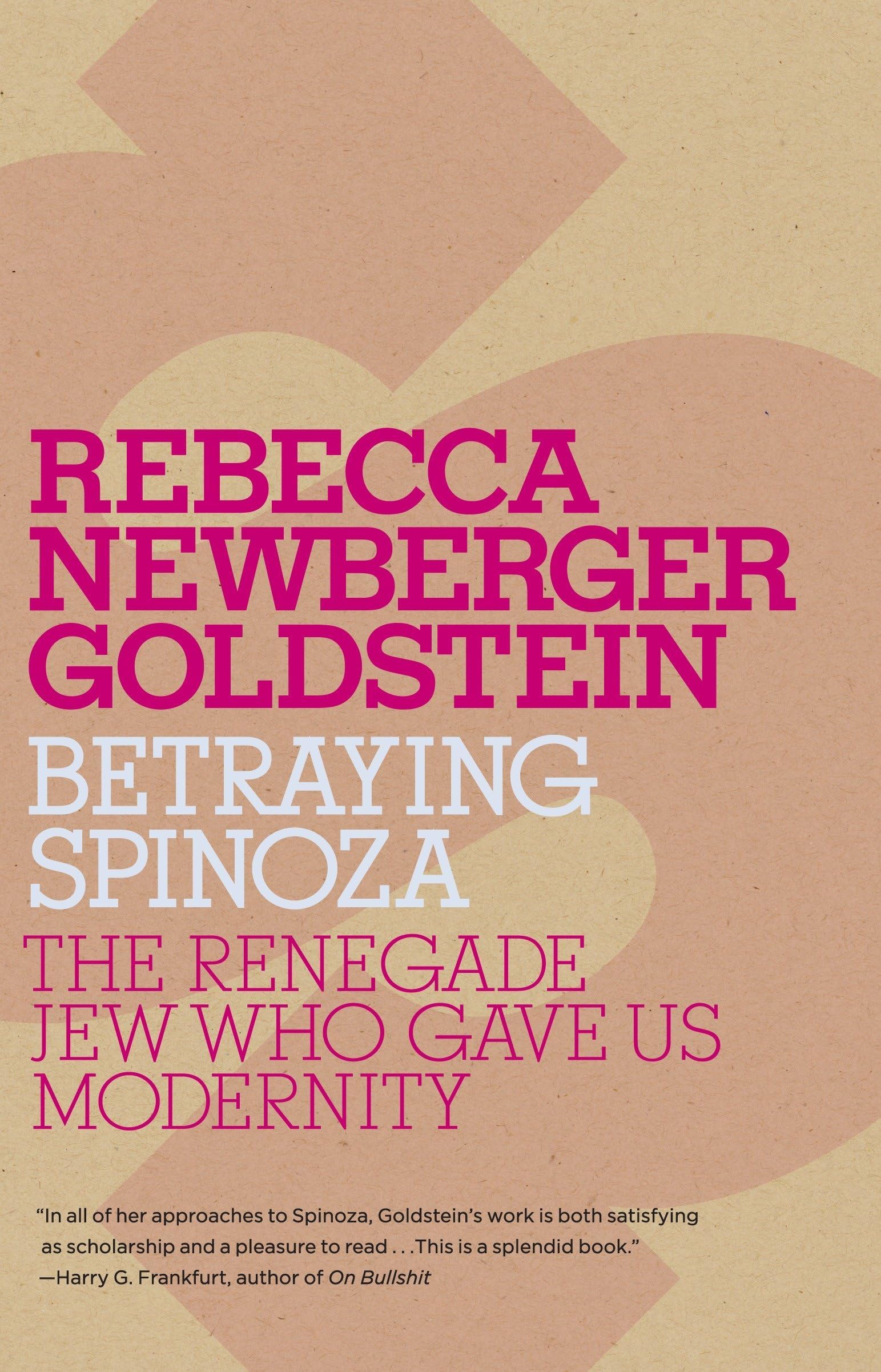
Betraying Spinoza: The Renegade Jew Who Gave Us Modernity (Jewish Encounters Series) [Goldstein, Rebecca] on desertcart.com. *FREE* shipping on qualifying offers. Betraying Spinoza: The Renegade Jew Who Gave Us Modernity (Jewish Encounters Series) Review: A Major Contribution that Uniquely Syntheses Genres and Engages Both Intellect and Imagination - “Betraying Spinoza” synthesizes several genres - philosophical introduction, biography, history, and memoir - into something unique and beautiful. One should not criticize it for not being what it doesn’t seek to be (e.g., a short introduction to his philosophy, or a biography); you should instead, meet it on its own terms. Your rewards will be, like the book, extraordinary. Rebecca Newberger Goldstein was commissioned to write this volume for a "Jewish lives" series, and begins it by asking how Spinoza's can even be considered a Jewish life. He was, after all, excommunicated by Amsterdam's Jewish community, and went on to abjure the very premise of ethnic identification, not to mention the core ideas of rabbinic Judaism. As it happens, Goldstein's own life history prepared her in unusual ways to address her framing question of Spinoza-as-Jewish, and that is why the element of memoir in this book is so apposite. She was raised in an ultra-Orthodox New York family and educated in an ultra-Orthodox schul, where her much-admired history teacher Mrs. Schoenfeld taught her of Spinoza as "an admonition, a cautionary tale"' of the "stubborn arrogance" of placing reason above tradition and community. Goldstein rebelled against her upbringing by getting a Ph.D. in analytical philosophy at Princeton, and her teachers there were, for almost opposite reasons, also hostile to Spinoza, whom they felt exemplified the "philosophical delusion" of "the naturalist fallacy" ( "ignoring the 'is-ought' gap"). Finally, as a philosophy prof at Barnard, Goldstein taught the 17th-century philosophy survey to undergrads and in the process developed a special affection for Spinoza. That teaching experience may be part of why she does such a fine job of explaining Spinoza's ideas to the non-philosopher reader. Goldstein has a profound grasp both of Western intellectual history and of Jewish history, so she places in Spinoza into larger contexts with exceptional clarity and scope. From the Amsterdam Jewish community's memories of hiding their "crypto-Judaism" from the inquisition in Spain and Portugal, and their experience of expulsion in what she calls history's first official act of racial anti-Semitism, to the kabbalism that caught on, to Spinoza’s horror, in Amsterdam long after the community had excommunicated him – Goldstein shows, superbly and clearly, how these experiences influenced Spinoza’s thought. In the end she shows how deeply Jewish a thinker he was in spite of his aspiring to a universal, impersonal rationality. Goldstein is, in her second career, a gifted novelist, and puts her skill to sensitive use when she allows herself to imagine Spinoza the human being - something Spinoza would have opposed, since he believed that his individuality did not matter; she says that she is "betraying Spinoza" by the very act of writing a biographical study of him. She also shows how thoroughly Spinoza influenced the worldviews not only of Albert Einstein (an avowed Spinozan) but also - not overtly, but profoundly - of many non-Jews, notably America's founders, at least with regard to freedom of speech, the press, and religion (Spinoza: ""Freedom of thought and speech not only may, without prejudice to piety and the public peace, be granted; but also may not, without danger to piety and the public peace, be withheld."). She even convincingly suggests how John Locke, during his years in Amsterdam, might have been influenced by Spinoza’s associates. And she writes interestingly about how Spinoza has helped her to deal with the endless and unresolvable question of Jewish identity. Goldstein writes clear, supple, engaging prose, and that is part of why this book forced me, unusually, to stay up way past my bedtime, unable to put it down. To give you a taste, here are a couple of striking passages: "If there is some missing element of biography that must be summoned in order to explain [Spinoza's] vision of radical objectivity, his abjuring any love other than that for objectivity itself, I very much doubt that it lies in disappointed romantic love. If it lies anywhere, it's in Jewish history. Spinoza has forsworn the Jew's love of that history. That was the love that was too heartbreaking to bear.... He is, paradoxically, Jewish at the core, a core that necessitated, for him, the denial of such a thing as a Jewish core. For what can be more characteristic of a Jewish thinker than to use the Jewish experience as a conduit to universality?" (p. 178) "Spinoza argues that the highest level of reason amounts to a sort of love. I would argue that the highest level of imagination also amounts to a sort of love. I would further argue that the imaginative acts by which we try to grasp the substance of others, that specific singularity of them that resists universalizing into the collective rational im-person, are a necessary component of the moral life. Spinoza, of course, would disagree." (p. 195) Review: An Apt and Meaningful Title - Rarely has a book had a more apt and meaningful title than Betraying Spinoza. A philosopher who both personally and in his thought strove to eradicate all the particularities of human experience is grounded by Goldstein’s research and imagination in a particular place and time. In other words, his exultation of reason above all the idiosyncrasies of personal history is betrayed. Spinoza was born into a Sephardic Jewish community in Amsterdam that had just recently won the right to freedom of worship. They were still in the process of relearning Judaism from the veneer of Christianity they had been forced to outwardly profess in Portugal. Into this community comes a man radically influenced by the Cartesian revolution who has the intuition that the entire universe is ultimately explicable by reason. Of course, there is no need for revelation or a chosen people in such a cosmos. These, and related beliefs, caused the excommunication of Spinoza from his people. However, his unique stance that reason, purified of all biographical particularities, is the highest aspiration of humankind seems to predate rather than be an effect of this shunning. All of this is wonderfully told by Dr. Goldstein. I should emphasize that the book is not intended as an exposition of Spinoza’s philosophy. Instead it deals at length with the history of Dutch Jewry and Spinoza’s life. While not a full biography, the book does anchor Spinoza in his particular historical setting. If you have previously studied his thought, or are just curious about the life of a great figure, I highly recommend Dr. Goldstein’s imaginative effort to situate Spinoza. While this may be a “betrayal” of Spinoza’s philosophical project it is by no means a betrayal of the man whose personality and unique accomplishments are fully brought to life.
| Best Sellers Rank | #928,587 in Books ( See Top 100 in Books ) #127 in Philosopher Biographies #450 in Jewish History (Books) |
| Customer Reviews | 4.4 4.4 out of 5 stars (275) |
| Dimensions | 5.16 x 0.79 x 7.95 inches |
| ISBN-10 | 0805211594 |
| ISBN-13 | 978-0805211597 |
| Item Weight | 10.6 ounces |
| Language | English |
| Part of series | Jewish Encounters Series |
| Print length | 304 pages |
| Publication date | August 11, 2009 |
| Publisher | Knopf Doubleday Publishing Group |
A**S
A Major Contribution that Uniquely Syntheses Genres and Engages Both Intellect and Imagination
“Betraying Spinoza” synthesizes several genres - philosophical introduction, biography, history, and memoir - into something unique and beautiful. One should not criticize it for not being what it doesn’t seek to be (e.g., a short introduction to his philosophy, or a biography); you should instead, meet it on its own terms. Your rewards will be, like the book, extraordinary. Rebecca Newberger Goldstein was commissioned to write this volume for a "Jewish lives" series, and begins it by asking how Spinoza's can even be considered a Jewish life. He was, after all, excommunicated by Amsterdam's Jewish community, and went on to abjure the very premise of ethnic identification, not to mention the core ideas of rabbinic Judaism. As it happens, Goldstein's own life history prepared her in unusual ways to address her framing question of Spinoza-as-Jewish, and that is why the element of memoir in this book is so apposite. She was raised in an ultra-Orthodox New York family and educated in an ultra-Orthodox schul, where her much-admired history teacher Mrs. Schoenfeld taught her of Spinoza as "an admonition, a cautionary tale"' of the "stubborn arrogance" of placing reason above tradition and community. Goldstein rebelled against her upbringing by getting a Ph.D. in analytical philosophy at Princeton, and her teachers there were, for almost opposite reasons, also hostile to Spinoza, whom they felt exemplified the "philosophical delusion" of "the naturalist fallacy" ( "ignoring the 'is-ought' gap"). Finally, as a philosophy prof at Barnard, Goldstein taught the 17th-century philosophy survey to undergrads and in the process developed a special affection for Spinoza. That teaching experience may be part of why she does such a fine job of explaining Spinoza's ideas to the non-philosopher reader. Goldstein has a profound grasp both of Western intellectual history and of Jewish history, so she places in Spinoza into larger contexts with exceptional clarity and scope. From the Amsterdam Jewish community's memories of hiding their "crypto-Judaism" from the inquisition in Spain and Portugal, and their experience of expulsion in what she calls history's first official act of racial anti-Semitism, to the kabbalism that caught on, to Spinoza’s horror, in Amsterdam long after the community had excommunicated him – Goldstein shows, superbly and clearly, how these experiences influenced Spinoza’s thought. In the end she shows how deeply Jewish a thinker he was in spite of his aspiring to a universal, impersonal rationality. Goldstein is, in her second career, a gifted novelist, and puts her skill to sensitive use when she allows herself to imagine Spinoza the human being - something Spinoza would have opposed, since he believed that his individuality did not matter; she says that she is "betraying Spinoza" by the very act of writing a biographical study of him. She also shows how thoroughly Spinoza influenced the worldviews not only of Albert Einstein (an avowed Spinozan) but also - not overtly, but profoundly - of many non-Jews, notably America's founders, at least with regard to freedom of speech, the press, and religion (Spinoza: ""Freedom of thought and speech not only may, without prejudice to piety and the public peace, be granted; but also may not, without danger to piety and the public peace, be withheld."). She even convincingly suggests how John Locke, during his years in Amsterdam, might have been influenced by Spinoza’s associates. And she writes interestingly about how Spinoza has helped her to deal with the endless and unresolvable question of Jewish identity. Goldstein writes clear, supple, engaging prose, and that is part of why this book forced me, unusually, to stay up way past my bedtime, unable to put it down. To give you a taste, here are a couple of striking passages: "If there is some missing element of biography that must be summoned in order to explain [Spinoza's] vision of radical objectivity, his abjuring any love other than that for objectivity itself, I very much doubt that it lies in disappointed romantic love. If it lies anywhere, it's in Jewish history. Spinoza has forsworn the Jew's love of that history. That was the love that was too heartbreaking to bear.... He is, paradoxically, Jewish at the core, a core that necessitated, for him, the denial of such a thing as a Jewish core. For what can be more characteristic of a Jewish thinker than to use the Jewish experience as a conduit to universality?" (p. 178) "Spinoza argues that the highest level of reason amounts to a sort of love. I would argue that the highest level of imagination also amounts to a sort of love. I would further argue that the imaginative acts by which we try to grasp the substance of others, that specific singularity of them that resists universalizing into the collective rational im-person, are a necessary component of the moral life. Spinoza, of course, would disagree." (p. 195)
A**S
An Apt and Meaningful Title
Rarely has a book had a more apt and meaningful title than Betraying Spinoza. A philosopher who both personally and in his thought strove to eradicate all the particularities of human experience is grounded by Goldstein’s research and imagination in a particular place and time. In other words, his exultation of reason above all the idiosyncrasies of personal history is betrayed. Spinoza was born into a Sephardic Jewish community in Amsterdam that had just recently won the right to freedom of worship. They were still in the process of relearning Judaism from the veneer of Christianity they had been forced to outwardly profess in Portugal. Into this community comes a man radically influenced by the Cartesian revolution who has the intuition that the entire universe is ultimately explicable by reason. Of course, there is no need for revelation or a chosen people in such a cosmos. These, and related beliefs, caused the excommunication of Spinoza from his people. However, his unique stance that reason, purified of all biographical particularities, is the highest aspiration of humankind seems to predate rather than be an effect of this shunning. All of this is wonderfully told by Dr. Goldstein. I should emphasize that the book is not intended as an exposition of Spinoza’s philosophy. Instead it deals at length with the history of Dutch Jewry and Spinoza’s life. While not a full biography, the book does anchor Spinoza in his particular historical setting. If you have previously studied his thought, or are just curious about the life of a great figure, I highly recommend Dr. Goldstein’s imaginative effort to situate Spinoza. While this may be a “betrayal” of Spinoza’s philosophical project it is by no means a betrayal of the man whose personality and unique accomplishments are fully brought to life.
P**S
Rebecca Goldstein explains Spinoza's philosophy with elegant simplicity Wish I had read this when I was much younger. Should be taught more frequently in all disciplines and especially Theology, Philosophy and Psychology.
D**N
This book is an exciting read both because of the subject and the approach of the author. The author has a writing style which I found generally engaging. Her knowledge of her subject matter is impressive. She brings forward a picture of the Jewish experience during the time of Spinoza and some aspects of the Jewish experience of Spinoza. The discussion of the impact of Spinoza's definition of God helps to clarify why his ideas would be considered heretical. She discusses of the impact of Spinoza's writings on Western society and how he brought us modernity. She describes the historical background in which Spinoza lived explaining how liberating the Dutch acceptance of the Jews must have been in contrast to the intolerance and persecution experienced in Spain. She references her text and that is very helpful.
P**D
Muy ilustrativo el estudio de la filosofía de Spinoza y la descripción del mundo judío en la España de la Inquisición
D**.
Ein sehr informatives Buch über die Hintergründe von Spinozas jüdischem Leben
K**D
Just brilliant. It's a page turner.
Trustpilot
3 weeks ago
1 month ago