
DOWNLOAD THE APP


Customer Services
Copyright © 2025 Desertcart Holdings Limited
DOWNLOAD THE APP
Full description not available
L**Y
Not just another romance novel; Milan's best yet
Wealthy heiress Jane Fairfield is the laughing-stock of polite Cambridge society, and that's just the way she likes it. She is counting the days until her younger sister reaches her majority, when Jane can liberate Emily from the tyranny of her guardian, their Uncle Titus. Until then, Jane will continue living in their uncle's house doing everything she can to avoid the attentions of fortune-hunting suitors - draping her Junoesque figure in yards of lace and garish colors, talking too loudly, and oh-so-politely insulting people to their faces. ("What a lovely chandelier you have. I wager it would look almost new, if it had been dusted recently.") Emily suffers from a mild convulsive disorder, and Jane is determined to protect her from the many self-proclaimed healers and downright quacks brought round by their ignorant, overly protective uncle.Oliver Marshall (son of Hugo and Serena of The Governess Affair) is quite the opposite. After fighting back against the taunts and bullying of boys at Eton and Cambridge, the adult Oliver has cultivated an air of quiet competence and dignity. Oliver is the byblow of the now-deceased Duke of Clermont, who forced himself upon a governess and refused to assist her, but the current duke (Robert from The Duchess War) befriended Oliver at school and regards him fully as his brother.While aspiring to a seat in the House of Commons, he is gradually making a name for himself in politics as an advocate of voting reform. He gingerly navigates his way between two worlds - the working class of his parents and the aristocracy of his biological father. Oliver is fiercely resolute and quite radical underneath his calm exterior.QUOTE: "Oliver didn't know his place. He'd spent too many nights seething at the way of things, too long wanting to rise in power, not just so that he might wield it, but so that he might wrest it from the hands of those who abused it. They'd spent years trying to teach him his place; he'd learned through long, hard experience that the only way forward was to keep quiet until he grew so tall they could no longer shove him down." END QUOTEThe politically powerful Marquess of Bradenton holds a personal grudge against Jane Fairfield, and he recruits Oliver's assistance in publicly taking her down a peg. Oliver doesn't know Jane very well, but like everyone else he finds her rather ghastly. Oliver is tempted, as Bradenton has offered him political support that could significantly further Oliver's aspirations. I love the clever way Milan describes the marquess - "like an old farmer, walking the perimeter of his property every day, testing the fences and peering suspiciously at his neighbors, making sure that his side and their side were clearly delineated." Bradenton is evilly manipulative as he points out to Oliver that "in the end, we all know how this will work out. It's one annoying girl against your entire future. Against the future of voting rights."Although Jane was born a lady, it was widely known that her mother's husband was not her father. The mother had died when Jane was ten, and when she was thirteen, a man she had never heard of died and left her an immense fortune. Her legal father then abandoned Jane and Emily to molder in the country, with no governess, no companion, no playmates, and no education suitable to their station. Upon his death, they were forced upon Uncle Titus, who viewed Jane as "the product of her mother's sin. She was argumentative, crude, unmannerly. She was, according to Titus, a poison in their household, one he only tolerated in the name of the duty he owed his dead brother."As Oliver becomes better acquainted with Jane, however, he finds that he rather likes her. Moreover, he sees her as someone like himself - tolerated but never really accepted by their supposed betters. Oliver begins to see through Jane's charade, to see a woman who is lonely, who can barely breathe under the burden she has assumed.QUOTE: "I see shoulders that dare not relax, muscles that dare not twitch, lips that dare not do anything but smile. You're awash in choices, Miss Fairfield, but you know as well as I that the wrong one will bring your carefully husbanded awful reputation to naught." END QUOTEFinally, Oliver half-guesses and Jane half-confesses the reasons for her pretense, and Oliver tells her of Bradenton's plot. As they grow closer, an unwanted attraction develops, but both of them know that it can proceed no further. Oliver needs the kind of wife who can advance his political career, and Jane is certainly not that woman. And so they part, and later even after they meet again, admit their feelings, and act upon them, they still go their separate ways because Jane is not cut out to be the wife that Oliver wants.Courtney Milan has written not just another wonderful romance novel; she has written a breathtaking novel. Full stop. While Jane and Oliver are pursuing their dreams, there are other, smaller but equally engaging, stories. There is Emily's attraction to an Indian law student whom she meets when she sneaks out of the house for afternoon walks. There are vignettes of Oliver's relationship with his father Hugo and his little sister Free, a suffragist who wants to go to Cambridge. (Her story will arrive in The Mistress Rebellion.) We again meet Oliver's cousin Sebastian Malheur, a scientist who has become famous, and reviled in some quarters, for his papers on natural selection that support Mr. Darwin's new theories, and his friend Violet Waterfield, the widowed Countess of Cambury. (Their story is coming up in The Countess Conspiracy.) There is a vivid picture of the great Hyde Park demonstration of May 1867, which was banned by the government but ultimately went forward because the crowds were so immense that the police and army did not dare to attack. There is even a kidnapping and forced elopement, which is so well done and so funny that I forgive the author for succumbing to the temptation to resort to such a tired old romance trope.And finally, there is the truly heartbreaking story of Oliver's elderly Aunt Freddy whose agoraphobia has kept her closed up in her tiny flat for years. She once told Oliver thatQUOTE: "Some people, when they're hurt . . . they remember the challenge. They grab hold of the fire once, and when they're burned, they make plans, trying to figure out how to hold live coals. That's your mother. But some of us remember the pain." She reached out and patted Oliver's hand. "You're like that. You remember the pain, and you flinch. When you were young, I thought you were like your mother--a regular coal-grabber. But no. Now I see more clearly." She smiled sadly. "You're like me." END QUOTEIt isn't a spoiler to reveal that she dies at the end of the book and that the truth about her life brought a tear to my eye. It is her passing that finally jolts Oliver out of his complacency. He realizes that Jane is not wrong for him; she is precisely right.QUOTE:"I don't need that quiet wife. I need you. Someone bold. Someone who won't let me stand back from myself, and who will tell me in no uncertain terms when I've erred." She didn't know what to say. "I've needed you to shock me out of the biggest mistake of my life. To make me recognize my fears and to reach into the fire and grab hold of the coals." END QUOTEThere are so many interwoven themes, such wry humor, and so much beautiful prose in this book that I found it difficult to select the bits to include in this review. In my opinion, though, this is Courtney Milan's best book yet, and given her track record that alone is saying a lot.
A**R
Now I have nothing to read on vacation!
This is probably the first time that I wanted the release of a book to be delayed, but just by a few days. I had thought that I would download this for my airplane trip this weekend, but, alas, I downloaded the book yesterday (just to make sure that I had it for the trip), read the first chapter (just to get an idea of what the book was about), read another chapter, and another chapter, and, well, I just finished the entire book (including the sneak peek at "The Countess Conspiracy" and the author's historical notes). So now I have to find something else to read on the plane. Maybe I'll re-read the series. Having now read Oliver's story, it might be interesting to go back to "The Governess Affair," where his parents' story is told.This book has all the elements that have made Courtney Milan one of my favorite authors, possibly my favorite author in the historical romance genre. The characters are flawed, but likeable. A couple reviewers said that they didn't like Oliver. One of the reviewers stated that they didn't like that Oliver actually considered humiliating Jane in order to garner Bradenton's vote on the Reform Bill. Call me a Pollyanna, but I never really thought that he would do anything to hurt Jane or anyone else. As he mentioned time and again, he'd been on the receiving end of similar actions before.Still, it's not really surprising that the offer of votes in Parliment would be enticing to someone who had political aspirations. Plus, he had adopted an "if you can't beat 'em, join 'em" approach to deal with the aristocracy, so it's no wonder that someone like Jane, who had taken the more "scientific" approach of appearing poisonous by donning not just bright but jarring colors, unsettled him at the same time that she gained his admiration.As for another reviewer's comment that Oliver believed that his brother was free to state his mind, while the previous book made clear that Robert did not feel so free, I'd say it comes down to perception. The grass is always greener on the other side of the fence. Robert felt the burden of duty and expectations. Oliver felt the burden of being born "on the other side of the blanket" and had to fight for acceptance. They loved each other, but neither could put himself in the other's place.Like many heroines, Jane is selfless and strong. Her devotion to her sister is admirable, even though her method of achieving "unmaritability" is puzzling. Why didn't she think of making ultimatums to her uncle sooner? Why didn't she pack up her sister and herself and run away? It's really pretty simple ... why do abused people stay with their abusers? Because through the years, Jane had been taught that she, by herself, was insignificant. Uncle Titus told her repeatedly that she was a bad influence and chastised her for not behaving properly. Her "father" deserted the family. Her mother didn't pay a lot of attention to either child. She may have had the power and the money, but she didn't realize it until she was pushed by her uncle. Plus, there were all the social "rules" that governed life in England at that time.I will say that I was somewhat mystified by the Johnson sisters at the beginning of the book. They set Jane up for ridicule by encouraging her to pile on layers and layers of lace, and yet didn't want her excluded from social engagements or made fun of by the men. I did appreciate that they came through for Jane when it counted, but I was wary about her trusting them so quickly when they confessed that they had been so thoughtless towards her.As for the plot, I absolutely love that Courtney Milan's books do not follow the standard formula that most romance novels go through. It didn't bother me that one part of the story line was wrapped up midway through the book. In fact, it made sense that solving the Bradenton issue did not solve every other issue in the book.Now for some specifics:* I learn something in every one of the author's books, and this one was no different. We know from U.S. history that England placed a high value on the aristocracy, particularly in the 18th and 19th Centuries. And, we know that England is much more democratic now, in the 21st Century. But how did they get there? Now I know about the Reform Act of 1867.* I also want to know more. In the United States, women got the right to vote in 1920 via the 19th Amendment to the Constitution (thank you "School House Rock"). Because of Free's participation in the rally, we know that women in England were also lobbying for the right to vote. When did that happen? Were they more progressive than the United States or was it more than 50 years before women in England got to vote?* And then there's the Rule Against Perpetuities and the fertile octogenerian. I just had to laugh when Anjan was puzzling over the concept that has been vexing 1L property law students for centuries. The only thing missing was the unborn widow.* Finally, I appreciate that the author creates characters who suffer from disorders or conditions that are routinely treated now (in this book, it's Emily's seizures) but at that time were not understood or were written off as some sort of infirmity that necessitated confinement in an asylum.I would have liked to see some interaction between Jane and Oliver's family. I know they would accept her with open arms, but it would have completed the picture for me. In the same vein, I would have liked to have a little more closure on the fates of Uncle Titus, Aunt Lily, Lord Dorling and Bradenton. Still, that's not enough to knock down my rating of the book. I didn't expect to see Lord Dorling or Bradenton go quietly, but it was plausible.Not only am I now looking for something new to read next, but I'm also stuck waiting until December for the next installment in the series.
V**L
Smart, swoony romance with an amazing heroine
One of the best romances I have read, and while I may not have read too many yet, I just loved this so much!The characters in this book are so well-written, with lots of depth and flaws. I especially loved Jane. She is so determined to take care of her sister and is such a passionate woman who's just a little too brilliant and eccentric for her peers. Her devotion to her sister is so touching and heartwarming and her witty conversations with the hero are delightful. She's just so fierce, awkward, relatable and straightforward - one of my all time fave heroines definitely.Oliver is also great with his attitude of there's no way I'm going to fall in love with this woman - it's quite enjoyable to watch his reluctance slowly melt away and see him realise to his horror that he has in fact fallen in love no matter how inconvenient it is. And in so many good romance novels, it always does feel so very inconvenient at first until our hero and heroine find a way to deal with it. In this book this conflict is so well-written it's a joy to read and see these two finally get together.Also the side characters are so amazing and full of depth and I absolutely adored the side plot with Jane's sister finding her own happiness despite her epilepsy and the awful way her uncle treats her because of it. She's such a spirited character as well (clearly related to her sister) and the love story there is as believable and swoony as the main romance plot.I also love the way Milan writes about this time period. She tackles the classicism, racism and sexism of the time and it all feels very true to the time. I also love her strong female characters who are out their defying all of the rules and negative aspects of their societies - this is true to every book of hers I've read.If you've never picked up a book by Milan yet, I would heartily recommend you do so - the books in this series and especially this one are what have made me fall in love with regency romance. Entertaining, but not completely glossing over some of the issues of the time, and smart with strong heroines and swoony romance, this and the other books in this series truly are a delight!
A**R
My favourite book in the series so far
Did want it too end. Gripped from page one. Almost missed my bus/train stop many a time as I was to engrossed in the story. The characters are wonderful the relationships and brilliant. The story was beautiful. A highly recommended read with a highly anticipated and very enjoyable ending. Would love too read more over Emily and anjans story and more about Jane and Oliver too.
B**T
The Love and Lies of the Impossible Girl
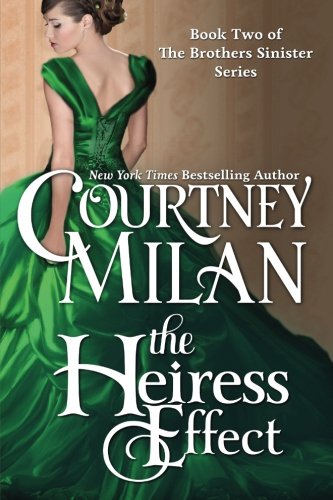
Jane Fairfield is awful. Her clothes are ostentatious and gaudy, her voice is too loud and her manners - well, surely she doesn't say such things on purpose? Anyone else would be shunned from polite society for such behaviour, but Jane is an heiress and she has one hundred thousand reasons to be allowed to stay.She also has one hundred thousand reasons to behave in such an appalling way - because Jane doesn't want to get married, but her uncle plans to marry her off to the first man who offers, or throw her from his house. So Jane works extra hard to keep all the fortune hunters at bay.Until she meets Oliver Marshall, the natural son of a duke, raised by a farmer and with ambitions towards Parliament. He's not like any man she's ever met, in fact he tells her she's the last woman he would ever marry. But he understands her, offering friendship and a chance to be herself. And for a girl who must always pretend, well, that's worth a lot more than a hundred thousand pounds...This is the second book in the Brothers Sinister series ( The Duchess War ), but it also has close connections to the prequel novella, The Governess Affair , since Oliver is the illegitimate bump that causes so much trouble there. As with all of Courtney Milan's excellent stories this is more than just a historical romance. This time we have politics, the horrors of Victorian medicine and the cruelty of casual racism mixed in with colonial tensions. It's beautifully researched and wonderfully written, providing a rich and vivid backdrop for the main characters' adventures.I love Jane. Yes, she's awful, but she's clever, strong, funny and so brave. She has excellent reasons for acting as she does, and sad ones for her particular methods. I loved watching her reclaim herself from her role, and wanted her to win everything she desired and deserved. I liked Oliver too, even if I mostly felt sorry for what his education had beaten into him, and occasionally longed to shake some sense into him. His emotional journey is actually tougher than Jane's, for all that he appears to start in the stronger position. His scenes with his Aunt Freddy were heartbreaking.There's also a wonderful supporting cast of family, friends and even an enemy or two along the way. The secondary romance is lovely and sensitively written, with one scene that made me cheer. I especially liked that none of the cultural difficulties are ignored, but each one raised and considered before solutions are found. We also catch a glimpse of Oliver's wild cousin, Sebastian, where all is apparently not well with the celebrated scientist. (The teaser at the end is just cruel! You might want to put off reading it until the release of The Countess Conspiracy is a little closer.)Funny yet serious, clever and romantic, this is historical romance at its best. With an excellent sense of time and place, and a cast of wonderfully engaging characters, this series is delightful. Courtney Milan just keeps getting better. The Duchess WarThe Governess Affair
E**A
Very enjoyable
This book is as accomplished as the other ones in this series, but for some reason I didn't quite enjoy it as much as I did those. I wish I could put my finger on why that was the case, because it features the same believable, flawed characters, the same assured writing style, the same witty exchanges and the same level of surprise. Maybe that was the problem - I've read too many novels by this author in too short a space of time, and I need to switch to something else again.Don't let that put you off though; this is still a very good romance novel, which will surprise you at almost every turn. Its characters are well-fleshed-out and likeable, and there are a few subplots which keep everything ticking over nicely so that you've reached the last page before you realise it. Recommended for everyone who likes historical romance with a dash of politics and main characters who aren't heartstoppingly beautiful.
M**N
excellent
This is yet another winner by Courtney Milan. A desperate woman, a desperate man.Our heroine is desperate to not get married until after her sister is of age so that she can take her away from their uncle and give her a life. Our hero feels that he has to be a man of power to make up for his earlier life. She acts just a little too over the top, to put off potential suitors - after all she is an heiress. He is promised everything he wants if he makes her unacceptable to the ton. The only problem is, they are drawn to one another.I like these series books by Milan, a definite re read
Trustpilot
2 weeks ago
3 weeks ago