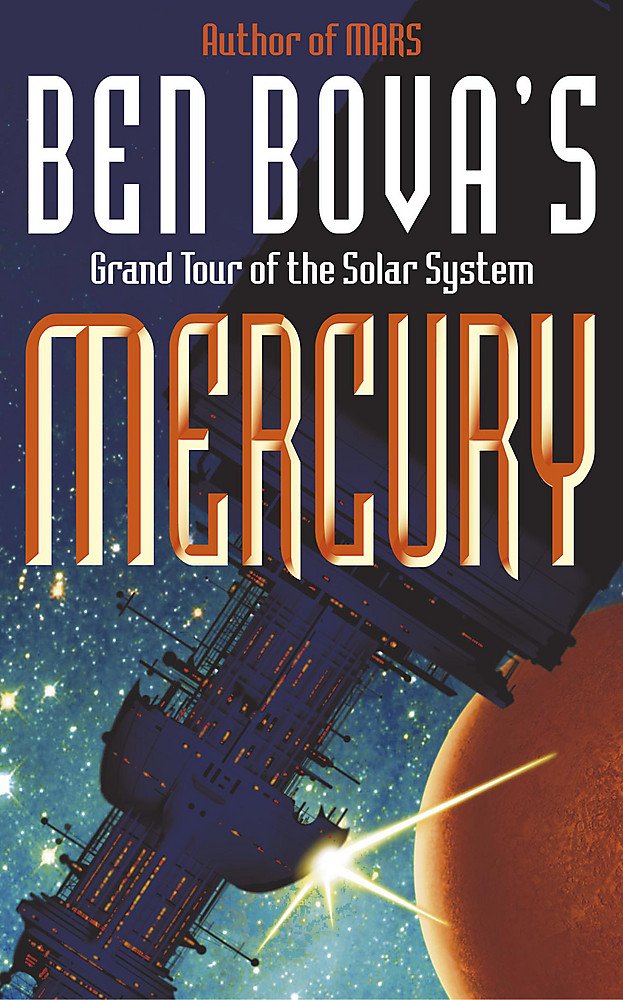
Full description not available
C**E
Ben Bova does it again
As always, Ben Bova combines his Scifi with the intrigues of human relationships. An excellent read. I highly recomment it.
G**N
Enjoyable Read
This book is easy to read, its story line is straightforward and once started you will want to finish it. The image of mercury is hot, hot, hot, so no surprises there then, but it's well done. Yes we have seen space elevator's before done by Kim Stanley Robinson and Arthur C. Clarke but I had no problem with that and rather enjoyed the technical realisation of the structure. Overall I enjoyed the book and will continue to pick up more of this author's work.
B**Y
Badly structured book with faulty physics
I agree with most of the other 2 star reviews regarding the flaws in this book, compared to others in the Grand Tour of the Solar system series. What I particularly disliked was that the second (more than) half of the book was a flashback to cover the collapse of the skytower (often called a space elevator elsewhere). This is not a spoiler because the collapse was well covered in the first part, so there was no surprise or anticipation in reading the second part, only a wait for the inevitable collapse.But what I have not seen commented elsewhere are the flaws in the fundamental physics regarding the skytower, which I would not have expected from an experienced author like Ben Bova. First, the characters visit a platform on the low Earth orbit station on the tower where the characters find themselves WEIGHTLESS. But that is quite impossible for a sky tower. It inevitably rotates with the Earth itself with a period of 24 hours, so weightlessness will only occur at the geosynchronous station on the elevator, over 22,000 miles above the Earth (where by definition the stable orbit has a 24 hour period). At the low Earth orbit station, only 300 miles high, weightlessness occurs for orbits of about one and a half hours period, not 24 hours, and on the skytower the reduction in weight would be scarcely noticeable!Secondly, when the tower (which is based in Ecuador) collapses, it is supposed to fall (presumably along the line of the equator) across the Pacific ocean. But the geosynchronous station, where the break occurs, is rotating (like the Earth beneath) West to East at about 6000 mph, compared to the surface rotational velocity of about 1000 mph. So that the huge rotational momentum of the tower would fling the falling tower FORWARDS, across Brazil and the Atlantic ocean!
S**K
Small planet, small impact.
Spawned lovers in intergalactic feud, is a potential tabloid headline for Mercury. It's science fiction elements are but a backdrop to the cast of rather unlikeable astronauts. In tone this feels more like a novel from Bova's Asteroid Wars than an entry in the Grand Tour, due to the overstretched plot and overarching coincidences that stitch the story together. Brilliant series however this entry is a little bit below par.
M**2
Patchy and disappointing
Mercury is the latest in Ben Bova's 'Grand Tour of the Solar System' series. Set in the near future it describes a world divided into an authoritarian mix of new religious fundamentalist governments, massive multinationals and heroic scientists and pioneers picking their way through the solar system planet by planet (including the Asteroid belt, setting for the last three books). Mercury is a tale of revenge and Bova is at his best when describing the interplay of human relations and betrayals that forge his characters. Unfortunately the rest of the book is poorly realised and feels unfinished. Admittedly Mercury is perhaps the least interesting of the planets, being a big baked rock, and Bova tries to expand the story with an extended flashback describing the first space elevator and, later, one of the characters' exile to the Asteroid belt. There's nothing here that hasn't been done before and I got the feeling that Bova was retreading old ground, or plagiarising others (I won't spoil the plot but the catastrophe half-way through the book is lifted wholesale from Kim Stanley Robinson's Mars series). His peripheral characters are weak. The arrogant Japanese corporate boss has stepped straight from the pages of Michael Crichton's Rising Sun and trots out the old cliched mistakes about Japanese businessmen being closet samurai. Grammatical errors and poor proof-reading ('despondent' repeated twice in the same paragraph) suggests this book was trotted on out autopilot for the sake of completeness. If you're into the series it's worth reading, if not, I'd either turn to the brilliant Moon series, Jupiter or wait and hope Bova gets back on form with the next planet.
M**E
A miserable attempt by Ben Bova
Ben Bova has written some excellent books, but sadly this one disappoints. The plot is weak, with characters and ideas from earlier books now over-used. Mercury itself plays a very small part in the story - much of the story is set on Earth - and the "big event" in the book is a poor shadow of a plot line in Kim Stanley Robinson's Mars series.Fortunately, Ben is running out of planets.
Trustpilot
1 month ago
2 weeks ago