
DOWNLOAD THE APP


Customer Services
Copyright © 2025 Desertcart Holdings Limited
DOWNLOAD THE APP
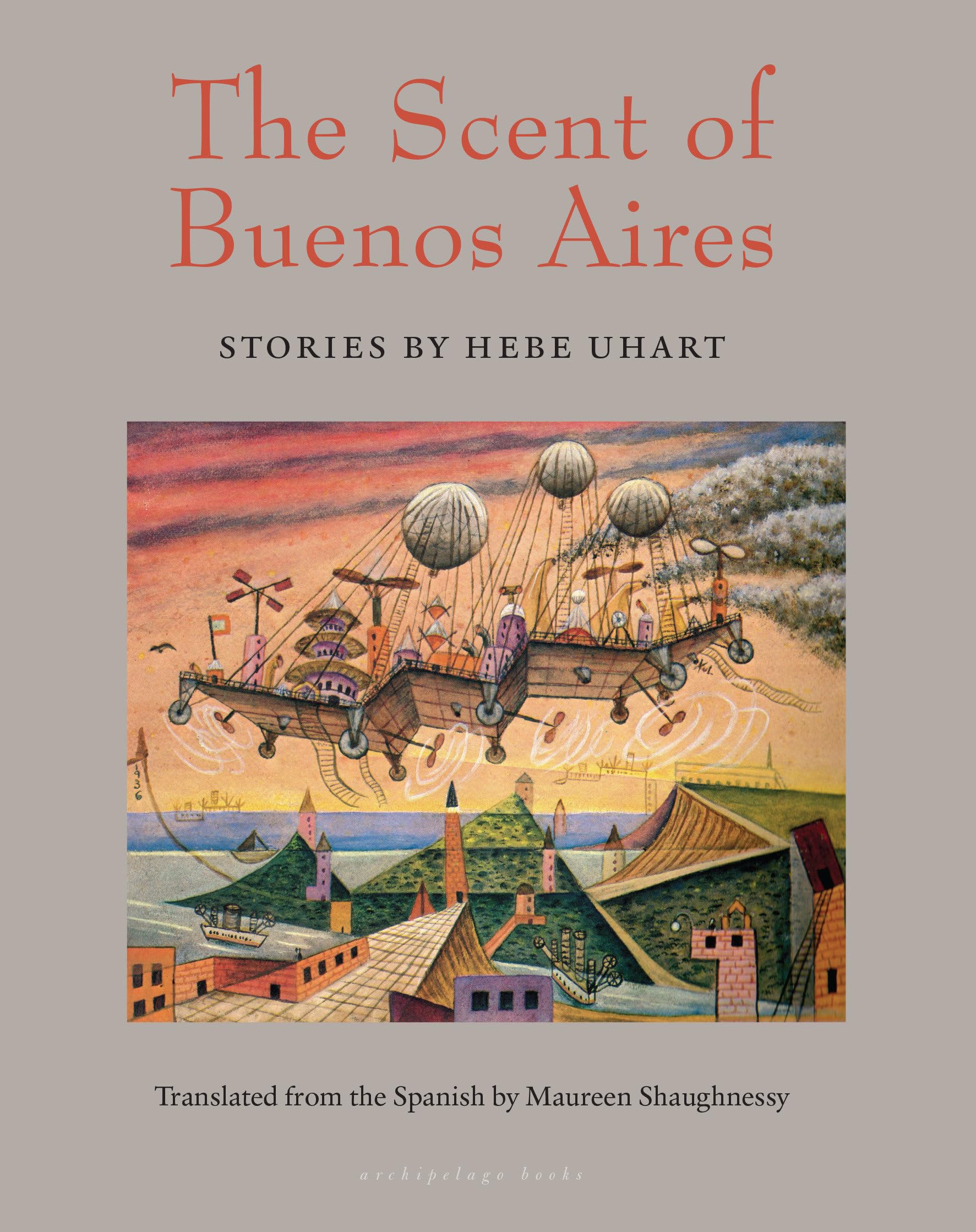
desertcart.in - Buy The Scent of Buenos Aires: Stories by Hebe Uhart book online at best prices in India on desertcart.in. Read The Scent of Buenos Aires: Stories by Hebe Uhart book reviews & author details and more at desertcart.in. Free delivery on qualified orders. Review: Amazing book. Get it! Review: Uhart (1936-2018) is not well known in the States but she had an estimable career during her lifetime in Buenos Aires as the author of startlingly brilliant short stories and vignettes. Her stories are usually about ordinary people and things. Doings are simply but evocatively described. Then, somewhere in the story, usually toward the end, she would throw in an observation or description that transfigured the meaning of all that had come before, framing it in a different light. Simple surface, subtle overtones – does that remind you of someone? Gabriel Garcia Marquez, for instance? It should, not because she writes like Garcia Marquez, but because like him, she transfigures the meaning of the simplest everyday things by the way she deals with them. And like Garcia Marquez, she was a master prose stylist, crafting sentences and passages stunning in their beauty and impact. Her stories seldom have an arrowlike trajectory to them. A thing, or a person, or a happening suggests a description or observation about something or one else, and so on until, zip, the story/reminiscence/observation is done with. She writes stories like Montaigne wrote essays, but she’s a poetic, sensory-driven proseist where Montaigne presents as mind observing heart. The inside feelings Uhart touches on —lightly, oh so lightly!-- infuse the outside world with a heightened reality. The first piece in the collection rambles through her day. It starts with her pruning her plant collection, getting rid of the ants. It ends with waking up in the morning and feeling contented. The closing passage: ”I’m so humbled and so satisfied at the same time that I could thank someone, although I don’t know who it would be. I inspect my garden and I’m hungry, I deserve a peach. I turn on the radio and hear them talking about the troy ounce. I don‘t know what that is, nor do I care. Time to get a move on, beautiful life.” That is not the closing of an O. Henry type story! The high point in “It Was the Cat’s Fault” is when the cat gets into the dining room and eats the baked fish intended for a visitor. I wrote in the margin: “A lovely story!” “The Cake” is, as much as anything, about the pleasure of listening to stories told in a group. In “Tourists and Travelers,” a woman who hates flying returns from a vacation (of mixed pleasure) in Italy. She thinks about her stay as the plane prepares for departure: “I remembered how everyone jumps into the sea, fully dressed. One by one they jump in, and I also remember how they pour milk into the coffee. They pour it from a distance, in circles as if they were gently tucking in a baby. And then I fell asleep.” “They pour it from a distance, in circles as if they were gently tucking in a baby.” That observation is accurate but the mechanical act of pouring a coffee is reconfigured into a human context, how we care for a vulnerable baby. Nothing is left ordinary in her writing. It’s all described, explained, turned over and commented on until the ordinary transmogrifies into small and modest epiphany. Another point: her stories may seem gentle but her observations, especially the character sketches, often have sharp teeth. Read “Human Beings Are Radically Alone,” the bizarre “Mister Ludo,” or “Homeowners Association Meeting.” A passage, the start of the last piece in the book, “Nothing But Shadows,” captures her stance well: “It’s curious what happens with me with people,” she writes. “When I meet them., I have an overall impression of who they are, but as I get to know them, that idea disintegrates and I no longer know what the other person is like. I let myself get carried away by different perspectives.” Now who does that sound like? She’s no Montaigne but she has a Montaigne-like perspective on how much and what we can know about ourselves and others. She’s an original.
| Best Sellers Rank | #1,130,798 in Books ( See Top 100 in Books ) #33,558 in Short Stories (Books) |
| Country of Origin | India |
| Customer Reviews | 4.4 4.4 out of 5 stars (17) |
| Dimensions | 15.09 x 3.2 x 19.02 cm |
| ISBN-10 | 1939810345 |
| ISBN-13 | 978-1939810342 |
| Importer | Atlantic Publishers and Distributors (P) Ltd., 7/22, Ansari Road, Darya Ganj, New Delhi - 110002 INDIA, Email – [email protected], Ph – 011-47320500 |
| Item Weight | 658 g |
| Language | English |
| Paperback | 484 pages |
| Publisher | Archipelago; Translation edition (15 October 2019) |
A**️
Amazing book. Get it!
D**R
Uhart (1936-2018) is not well known in the States but she had an estimable career during her lifetime in Buenos Aires as the author of startlingly brilliant short stories and vignettes. Her stories are usually about ordinary people and things. Doings are simply but evocatively described. Then, somewhere in the story, usually toward the end, she would throw in an observation or description that transfigured the meaning of all that had come before, framing it in a different light. Simple surface, subtle overtones – does that remind you of someone? Gabriel Garcia Marquez, for instance? It should, not because she writes like Garcia Marquez, but because like him, she transfigures the meaning of the simplest everyday things by the way she deals with them. And like Garcia Marquez, she was a master prose stylist, crafting sentences and passages stunning in their beauty and impact. Her stories seldom have an arrowlike trajectory to them. A thing, or a person, or a happening suggests a description or observation about something or one else, and so on until, zip, the story/reminiscence/observation is done with. She writes stories like Montaigne wrote essays, but she’s a poetic, sensory-driven proseist where Montaigne presents as mind observing heart. The inside feelings Uhart touches on —lightly, oh so lightly!-- infuse the outside world with a heightened reality. The first piece in the collection rambles through her day. It starts with her pruning her plant collection, getting rid of the ants. It ends with waking up in the morning and feeling contented. The closing passage: ”I’m so humbled and so satisfied at the same time that I could thank someone, although I don’t know who it would be. I inspect my garden and I’m hungry, I deserve a peach. I turn on the radio and hear them talking about the troy ounce. I don‘t know what that is, nor do I care. Time to get a move on, beautiful life.” That is not the closing of an O. Henry type story! The high point in “It Was the Cat’s Fault” is when the cat gets into the dining room and eats the baked fish intended for a visitor. I wrote in the margin: “A lovely story!” “The Cake” is, as much as anything, about the pleasure of listening to stories told in a group. In “Tourists and Travelers,” a woman who hates flying returns from a vacation (of mixed pleasure) in Italy. She thinks about her stay as the plane prepares for departure: “I remembered how everyone jumps into the sea, fully dressed. One by one they jump in, and I also remember how they pour milk into the coffee. They pour it from a distance, in circles as if they were gently tucking in a baby. And then I fell asleep.” “They pour it from a distance, in circles as if they were gently tucking in a baby.” That observation is accurate but the mechanical act of pouring a coffee is reconfigured into a human context, how we care for a vulnerable baby. Nothing is left ordinary in her writing. It’s all described, explained, turned over and commented on until the ordinary transmogrifies into small and modest epiphany. Another point: her stories may seem gentle but her observations, especially the character sketches, often have sharp teeth. Read “Human Beings Are Radically Alone,” the bizarre “Mister Ludo,” or “Homeowners Association Meeting.” A passage, the start of the last piece in the book, “Nothing But Shadows,” captures her stance well: “It’s curious what happens with me with people,” she writes. “When I meet them., I have an overall impression of who they are, but as I get to know them, that idea disintegrates and I no longer know what the other person is like. I let myself get carried away by different perspectives.” Now who does that sound like? She’s no Montaigne but she has a Montaigne-like perspective on how much and what we can know about ourselves and others. She’s an original.
C**X
The writing style of these stories is unusual. The sentences tend to be brief, and they are strung together in ways that feel a bit disjointed. There is a plainness to the style that I found quite off-putting at first, and then thought that it might be due to this having been translated (perhaps it is more charming in Spanish?). Toward the end of the book though, it felt like this was the writer's personal style, these brief, plain, and thought-like sentences. As for the stories themselves, initially I found them to be somewhat mystifying and not that enjoyable. The stories at first seemed as though they should be approachable, being about families or city life, but the characters behaved oddly or the story developed in ways that did not make sense. Many of the stories also ended on notes that I found difficult to interpret. Some ended with phrases that seemed to be meant to tie the themes of the story together, some ended with what were meant to be punchlines, but neither type of ending fully made sense to me (with the exception of 'My New Love' - that one was quite clear). Again, I thought that something was missing from my understanding here, that maybe if I had more cultural context, these stories would mean more to me. So I kept reading on in some confusion until I neared the end of the collection, and there found stories that connected for me. From the story 'Gina' onward, I found myself enjoying the stories more. 'The Old Man', 'Events Organization' and 'Homeowners Association Meeting' were interesting, while in 'The Light of a New Day', 'Just Another Day', and 'Dear Mama' I found that emotional connection I had been missing. In the end, I would say that I enjoyed this book well enough. I almost stopped reading partway through, because I was frustrated by both the writing style and the stories themselves. If I had stopped though, I would have missed those stories that resonated with me the most.
S**T
I enjoyed "The Scent of Buenos Aires: Stories by Hebe Uhart" by HEBE UHART (translated by Maureen Shaughnessy). It is a collection of short stories so I could read them over a period of time. The stories are evocative of a range of people and presents them where they are at. There is an economy of language that makes the reading smooth and easy to digest. It is surprisingly fast paced as well. This is the type of collection that I would read over and over because the writing is so wonderful.
C**Y
The Scent of Buenos Aires is a book of short stories by Hebe Uhart, one of Argentina's greatest contemporary writers. Translated from Spanish to English by Maureen Shaughnessy. This book was nothing like I was expecting, I can't decide if there is something lost in translation or if it is just the style the writer uses. The stories are captivating, they suck you in quickly, so you care about the characters and what happens next - then suddenly the story ends a paragraph or two too soon. Every story I've read I was left wondering, what happens next? This is not a book to power through, I've been reading 2 or 3 stories per evening, but it is hard to put down. The stories are all from a certain time but they are also timeless.
Trustpilot
2 days ago
3 weeks ago