
DOWNLOAD THE APP


Customer Services
Copyright © 2025 Desertcart Holdings Limited
DOWNLOAD THE APP

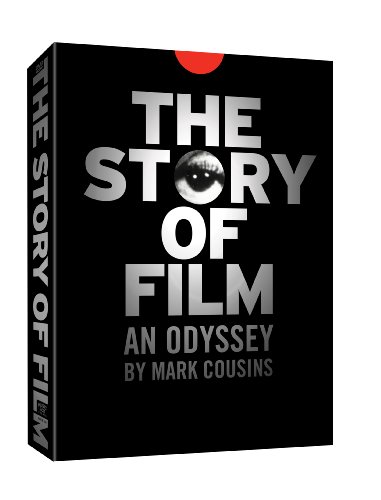
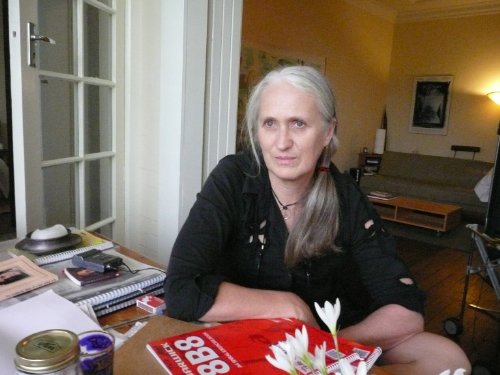
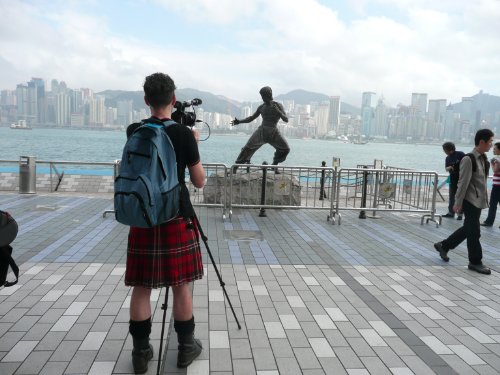


The Story of Film: An Odyssey is an unprecedented cinematic event, an epic journey through the history of world cinema that is a treat for movie lovers around the globe. Guided by film historian Mark Cousins, this bold 15-part love letter to the movies begins with the invention of motion pictures at the end of the 19th century and concludes with the multi-billion dollar globalized digital industry of the 21st. The Story of Film: An Odyssey heralds a unique approach to the evolution of film art by focusing on the artistic vision and innovations of filmmaking pioneers. Cousins' distinctive approach also yields a personal and idiosyncratic rewriting of film history. Filmed at key locations in film history on every continent, from Thomas Edison's New Jersey laboratory, to Hitchcock's London; from post-war Rome to the thriving industry of modern day Mumbai-this landmark documentary is filled with glorious clips from some of the greatest movies ever made and features interviews with legendary filmmakers and actors including Stanley Donen, Kyoko Kagawa, Gus van Sant, Lars Von Trier, Wim Wenders, Abbas Kiarostami, Claire Denis, Bernardo Bertolucci, Robert Towne, Jane Campion and Claudia Cardinale. Review: A masterpiece - A very entertaining and informative ride hitting on relevant moments, styles, innovations, films and general guard-advancing moments in film. This is done by narration and interviews with examples of films, interviewees and other B-roll clips as backdrop. It is wrapped in a simple but very effective (and I'd say at times dramatic) music score. Elegantly presented both on screen and as a package it moves from the late 1800s through 2007, with the film Inception excepted (2010). Also, chronologically organized into about 1 hour installments. A look at its Wikipedia page shows a glimpse of what critics said about this work. At times, the narrator seems to be going around alone with a camera showing places and interviewing people. This, along with the minimalistic music score strengthens the effect that one does not necessarily need a big production to produce significant and positive results in a documentary film. Of note are the interesting B-roll clips that reminds me of my beginnings in photography, when everything was beautiful. When everything was worth picturing. This epic production has one significant drawback: No subtitles. Something needed at times when Mr. Cousins pronounces certain words, especially those from French. The Netflix edition had subtitles. Though I agree and relate to much of what is said in The Story Of Film, I do disagree in certain areas. Subjectively mostly. My strongest objection is on Disc 2, episode 4, time 32 minutes and 47 seconds. Mr. Cousins is refers to 1940 France and mentions that the Vichy government of France, "... sided with Hitler..." This was not true until 1942 when the Allies invaded North Africa. However, after playing this section several times I concede I might have misunderstood. But I'm not yet sure. I have watched the whole series about 5 times in Netflix before I could find it no more there. For this reason, I purchased it: To watch it again. And again. I does take several views to wrap your brain around it. I'm not there yet. As a final note, and with respect to the producers I'd submit the proper title would be "A Story Of Film,' for there are many other stories to be told. The bad and ugly (Trailer Park Of Terror), the totally weird (Sweet Movie), the documentary world (Ken Burns' The West), epic movies (Carlos), hidden treasures (Nebraska, Cashback, No Men Beyond This Point, Man With A Movie Camera), movies as a venue to sell products (A View To A Kill) and the like. Then, there are subjects like the rise and fall of iconic actors and producers (won't name names), camera and lenses, paste versus digital, etc. I understand many of those I mention above are beyond the timeframe The Story of Film covers, but I use it to illustrate my opinion: That it should be A Story and not The Story. In the end, a masterpiece. Review: A Highly Idiosyncratic and Stimulating Survey - May 8, 2102: Since the time I originally posted some comments on this superb documentary essay, "The Story of Film: An Odyssey," I have re-watched all 15 hours of it twice. Several of my friends are cinephiles and college film professors who have been anxious to share this viewing experience with me. This explains my insanity, as it were. Lots of nice dinners at my house and lots of "The Story of Film." Needless to say, everybody I know finds something missing: an important director, an important individual film. Everybody hates something that Cousins loves. (He is is full of hyperbolic praise for the most surprising things.) But we all agree -- this is a stunning achievement. One of the greatest things about it, by the way, is that it makes you want to see hundreds of movies again or for the first time. If I had the energy, I would remove almost all the negative remarks I have made below -- but best to leave it as it stands. I do have to add, however, not one of my friends has any objection to the way Mr. Cousins speaks. I also no longer find that his remarks interfere with the zillion film clips. Just imagine the mountainous task of selecting and obtaining the rights to them! Earlier review: This huge "The Story of Film: An Odyssey" is an odyssey for sure in the way the author/narrator's ideas stray all over the place intellectually and geographically. But it is coherent unlike Godard's "Histoire(s) du cinéma." It is also highly idiosyncratic and the author's opinions are right in your face. He makes sweeping pronouncements on who and what is great. One is likely to disagree with many of his powerful convictions. Here at desertcart, I have read a number of unfair negative customer comments. Many people cannot stand Mark Cousins' Northern Irish accent -- a nasty prejudice I find offensive. It is true that his speech is lilting, even lulling, and virtually every statement sounds like a question; but would these same commentators attack speakers with other national or ethnic accents? And how seriously are we to take comments from people who have seen only two or three hours out of a 15-hour project? This is not a set to buy if you are seeking a wonderful series on the "Golden History of Hollywood." Cousins does not ignore Hollywood altogether, of course (how could he?) -- but the glamorous studio years are shoved way, way off to the side. Except in one episode, Cousins makes references to Hollywood only as needed. When he reaches the '60s and '70s, American film comes more solidly into the picture. In general, Cousins admires almost all of the American based directors that European intellectuals fashionably admit into the Pantheon of greatness (Sirk, Wilder, Ray, Minnelli, Donen, Hitchcock, Ford, Lynch etc.). In this way he is predictably tiresome, and one even suspects an anti-American sentiment lurking beneath the surface of everything. Certainly the many full-color inserted shots of LA seem designed to make it look as tacky as possible. So -- for a documentary that calls itself "The Story of Film," it is lousy as a study of American film per se. But Cousin's brief comments on everything he treats are of interest. He offers one insight after another, and his explanations of technical developments would be perfect for film students. He is always discussing lighting, atmosphere, mise en scene, camera angles, camera lenses, and everything that has to do with content and meaning of a visual image. His comments on the advent of digital and CGI techniques are especially good. The viewer is likely to have a series of epiphanies. India, China, Egypt, Japan, South America, Mexico, Spain, France, Denmark, Sweden, England, Hungary, Russia, Poland, Czechoslovakia, -- these and more give a sweep to his narrative. I learned about many films I have never heard of before in my life and now am anxious to see. The film intercuts contemporary documentary footage (apparently freshly shot for the documentary itself) of all the international locales discussed, often showing us a brief glimpse of the way something looks now. For instance, in a the section about Charlie Chaplin, Buster Keaton and Harold Lloyd, there are flashes of the locations today. For instance, Chaplin is on a street corner with the blind girl in "City Lights," and for a second or two we see that empty corner as it looks now -- namely dreary!. We learn about the Shaw Studios in China -- and then see those studios today etc. A technique Cousins uses is to intercut examples of the later influence of a an earlier director on the work of a later one. So, when we learn about Chaplin, we see examples of his influence on other comic actors and filmmakers. One slightly annoying thing is that Cousins often talks his way through many of the film clips. I think it helps to know something about movies to start with -- but this essay (I think that is a better term than "documentary") is bound to broaden the horizons of any serious film lover.
| ASIN | B008ZDC7M8 |
| Actors | Amitabh Bachchan, Claire Denis, Mark Cousins, Robert Towne, Stanley Donen |
| Best Sellers Rank | #28,602 in Movies & TV ( See Top 100 in Movies & TV ) #349 in Documentary (Movies & TV) #387 in Special Interests (Movies & TV) |
| Customer Reviews | 4.6 4.6 out of 5 stars (582) |
| Director | Mark Cousins |
| Is Discontinued By Manufacturer | No |
| Item model number | 26155594 |
| MPAA rating | PG-13 (Parents Strongly Cautioned) |
| Media Format | Black & White, Box set, Color, Dolby, Multiple Formats, NTSC |
| Number of discs | 5 |
| Producers | John Archer |
| Product Dimensions | 1 x 5.7 x 7.5 inches; 12.32 ounces |
| Release date | December 11, 2012 |
| Run time | 15 hours and 15 minutes |
| Studio | Music Box Films |
F**K
A masterpiece
A very entertaining and informative ride hitting on relevant moments, styles, innovations, films and general guard-advancing moments in film. This is done by narration and interviews with examples of films, interviewees and other B-roll clips as backdrop. It is wrapped in a simple but very effective (and I'd say at times dramatic) music score. Elegantly presented both on screen and as a package it moves from the late 1800s through 2007, with the film Inception excepted (2010). Also, chronologically organized into about 1 hour installments. A look at its Wikipedia page shows a glimpse of what critics said about this work. At times, the narrator seems to be going around alone with a camera showing places and interviewing people. This, along with the minimalistic music score strengthens the effect that one does not necessarily need a big production to produce significant and positive results in a documentary film. Of note are the interesting B-roll clips that reminds me of my beginnings in photography, when everything was beautiful. When everything was worth picturing. This epic production has one significant drawback: No subtitles. Something needed at times when Mr. Cousins pronounces certain words, especially those from French. The Netflix edition had subtitles. Though I agree and relate to much of what is said in The Story Of Film, I do disagree in certain areas. Subjectively mostly. My strongest objection is on Disc 2, episode 4, time 32 minutes and 47 seconds. Mr. Cousins is refers to 1940 France and mentions that the Vichy government of France, "... sided with Hitler..." This was not true until 1942 when the Allies invaded North Africa. However, after playing this section several times I concede I might have misunderstood. But I'm not yet sure. I have watched the whole series about 5 times in Netflix before I could find it no more there. For this reason, I purchased it: To watch it again. And again. I does take several views to wrap your brain around it. I'm not there yet. As a final note, and with respect to the producers I'd submit the proper title would be "A Story Of Film,' for there are many other stories to be told. The bad and ugly (Trailer Park Of Terror), the totally weird (Sweet Movie), the documentary world (Ken Burns' The West), epic movies (Carlos), hidden treasures (Nebraska, Cashback, No Men Beyond This Point, Man With A Movie Camera), movies as a venue to sell products (A View To A Kill) and the like. Then, there are subjects like the rise and fall of iconic actors and producers (won't name names), camera and lenses, paste versus digital, etc. I understand many of those I mention above are beyond the timeframe The Story of Film covers, but I use it to illustrate my opinion: That it should be A Story and not The Story. In the end, a masterpiece.
D**N
A Highly Idiosyncratic and Stimulating Survey
May 8, 2102: Since the time I originally posted some comments on this superb documentary essay, "The Story of Film: An Odyssey," I have re-watched all 15 hours of it twice. Several of my friends are cinephiles and college film professors who have been anxious to share this viewing experience with me. This explains my insanity, as it were. Lots of nice dinners at my house and lots of "The Story of Film." Needless to say, everybody I know finds something missing: an important director, an important individual film. Everybody hates something that Cousins loves. (He is is full of hyperbolic praise for the most surprising things.) But we all agree -- this is a stunning achievement. One of the greatest things about it, by the way, is that it makes you want to see hundreds of movies again or for the first time. If I had the energy, I would remove almost all the negative remarks I have made below -- but best to leave it as it stands. I do have to add, however, not one of my friends has any objection to the way Mr. Cousins speaks. I also no longer find that his remarks interfere with the zillion film clips. Just imagine the mountainous task of selecting and obtaining the rights to them! Earlier review: This huge "The Story of Film: An Odyssey" is an odyssey for sure in the way the author/narrator's ideas stray all over the place intellectually and geographically. But it is coherent unlike Godard's "Histoire(s) du cinéma." It is also highly idiosyncratic and the author's opinions are right in your face. He makes sweeping pronouncements on who and what is great. One is likely to disagree with many of his powerful convictions. Here at Amazon, I have read a number of unfair negative customer comments. Many people cannot stand Mark Cousins' Northern Irish accent -- a nasty prejudice I find offensive. It is true that his speech is lilting, even lulling, and virtually every statement sounds like a question; but would these same commentators attack speakers with other national or ethnic accents? And how seriously are we to take comments from people who have seen only two or three hours out of a 15-hour project? This is not a set to buy if you are seeking a wonderful series on the "Golden History of Hollywood." Cousins does not ignore Hollywood altogether, of course (how could he?) -- but the glamorous studio years are shoved way, way off to the side. Except in one episode, Cousins makes references to Hollywood only as needed. When he reaches the '60s and '70s, American film comes more solidly into the picture. In general, Cousins admires almost all of the American based directors that European intellectuals fashionably admit into the Pantheon of greatness (Sirk, Wilder, Ray, Minnelli, Donen, Hitchcock, Ford, Lynch etc.). In this way he is predictably tiresome, and one even suspects an anti-American sentiment lurking beneath the surface of everything. Certainly the many full-color inserted shots of LA seem designed to make it look as tacky as possible. So -- for a documentary that calls itself "The Story of Film," it is lousy as a study of American film per se. But Cousin's brief comments on everything he treats are of interest. He offers one insight after another, and his explanations of technical developments would be perfect for film students. He is always discussing lighting, atmosphere, mise en scene, camera angles, camera lenses, and everything that has to do with content and meaning of a visual image. His comments on the advent of digital and CGI techniques are especially good. The viewer is likely to have a series of epiphanies. India, China, Egypt, Japan, South America, Mexico, Spain, France, Denmark, Sweden, England, Hungary, Russia, Poland, Czechoslovakia, -- these and more give a sweep to his narrative. I learned about many films I have never heard of before in my life and now am anxious to see. The film intercuts contemporary documentary footage (apparently freshly shot for the documentary itself) of all the international locales discussed, often showing us a brief glimpse of the way something looks now. For instance, in a the section about Charlie Chaplin, Buster Keaton and Harold Lloyd, there are flashes of the locations today. For instance, Chaplin is on a street corner with the blind girl in "City Lights," and for a second or two we see that empty corner as it looks now -- namely dreary!. We learn about the Shaw Studios in China -- and then see those studios today etc. A technique Cousins uses is to intercut examples of the later influence of a an earlier director on the work of a later one. So, when we learn about Chaplin, we see examples of his influence on other comic actors and filmmakers. One slightly annoying thing is that Cousins often talks his way through many of the film clips. I think it helps to know something about movies to start with -- but this essay (I think that is a better term than "documentary") is bound to broaden the horizons of any serious film lover.
P**Y
A thought-provoking survey of world cinema
There are those who don't seem be able to stand this series, complaining of the narrator's accent and reading, and also the way it challenges some established (especially Hollywood/US- centric) interpretations of film history. On the first point, Cousins speaks the way many people from Belfast speak and he can hardly be blamed for being Irish. On the second point, it's obvious going in that this work is a personal interpretation of film history that's intended to be thought provoking and challenging. It is not intended or presented as a standard historical overview, rather it's "an odyssey" just as the title declares. If you're looking for a traditional historical overview that leaves your pre-existing prejudices in tact, you might steer clear. The attempted scope of the work is impressive. Hundreds of films, many of which will be unknown to an American audience are mentioned and many quoted (clearance must have been a nightmare). There are some brilliant observations and connections made. Sometimes Cousins attempts stretches he can't quite make, and some of the interpretation gets a little precious, but even in this the work is instructive. The interlude footage contains many visuals puns on what's being said if one watches carefully, and it's fun to figure these out. The interviews with writers and directors are shot in an anti-cinema style that those wanting something that looks like Discovery Channel talking heads may find off-putting. Again there's more method there than may at first meet the eye.
J**E
Trying to tell the story of film, a still rather young artform, was always going to be an ambitious task. This task is made even more complicated when you consider that in order to tell the full story of film, you have to move outside of the more commonly known countries such as America, Britain and even the likes of Japan and France and capture their stories and their filmmakers as well. Certainly this was not an easy task to do and attempting to cover this even in a 15-hour format was going to be a tall order, but director Mark Cousins has done an outstanding job and given viewers both a thorough history and an engrossing documentary in it's own right. The set is divided into five discs containing three episodes, bringing the length of each disc to around three hours. The first three parts of the documentary focus on silent film, with Episode 1 focusing on how cinema was established as a new and upcoming artform (including a fascinating look at the theory of conventional film techniques such as shot-reverse-shot); Episode 2 focusing on American silent film, divided into two halves: the first looking at mainstream film, particularly the silent comedians a la Charlie Chaplin and Buster Keaton, and the second looking at outsider pioneers such as Erich von Stroheim, King Vidor and Carl Theodor Dreyer; and Episode 3 looking at world silent film. The only slight disappointment in this portion of the documentary is that the last episode could have been easily stretched over two episodes, but this is understandable given the documentary's staggering length and there are several good books and documentaries on the subject of silent film out there if you want to explore in more detail than Cousins can fit in. Things move rapidly for the next three episodes. Episode 4 looks at the introduction of sound to cinema in the 1930's. The first half of the program focuses on the genres that appeared in American film following the introduction of sound (musicals, gangster films, horror films, westerns, comedies and animated films), then moving onto how world cinema accepted film (featuring a long look at the style and technique of one Alfred Hitchcock), and finally going full circle to the release of "Gone With The Wind" and "The Wizard of Oz" in 1939, bookending the episode nicely. Episode 5 focuses mainly on the American cinema of the 1940s (including an interesting exploration of the film noir of the time), with a quick look at British cinema at the end of the episode including the classics "A Matter of Life & Death" and "The Third Man". This feels slightly tacked onto an otherwise fascinating look at how the post-War attitude led to the McCarthy hearings and the subsequent effect on the film industry, but it was good to see these films featured in the documentary regardless. And this is followed by Episode 6, showing the first comprehensive look at sound-world cinema in the series. It looks at the rising talent in India (Satyajit Ray), Japan (Akira Kurosawa) and Mexico (Emilio Fernandez's "The Pearl") amongst others, before finally returning to examine some of the most interesting films America and Britain made at this time (particularly "Johnny Guitar", "All That Heaven Allows" and Lindsay Anderson's "O Dreamland"). Episodes 7 and 8 focuses on the European New Wave Cinema and its subsequent influence on cinema all around the world in the late 50's and 1960's. For those wishing to find out more about the European New Wave, the former episode is certainly a good primer on both its greatest filmmakers & works (with long explorations of the work of Ingmar Bergman and Federico Fellini) and even how it impacted the spaghetti westerns of the day (highlighting Sergio Leone's "A Fistful of Dollars" and "Once Upon a Time In The West" in particular). And even as someone who is only slightly familiar with the names of both the films and filmmakers, it certainly does a good job showing how these filmmakers altered cinema in such a huge way that it makes me want to go out and watch some of the films featured. Episode 8 in particular is a rather thrilling look at how world cinema was altered by the rush and energy of the New Wave, going to Russia (Andrei Tartovsky), India (Ritwik Ghatak) and Africa (Ousmane Sembène) amongst others, before looking at how America awoke to a new style of filmmaking in films such as "Easy Rider". Episodes 9 through 11 are my personal favourites, covering my personal favourite era of film, the 1970s, in well-deserved detail. Episode 9 is a good primer, especially for newcomers, to the New Hollywood movement that gave us classics such as "The Graduate" and "The Godfather" and famed directors such as Martin Scorsese and Francis Ford Coppola. However, it also discusses often ignored faces from this era, including the criminally underrated Charles Burnett, who appears in interview form to discuss his equally underrated film "Killer of Sheep". Episode 10 looks at the world cinema of this time, and hops from Germany (the works of Rainer Werner Fassbinder), Australia ("Picnic at Hanging Rock") to South America ("The Holy Mountain") amongst many, many others, giving a comprehensive introduction to talented filmmakers working outside America at this time. Episode 11 focuses on the innovation in mainstream film around the world, going from the rise of Hong Kong action cinema to the ending featuring the obligatory appearances of both filmmaker Steven Spielberg and George Lucas' "Star Wars", both of which are focused on in such a way it can give viewers of Spielberg and "Star Wars" new insights that they may not have noticed before. Episode 12 moves onto the outsider films of the 1980's, with Cousins exploring not the American blockbusters that are traditionally thought of, but rather the outsider work in worldwide cinema such as "Yeelen" and "Come and See", and filmmakers such as Pedro Almodóvar and Terence Davies. The next two episodes focus on the 1990's, the first looking at world cinema & "The Last Days of Celluloid" (to quote the title), exploring filmmakers from Iran (Abbas Kiarostami), Japan ("The Ring" and "Audition") and even the Dogme 95 movement amongst many others, and the second focusing on the rise of Computer Generated Imagery in American and Australian film, ranging from the likes of "Toy Story" and "Elephant" to "An Angel At My Table" and "Moulin Rogue!". The last episode brings the series up to its' airdate of 2011 by focusing on worldwide film innovation in the 2000s, with a surprise epilogue that I won't spoil for those who haven't watched but needless to say sums up the power film can have. There are only relatively minor nitpicks I have with the series and the DVD release. First, as I have mentioned in the above paragraphs, because the series has to fit to a 15 hour length and is presumably chosen by Cousins himself, it can mean that a lot of film history and pioneers in areas such as animation are left out. This is a minor nitpick and certainly Cousins goes out of his way to highlight the contributions of those who are often forgotten about in film history (especially in African and Asian cinema) will mean someone watching the series for the first time will come away with new directors and films to check out, but as said, trying to cover so much in 15 hours means that some pioneers in certain areas can be left out. And second, this has nothing to do with the content of the series, but the presentation of the discs is rather subpar, with a rather bland menu design and only two options: to play the features in their entirety or to play individual episodes. I understand that this is done to fit three episodes onto one disc, but it does mean that the menus are a bit lacking as a consequence. But if you are interested in film and want to learn more about its history and even some of its theory, this series is an absolute must, covering just about all the essential eras of film history throughout the world. Highly recommended if you want to have a comprehensive look at film history in a film format.
R**Y
Great body of work
V**A
Fantastic collection de um l'histoire du cinéma
I**S
Mesmerising and highly informative, a perspective on cinema beyond the western mainstream. You'll really learn something about film if you stick through the 15 hours – they seem to fly by, you'll want to watch it all in one sitting. Highly recommended.
R**E
Una collezione d' inestimabile valore cinefilo, un super documentario sulla storia del cinema. Appassionante, entusiasmante, bello e sopra tutto utile.
Trustpilot
1 week ago
1 month ago