Desert Online General Trading LLC
Dubai, United Arab Emirates
Desert Online General Trading LLC
Dubai, United Arab Emirates

Full description not available
J**S
Just Not Enough Stars!
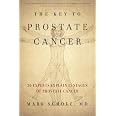
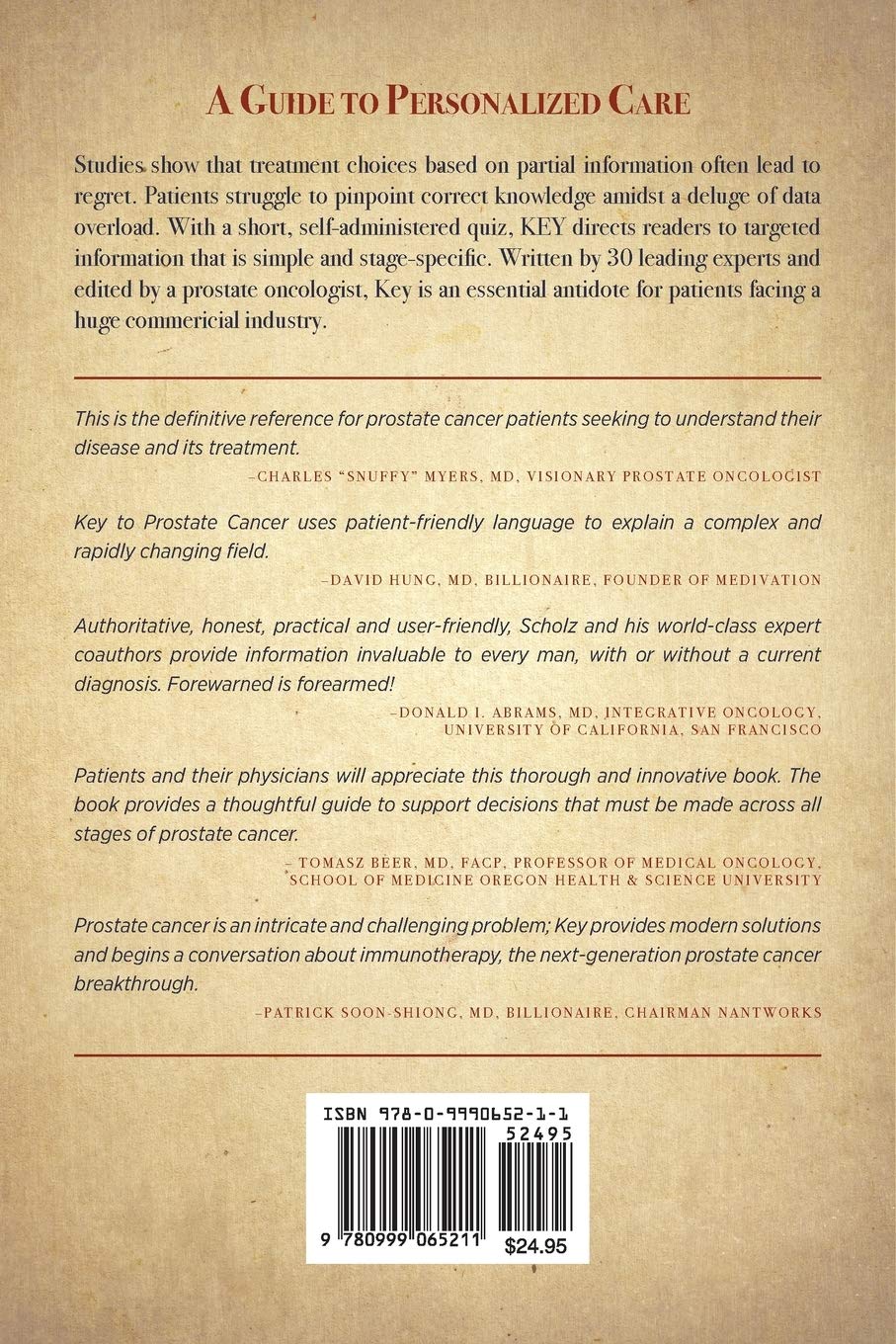
There are just not enough stars for this comprehensive, authoritative, yet highly readable masterpiece that orients patients to prostate cancer whether they are newly diagnosed or long-term patients, and whether they have disease that is so mild they do not need treatment or are fighting aggressive metastatic disease. Recently published in 2018, it is highly current. It is virtually an expert second opinion for the newly diagnosed patient. While dealing with some of the difficult challenges faced by patients and their doctors, it delivers its messages with realistic optimism, based on sound, published and referenced medical research. It will help patients become empowered partners in decision making with their sometimes overly busy and overly specialized care providers who often struggle to keep up with advancements.The main author, Dr. Mark Scholz, MD, is a pioneering medical oncologist who has specialized in just prostate cancer for his entire career. Those of us in the survivor community know him for his early and courageous advocacy of active surveillance – now accepted as the “go to” strategy for mild cases, and a key theme in his earlier book “Invasion of the Prostate Snatchers”, and his expertise in dealing with more advanced cases, reflected in his published research. He is joined by 29 other authors, most also brilliant, prominent, pioneering experts with prolific research publication records. The experts give their own views, and there are occasional clashes, as between the surgeons and the radiation oncologists, but reading their view is illuminating. (Hint, the surgeon kind of stacks the deck in chapter 24, such as in leaving out some of the side effects of surgery, incontinence and erectile dysfunction, that are much more common with surgery – p. 187. I guess you can tell I’m a fan of radiation.)This book will help patients (but also doctors and prostate cancer researchers) to quickly sort through what can be an overwhelming amount of information and competing claims. It is written in layman’s language with short chapters that focus on specific aspects of the disease. It has a modular design, with the first section covering basic, common information, with a long second section that is tailored to the situation facing the reader (keyed by a 4 to 6 question “quiz” – previous treatment, whether distant mets, PSA, Gleason score, stage, any imaging results), and a third section on lifestyle and general health concerns common to all patients. The tailoring is accomplished by dividing the disease into five increasingly dark shades of blue, from Sky, then Teal, next Azure, followed by Indigo, and finally Royal, reflecting increasingly challenging case circumstances, and essentially paralleling low-risk, intermediate-risk, high-risk, recurring, and metastatic disease. Each type has Low, Basic, and High subgroups, so there are 15 subgroups in all, which enables the patient to see recommendations closely tailored to his circumstances. The beauty of this scheme is that patients only need to read the sections that apply to them. Patients can also set their own depth. Those who want further information can use the references to each chapter, which detail the quality evidence behind the text. They can also go to the Prostate Cancer Research Institute website (www.pcri.org) which is closely associated with Dr. Scholz, or they can follow-up on what they have read by searching PubMed (www.pubmed.gov).One unusual characteristic of the book is its use of the acronym “TIP” – Testosterone Inactivating Pharmaceuticals – for what is commonly referred to as hormonal therapy or androgen deprivation therapy.I am a 19 year survivor of once life-threatening prostate cancer, now apparently cured by radiation therapy plus TIP in 2013. (I bet on waiting to try for a cure until technology matured, and so far it looks like I have won the bet.) I bought the book early in 2018 and read the sections pertaining to me, but I just finished reading every page from the viewpoint of those of us who help others navigate this disease. I can now give “The Key to Prostate Cancer” my enthusiastic recommendation!
R**S
The Prostate Cancer Book I Wish I Had Read
I’m a 15-year prostate cancer survivor, thanks to an accidental conversation, a PSA (prostate specific antigen) blood test, and surgery. But, it turns out, I may not have needed that surgery!Each year, over 200,000 men learn they have prostate cancer. Most of them, like me, have no idea what the prostate is, what it does, or even where to find it in the body. But they do know what the word cancer means.I just finished reading the book that I wish had been available when I learned I had prostate cancer on December 8, 2002, the day before my 58th my birthday.The Key to Prostate Cancer by Mark Scholz, MD, should be the very first step in any man's prostate cancer journey. Even before turning to the Internet.This book provides a simple process and checklist for men and their significant others to follow in determining their actual prostate cancer risk and treatment options. Prostate cancer comes in many variations, with differing risk profiles. As Dr. Scholz points out, a substantial percentage of men diagnosed with prostate cancer have an indolent form of the disease and will never need treatment.There are many very useful aspects of this book. One of the best is the simple structure it provides for determining the stage of your prostate cancer, the risk profile associated with that stage, and the available treatment options.According to Scholz, there are five main stages of prostate cancer, with three sub-categories in each stage, for a total of 15.A simple checklist in Chapter 1 leads you to your stage. The other chapters by 30 leading experts discuss in easily understood terms really important concepts such as how prostate cancer is staged, how to read and understand your pathology report, the various treatment options available, along with their potential side and after effects.If you are diagnosed with prostate cancer, buy two copies of this book before you make any treatment decision. Give one copy to your significant other and then both of you read through the sections that pertain to your situation at least twice. Once you’ve done that, you’re prepared to begin evaluating your options.In short - "Stay Calm and Read The Key to Prostate Cancer."If you know someone who is recently diagnosed and evaluating treatments, tell them about this book. Better yet, gift them a copy.Robert Hess15-year prostate cancer survivorCancer Journeys Foundation
T**S
It's giving us hope that there are alternatives to getting his prostate removed
I bought this book for my father-in-law who was recently diagnosed with prostate cancer, after doing a search on Amazon. I didn't expect to read it myself, but I found it so useful as a guide for me to help him make decisions about his care. We are still learning the details of his diagnosis, and what to do about it. The first thing we were asked by many of his friends who have had the disease is "so when's your surgery?" But we're not sure that's the best approach - we don't even have final details on his diagnosis. It's a much more complicated disease than we ever imagined, and this book is helping us navigate the intricacies, as well as treatment options. It's giving us hope that there are alternatives to simply getting his prostate removed.
K**T
This book is a Godsend and a must read . . .
for newly diagnosed prostate cancer patients. In this day and age, when so many doctors do not seem to have the time to fully explain the whole lot of information with regards to treatment options that comes your way after a diagnoses of prostate cancer-- this book feels in the gaps! Easy to read and follow and covers every topic related to diagnoses, staging and treatments available. The knowledge it imparts brings with it a much needed calm in the rage of a storm of a new diagnosis.
Trustpilot
2 months ago
1 month ago